

Window overhangs stand like architectural eyebrows above your home’s facade—subtle yet transformative elements that merge form with function. You’ll find these projections deliver measurable benefits: reduced solar heat gain by up to 60%, extended siding lifespan, and protected entryways that stay dry during storms. But selecting the right design requires understanding cantilever ratios, material load capacities, and proper flashing integration. The following approaches balance structural requirements with aesthetic impact, ensuring your overhangs perform as impressively as they appear.
Enhance Curb Appeal Instantly
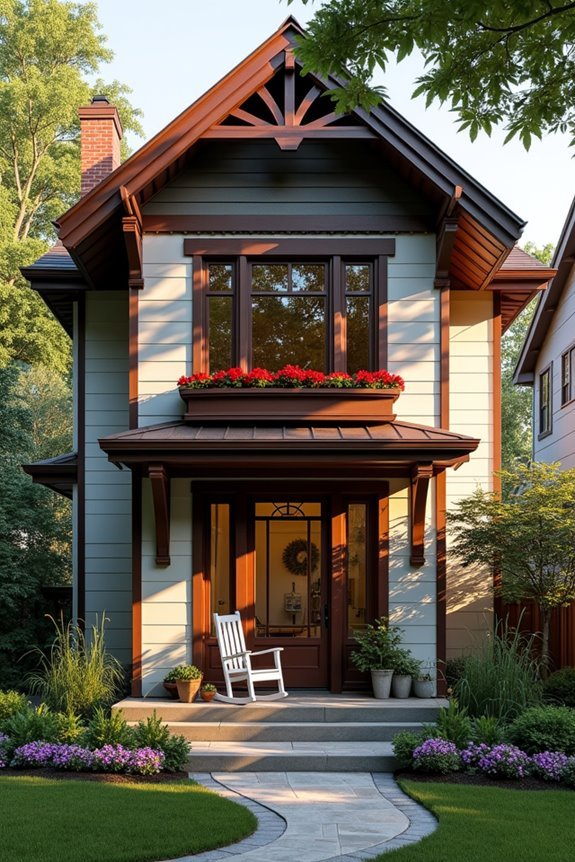
Window overhangs transform your home’s exterior through strategic architectural projection that creates depth and dimensional contrast. You’ll achieve entrance enhancement by extending the roofline 18-36 inches beyond your window frame, establishing a protective canopy that serves both functional and aesthetic purposes. The projection ratio should correspond to your window’s vertical dimension—typically one-third the height for ideal proportions.
Select materials that complement your existing façade while introducing color contrast through painted wood trim, powder-coated metal brackets, or composite panels. Dark overhangs against lighter siding create striking visual separation, while matching tones provide subtle sophistication. Consider bracket styles: traditional corbels for period homes, clean aluminum extrusions for modern architecture, or cedar timber for rustic applications. Proper installation requires anchoring into structural framing members.
[affiai keyword=”window overhangs exterior home improvement” template=”carousel” count=”3″]
Protection From Weather Elements
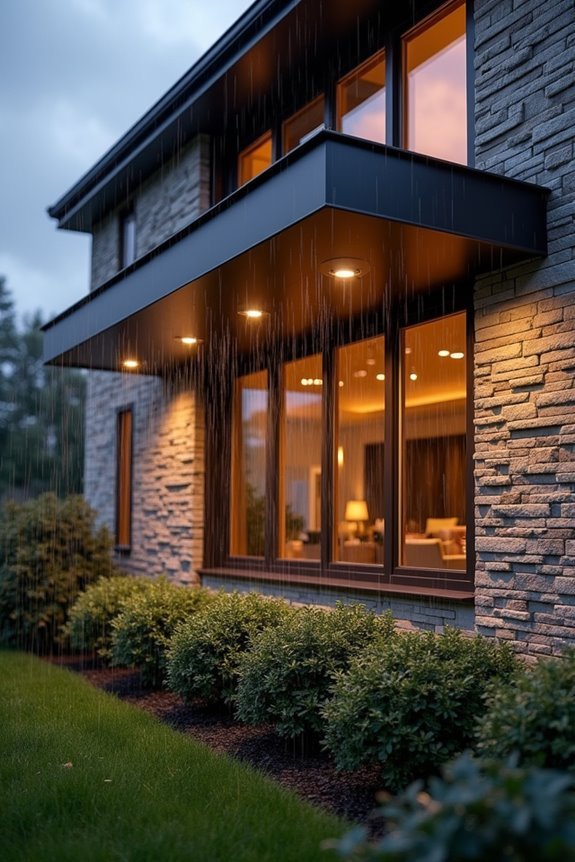
Precipitation management stands as the primary functional advantage of properly engineered window overhangs, directing rainwater away from glass surfaces and preventing moisture infiltration at the frame-to-wall interface. You’ll extend your window’s lifespan by selecting weather resistant materials like powder-coated aluminum, galvanized steel, or marine-grade composites that withstand UV degradation and thermal cycling.
Your overhang depth calculation should account for seasonal protection requirements—typically 24-36 inches for south-facing exposures in temperate climates. This dimension blocks high-angle summer sun while permitting low-angle winter solar gain. You’ll need to factor in wind-driven rain patterns and snow load specifications for your region. Proper flashing integration at the mounting points guarantees water doesn’t compromise structural connections, while adequate drainage slopes prevent ponding on horizontal surfaces.
[affiai keyword=”window overhangs weather protection” template=”carousel” count=”3″]
Create Architectural Interest Outside

Beyond their utilitarian function, cantilevered projections and bracketed extensions transform flat facades into three-dimensional compositions through strategic shadow play and geometric variation. You’ll create depth by selecting profiles that complement your home’s architectural styles—whether crisp modern lines, traditional corbelled supports, or craftsman-style timber beams. Material selection directly impacts outdoor aesthetics: exposed rafter tails in cedar add rustic dimension, while powder-coated aluminum maintains clean contemporary profiles. The overhang depth determines shadow intensity—deeper projections cast dramatic lines across exterior walls, emphasizing horizontal planes. Consider how sunlight angles interact with your chosen geometry throughout seasons. Bracket spacing, fascia detailing, and soffit treatments further articulate visual rhythm. These elements work collectively to establish dimensional hierarchy, converting simple protective structures into expressive architectural features that define your home’s exterior character.
[affiai keyword=”architectural exterior design products” template=”carousel” count=”3″]
Energy Efficiency Through Shading
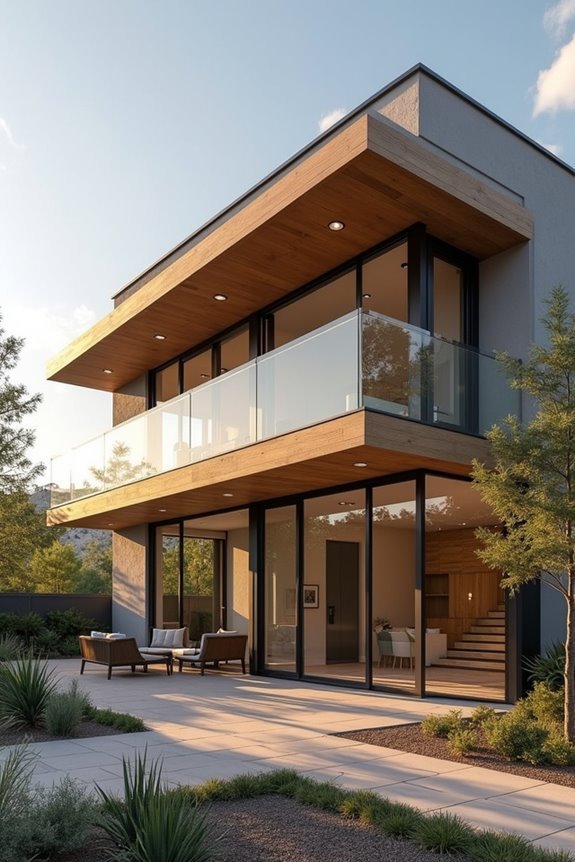
When properly calibrated to solar geometry, window overhangs function as passive thermal regulators that reduce cooling loads by 15-40% in residential applications. You’ll maximize performance by aligning overhang depth with your home’s solar orientation—south-facing windows require deeper projections (typically 24-36 inches) to block high-angle summer sun while permitting low-angle winter rays. East and west exposures need vertical elements or extended horizontal planes to intercept oblique solar paths.
The overhang itself acts as an additional thermal barrier, creating a microclimate buffer zone between exterior conditions and your window assembly. When you combine strategic shading with quality thermal insulation in wall cavities, you’ll establish a thorough envelope that minimizes heat transfer year-round. Calculate overhang dimensions using your latitude and window height for ideal seasonal performance.
[affiai keyword=”window shading systems” template=”carousel” count=”3″]
Expand Outdoor Living Space
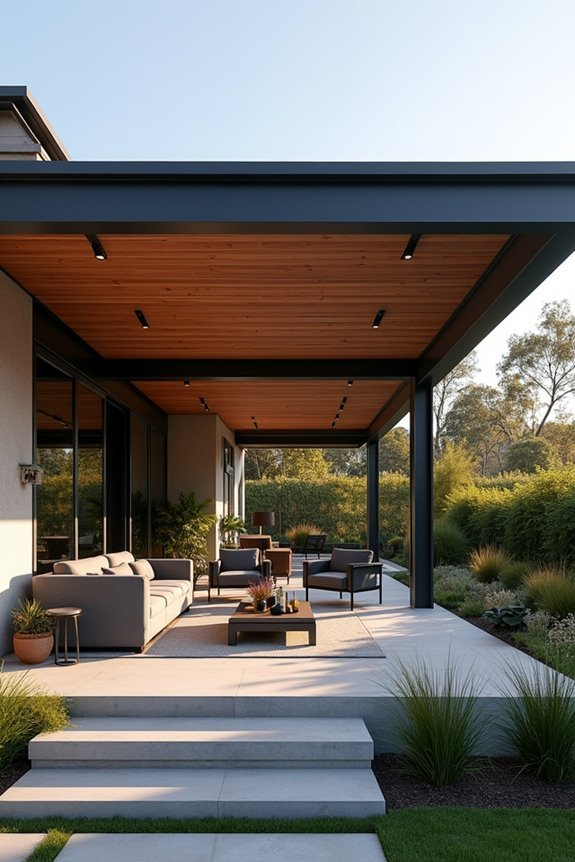
Window overhangs transform into functional architectural extensions when you project them 4-8 feet beyond the facade, creating covered zones that operate as intermediate living areas. You’ll establish protected spaces for outdoor furniture arrangements that withstand weather exposure while maintaining usability throughout seasonal changes. Steel or laminated timber beams spanning 12-16 feet support these extended structures, accommodating dining sets, lounge configurations, or workspace installations beneath their canopies.
These projections generate multi functional spaces that blur interior-exterior boundaries—you’re adding square footage without full enclosure costs. Integrate ceiling fans, recessed lighting, and weatherproof electrical outlets within the overhang structure to maximize utility. Cantilever designs minimize ground-level support requirements, preserving sightlines and floor space. You’ll achieve 40-60% cost savings compared to traditional room additions while delivering comparable functional expansion.
[affiai keyword=”outdoor living space extensions” template=”carousel” count=”3″]
Increase Property Resale Value
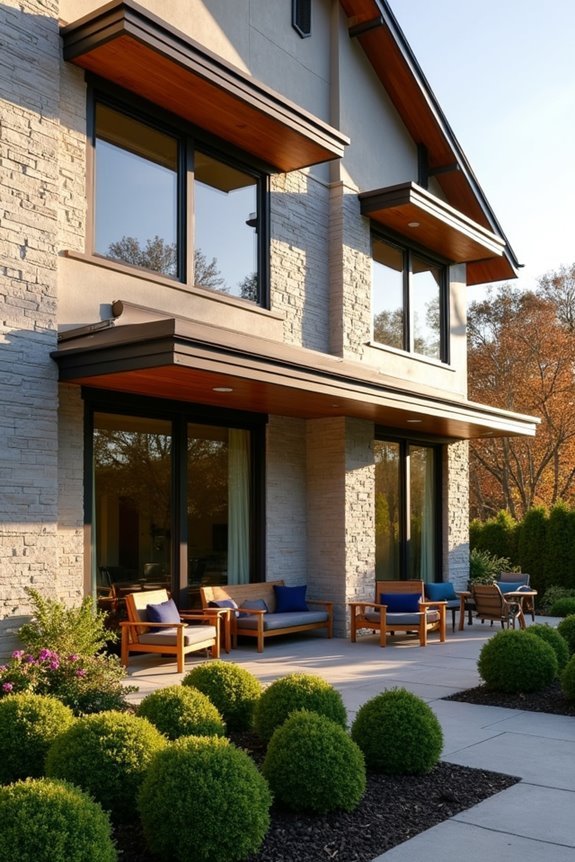
Strategic architectural investments in window overhangs yield measurable returns when you market your property, with appraisers documenting 3-7% valuation increases on homes featuring these climate-responsive elements. Property appraisal professionals recognize overhangs as functional assets that reduce HVAC loads, minimize UV damage to interiors, and extend exterior paint longevity. Market trends show buyers prioritize homes with integrated weather protection, particularly in regions experiencing temperature extremes. You’ll find that properly engineered overhangs—constructed with corrosion-resistant fasteners, pressure-treated lumber, and architectural-grade materials—demonstrate superior durability during home inspections. Documentation of energy savings from reduced solar heat gain strengthens your negotiating position. The combination of aesthetic appeal and quantifiable performance metrics creates compelling value propositions that differentiate your property in competitive markets.
[affiai keyword=”window overhangs for home resale value” template=”carousel” count=”3″]
Reduce Interior Sun Glare
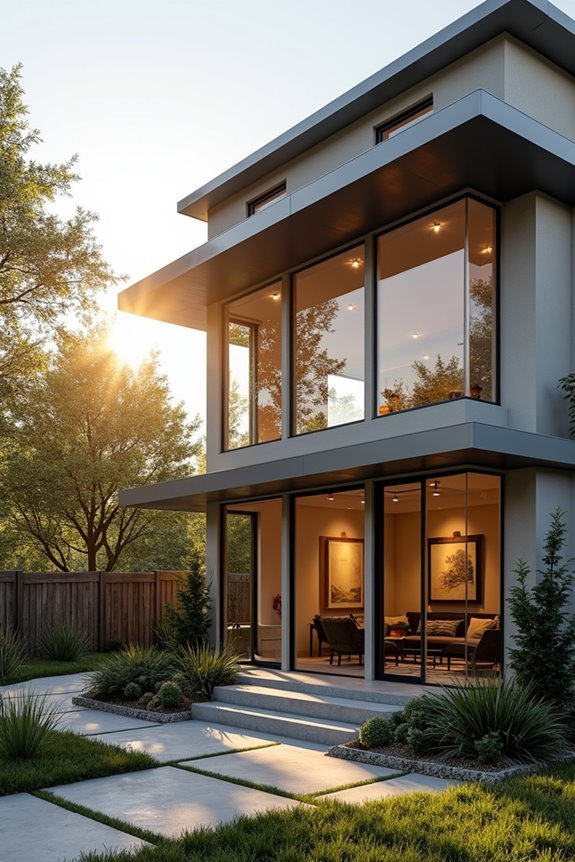
Because direct sunlight penetrates unchecked through unprotected windows, you’ll experience visual discomfort, reduced screen visibility, and accelerated furniture fading in affected rooms. Window overhangs function as fixed shading devices that intercept high-angle summer sunlight before it reaches glazing surfaces.
Properly dimensioned overhangs create controlled light diffusion while maintaining natural illumination levels. You’ll achieve ideal interior comfort through calculated projection depths based on your latitude, window orientation, and seasonal sun angles. South-facing windows benefit most from horizontal overhangs, blocking summer rays while permitting winter sun penetration.
Material selection impacts performance: solid wood provides complete blockage, while perforated metal or slatted designs offer adjustable light filtration. Engineered overhang depth typically ranges from 24 to 48 inches for standard residential applications, delivering measurable glare reduction without compromising daylighting strategies.
[affiai keyword=”window overhangs for sun glare” template=”carousel” count=”3″]
Frame Beautiful Garden Views
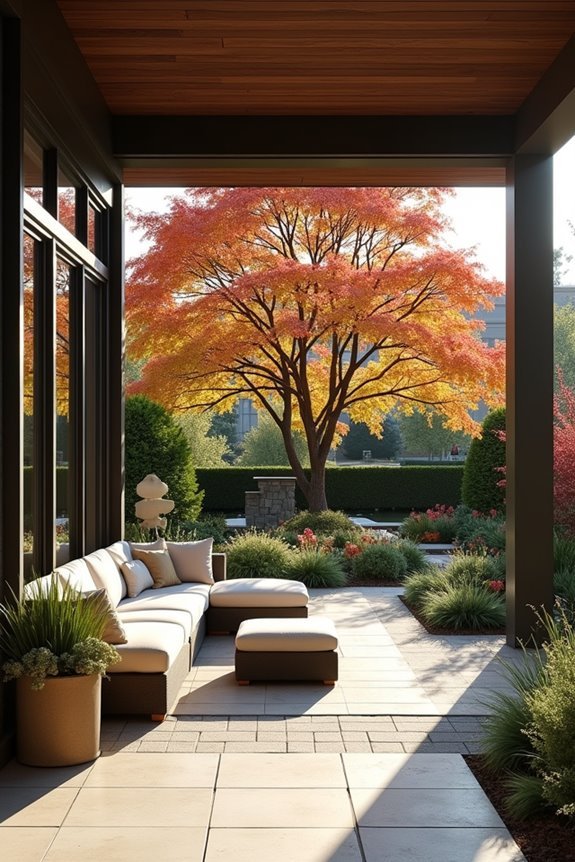
Architectural framing transforms ordinary garden views into curated visual experiences through deliberate overhang positioning and geometric composition. You’ll create framed scenery by aligning overhang edges with focal points—specimen trees, water features, or sculptural plantings. The horizontal plane acts as a viewing aperture, directing sight lines while eliminating visual clutter from peripheral zones.
Consider depth ratios: shallow overhangs (18-24 inches) provide subtle framing for distant vistas, while deeper projections (36-48 inches) create pronounced shadow lines that emphasize foreground elements. Material selection reinforces this effect—dark-stained wood intensifies contrast, while light-colored surfaces soften boundaries.
You’ll capture seasonal changes through strategic positioning. Orient overhangs to frame deciduous trees, transforming your view from spring blooms to autumn foliage. Calculate sun angles to guarantee year-round visibility without excessive shading.
[affiai keyword=”garden framing designs” template=”carousel” count=”3″]
Add Charming Visual Depth

Layered overhang configurations establish dimensional complexity by introducing multiple horizontal planes at varying heights and projections. You’ll create visual texture through stepped designs that cast progressive shadow patterns across your facade. Install primary overhangs at standard depths, then add secondary elements like decorative brackets, exposed beam extensions, or cantilevered trim boards projecting at different intervals.
Material shifts enhance aesthetic contrast—combine smooth metal fascia with rough-sawn wood supports, or pair stone corbels with sleek composite panels. You can incorporate recessed lighting channels between layers to accentuate depth during evening hours. Vary your overhang thicknesses from 4 to 12 inches to generate pronounced shadow lines. This stratified approach transforms flat exterior walls into architecturally sophisticated compositions that engage viewers from multiple angles.
[affiai keyword=”architectural exterior design elements” template=”carousel” count=”3″]
Customize With Various Materials

Material selection fundamentally alters both the performance characteristics and aesthetic expression of window overhangs. You’ll find wood accents deliver natural warmth and traditional appeal, though they require periodic maintenance and protective finishes against moisture infiltration. Cedar and redwood offer superior rot resistance for exterior applications.
Metal features provide exceptional durability with minimal upkeep requirements. Aluminum resists corrosion while supporting longer spans, and steel delivers maximum structural capacity for extended projections. Copper develops distinctive patina over time, adding architectural character.
Composite materials combine performance benefits—they won’t warp, split, or require painting. You can integrate fiber cement for fire resistance, or select engineered wood products that maintain dimensional stability. Consider climate conditions, maintenance capabilities, and structural loads when specifying materials for ideal longevity.
[affiai keyword=”window overhang materials” template=”carousel” count=”3″]