
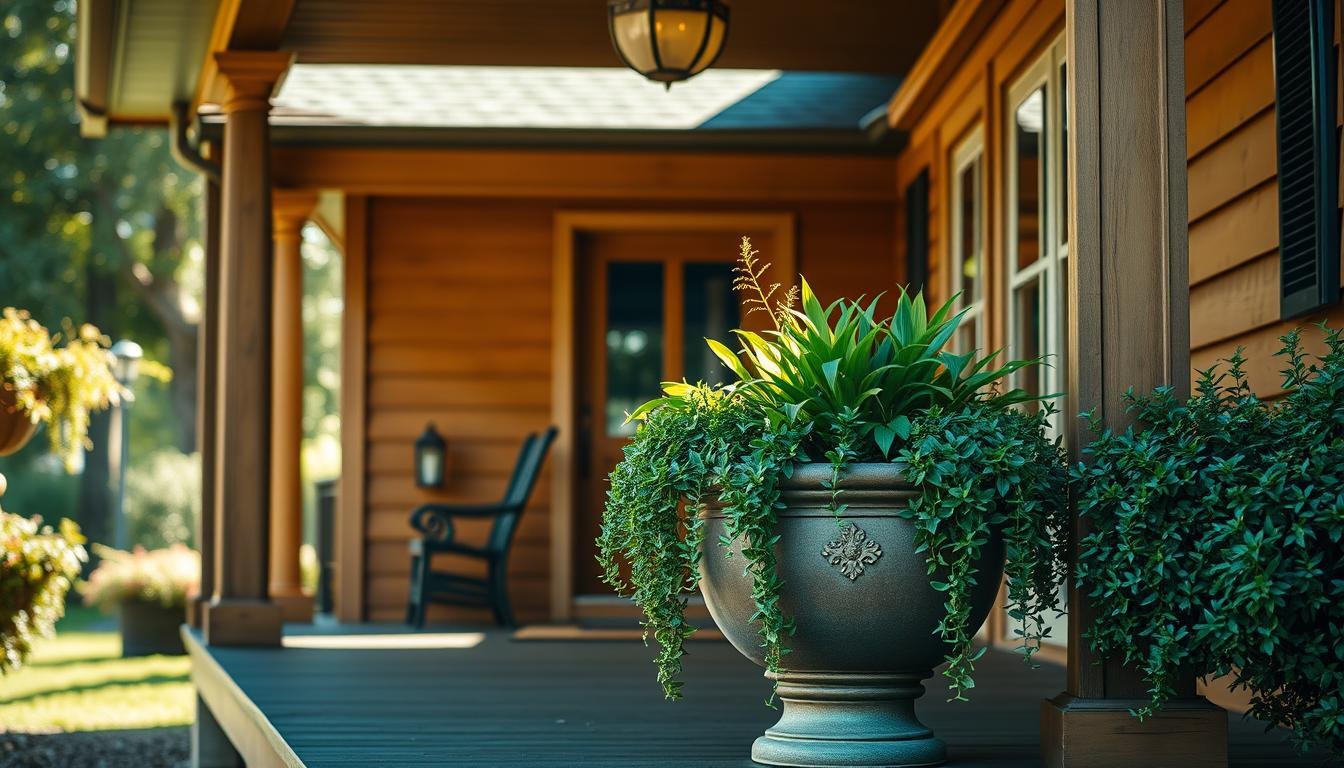
Picking the right size planter for your front porch makes it look nicer and more welcoming. Whether you prefer bright flowers or simple topiaries, choosing the perfect planter can make your porch an eye-catching spot. It is important to match the planter’s look and function with your home’s style. This includes considering the planter’s size and material to enhance your home’s friendly vibe.
The size of your planter is key because it affects how your porch looks. Experts often recommend a 12″ pot for hellebore, a 9″ one for boxwood, and a 16″ one for Arborvitae Whipcord. For a coordinated look, try three planters of different heights or one large planter for bigger porches. The best planter size is usually 2 inches bigger than the plant’s diameter to give it space to grow.
Key Takeaways
- Choosing the appropriate planter size enhances curb appeal.
- A 12″ diameter planter suits standard door dimensions.
- Consider three different planter sizes for an empty corner arrangement.
- Small evergreens offer low maintenance and long-lasting greenery.
- Ensure planters are proportionate to the size of your porch.
- Incorporate planters with drainage holes to prevent root rot.
- Choose planter materials that match the style of your home.
Understanding Your Porch Dimensions
Before picking planters for your porch, know your front porch dimensions for the best look and flow. Porches are usually 6 to 8 feet wide. With entrance doors about 36 inches wide, think about the space you need to move easily.
Double columns, which are 7 to 8 feet apart, change how you plan for planters. Planters should look good without blocking your way in. Using sidelights, which are 12 to 18 inches wide, next to your planters can make your porch look better. Properly placed planters make your porch welcoming by highlighting key features.
When placing planters, make sure they can be seen easily, especially near the door. This ensures your plants are noticed and don’t hide the view. For a porch with traditional-style columns that are 8 inches square and 8 feet high, medium-sized planters are best.
It’s important to think about depth. Even a 6 to 4 feet deep porch can fit planters and simple furniture without feeling too crowded. The depth and width of your porch affect how well planters and furniture fit.
Safety comes first for porches over 30 inches high, as they need 42-inch tall guardrails. Remember these safety and design tips for a welcoming and safe porch. Good design keeps your porch looking great and functional.
Types of Planters to Consider
Choosing the right planters for your porch is key. Different types bring unique styles to the table. The right ones will make your porch look better and match your home’s design.
Here are some popular types of front porch planters:
- Classic Pot Planters: These are versatile, available in many sizes, and colors. They can be set alone or in groups.
- Elegant Urns: Great for traditional porches, urns add a touch of class. They’re often made of ceramic, stone, or concrete.
- Modern Box Planters: These fit well with modern homes. They have a sleek design and are made from materials like fiberglass, metal, or wood.
| Material | Characteristics | Suitable Styles |
|---|---|---|
| Wood | Natural, rustic, can be painted or stained | Farmhouse, Cottage |
| Metal | Durable, industrial look, rust-resistant | Modern, Industrial |
| Fiberglass | Lightweight, versatile, weather-resistant | Contemporary, Minimalist |
| Ceramic | Decorative, traditional look | Classic, Mediterranean |
Galvanized metal planters are known for their durability. Corten Steel planters get a unique look over time. This adds a rustic or industrial vibe to your porch.
Using different planter sizes and shapes adds depth. This is especially effective on wide porches. The shape of the planter can change the vibe—rectangular or square shapes look formal, while round shapes are more casual.
Sizing Guide for Planters
Choosing the right planter size is key for healthy plants and a nice-looking porch. Knowing how big should porch planters be is important. A too-small planter can limit root growth, and a too-big one may cause root rot. For a good planter size guide, pick a pot that’s at least two inches bigger than the plant. This allows enough space for roots and soil, improving watering.
Think about your porch size when picking planter sizes. Big planters can make your front porch more inviting. But, small ones might not stand out on a large porch. Mixing tall planters with smaller ones can create a balanced look.
When choosing planters, gradually increase the size. Moving to a much larger pot quickly can lead to too much water and root rot. Also, consider the plant’s growth in the future when selecting a size.
Different planter shapes and materials matter too. For instance, aluminum planters are great for resisting rust and are light, perfect for outdoors. Corten steel planters are even better at preventing rust, lasting longer with less care.
Picking the right planter size mixes science and art. Getting the soil-to-root ratio right leads to healthy plant growth. For pots with many plants, more space helps avoid nutrient and light competition, good for edible plants.
Trying different shapes of planters can change the mood and style. For example, rectangular or square planters add structure, while round ones give a softer feel. This lets you design your porch to match the plants and vibe you want.
At the end, choose planters that meet both your needs and design wishes. Regular care like watering, feeding, and trimming helps plants thrive. This makes your porch a lively place all year.
Choosing the Right Material
When picking materials for outdoor planters, you have many choices, each with good points. This guide aims to help you choose, thinking about lasting quality and looks.
Fiberglass planters are light and can stay looking good for a long time, perfect for long-lasting porch decor. Metal planters, like aluminum and Corten Steel, are strong and look modern. Though more expensive, metal ones keep their shape and don’t rust.
If you prefer classic style, look at wood planters. They’ve been used forever and last well if taken care of, but they do need regular work to stay in good shape. Ceramic is great for water-loving plants but is easily broken, especially when it gets very cold.
Plastic planters are less costly and come in many styles and colors. Choosing a thicker plastic means better lasting quality and less color fading. Concrete planters, tough against all weather and requiring little care, last through almost anything.
Think about the weather and how much effort you want to put into care when choosing materials. Picking wisely not only extends the life of your planters but also adds beauty to your space.
Seasonal Planting Options
Choose the right plants for front porch planters based on the season and container size. Seasonal planting ensures your porch looks great all year with the correct seasonal flowers for planters and strong greenery that adapts to weather changes.
During spring and summer, go for bright flowers like petunias, marigolds, and geraniums. These thrive in the sun, making your entrance inviting. Add greenery like ‘Golden Sword’ yucca and ‘Green Mountain’ boxwood for extra beauty. These plants are tough and add to your porch’s charm.
Come fall, choose chrysanthemums and ornamental kale for their cozy colors. ‘Variegated Redtwig’ dogwood is great too, surviving in many zones. ‘Golden Creeping’ Jenny and Bergenia also offer interesting textures and colors to your planters.
Winter doesn’t mean a dull porch. Use year-round porch greenery like evergreens or hardy shrubs such as ‘Emerald’ arborvitae. Heucheras are also great for adding color in cooler climates.
| Plant | Hardiness Zones | Characteristics |
|---|---|---|
| Golden Sword Yucca | 4–11 | Robust, striking foliage |
| Green Mountain Boxwood | 4–9 | Evergreen, dense growth |
| Golden Creeping Jenny | 4–8 | Low-growing, vibrant |
| Variegated Redtwig Dogwood | 2–8 | Colorful stems and leaves |
| Emerald Arborvitae | 2–7 | Tall, columnar habit |
Picking the right year-round porch greenery keeps your front porch welcoming through all seasons. From summer’s lush flowers to winter’s sturdy shrubs, select plants that match your porch’s light and climate. With the right plants for front porch planters, your porch will have beauty and appeal all year.
Complementing Your Home’s Style
Your choice of planters is key in matching your home’s architectural style. Whether your home is traditional or modern, you’ll find the perfect planter to make your house look better.
For a traditional home, classic designs like terracotta or ornate stone urns work well. They add a touch of elegance. If your home is more modern, go for simple planters in solid colors. Metal planters, like aluminum and Corten Steel, are both pretty and tough.
Choosing decorative porch planters also means thinking about size and balance. Tall planters are great for small porches since they don’t take up much room. For larger porches, mix big and small planters to create an interesting look.
| Planter Material | Durability | Best Suited For |
|---|---|---|
| Terracotta | Moderate | Traditional Homes |
| Stone Urns | High | Classic Facades |
| Aluminum | High | Contemporary Homes |
| Corten Steel | Very High | Industrial/Rustic Homes |
Match your planters to your home’s style by choosing the right color, shape, and design. Square or rectangular planters look neat and are great for formal areas. Round or curved planters feel more laid-back, perfect for a casual vibe. Putting together planters of different heights and sizes can make your porch look great.
The main goal is to make your home’s outside look as welcoming as the inside with these planters.
Arranging Planters on Your Porch
Arranging planters on your porch combines art and science. It boosts your home’s curb appeal. Consider symmetry for a formal look when placing them. Placing identical planters on both sides of your entrance creates a balanced look. This setup makes your doorway inviting and visually harmonious with matching flower pots.
Using different heights and sizes of planters adds interest. Combine tall planters with “thriller” plants and “filler” flowers. Add trailing “spiller” plants for a complete look. Setting up takes less than ten minutes, offering quick and beautiful results.
Group planters in odd numbers for a pleasing look. Add hanging or wall-mounted planters to use vertical space and extend your porch area. Shaded porches benefit from low-maintenance Boston ferns. This approach beautifies and makes practical use of your space.
Be creative with your planter designs. Mix plants of neutral colors for a modern look. Use bold colors to make your porch stand out. Window boxes can add more charm and enhance both indoor and outdoor views.
Remember practical aspects too. Fill planters with soil to 2 inches from the top. Water them right after planting. Self-watering planters, like Mayne’s 16-inch square ones, cut down on watering work. They ensure your plants stay evenly hydrated.
Try moving planters to different spots to refresh your porch easily. Use seasonal planting to keep the porch lively all year. Including plants like Supertunias attracts pollinators. This makes your porch a lively spot for nature.
Using creativity and planning is essential for beautiful porch planters. Follow these tips to make your front porch welcoming and attractive.
Maintenance Tips for Your Planters
Making sure your planters last long and stay beautiful is all about regular care. Start by keeping drainage holes open to stop water from soaking the roots. Terra-cotta pots need more water than other types due to their quick drying. You can use special soil additives to keep the moisture right, just be careful in shaded areas to not overdo it.
To really take care of your planters, you should repaint or treat wooden and metal ones yearly. This helps them resist the weather. Wooden planters need more attention to stay in good shape compared to easy-care fiberglass ones. Feeding your plants regularly is also key because they eat a lot when in containers. Start with a slow-release fertilizer and then use a liquid one every few weeks.
Your planters will look their best if you keep the plants trimmed and healthy. Taking off dead flowers and bad leaves helps plants grow better and stay healthy. In the warm summer months, water them every day if the top of the soil feels dry. If it’s really sunny, putting saucers under the planters can help hold water. But, don’t do this in shaded spots to stop the roots from getting too wet. With these actions, your plant displays will stay beautiful all year.


