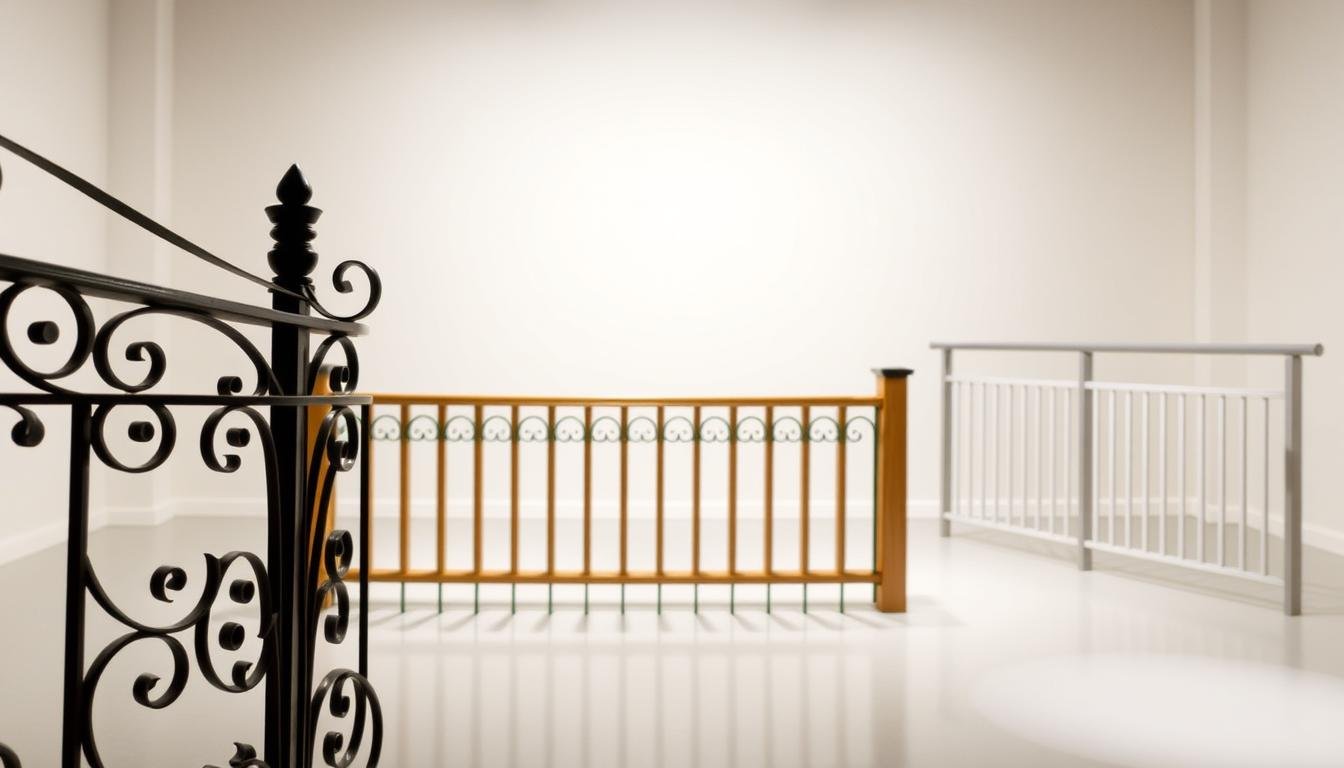
“Porch rails” is the common name for the parts that surround a porch’s sides. They keep things safe and make your porch look better. You’ll hear about balusters and pickets, the main parts of a porch rail, which are held in place by other rail pieces. For a fresh, modern feel, many people choose porch panels made of PVC. These panels are pretty and easy to put up.
Key Takeaways
- Porch rails are vital for both safety and design on your porch.
- Components such as balusters and pickets form the bulk of the rail system.
- The use of PVC panels has become a popular choice for easy installation and modern aesthetics.
- Understanding porch rail terminology can help you make an informed decision.
- Different types of porch rails are available to suit various design needs.
Understanding Porch Rails: The Basics
Porch rails play a key role in safety and adding beauty to your home. As you learn about porch rail construction, you’ll find important porch rail components. These include posts, rails, infill, and brackets. Knowing about these helps you make smart choices regarding porch rail construction.
Posts can be wooden or metal and are crucial to the porch’s structure. They should be at least 36 inches high from the deck. Designers need to ensure the horizontal parts of the railing stay 4 inches or less apart. This is to meet safety standards.
The top and bottom rails are vital for stability. The top rail must be at least 36 inches high. The bottom rail should have enough space underneath to keep the area clean. Balusters, used as infill, must not be more than 4 inches apart to follow codes.
Enhancements like post caps upgrade the look and usefulness of the rails. These caps come in various materials such as wood, metal, and glass. To unify your deck’s appearance, you can cover metal posts with composite sleeves.
Gaining a solid grasp of porch rail parts leads to a design that’s both legal and matches your home’s style. For a closer look at designing your porch rails, check this detailed guide on deck railings.
Different Styles of Porch Rails
When it comes to porch rail styles, you have many choices. From wood balusters with classic charm to modern cable railings and glass panels, there’s a style for everyone. Knowing the differences helps you pick the best one for your home.
Traditional wood railings bring a warm, rustic look but need more upkeep due to weathering. Composite railings mix wood fibers and plastics for less maintenance and better resistance to rot and insects. They’re stronger and less prone to bending over time, especially the solid types.
Steel and aluminum railings are durable with minimal care. Steel must be weather-proofed against rust, while aluminum is cheaper and cleaned easily. Yet, in coastal areas, metal railings may corrode faster and need more care.
Cable railing systems provide clear views, perfect for scenic spots, but can be pricey and sometimes restricted. Glass panel rails use tough tempered glass for clear views but need regular cleaning to look good.
Wrought iron railings, seen in historic or decorative styles, need occasional upkeep to prevent rust. PVC railings are easy to care for, resist stains and mildew, and are a practical choice.
Think about how railings match your home’s style. For a Southern cottage, Chippendale railings add pattern and charm, or choose simple pickets for a classic look. Horizontal railings offer clear views and suit modern homes well.
In the end, picking the right porch rail styles is about both looks and lasting quality. The goal is to keep your porch safe and beautiful for your home.
Materials Used for Porch Rails
Choosing the right materials for porch rails involves looking at style, strength, and care. We’ll explore options like wood, PVC, composite, and metal. Each has its own benefits for your home.
Wood is timeless with its warm look. Yet, it needs a lot of care to avoid drying, splintering, rot, and mold. Posts are usually 4×4 or 6×6 inches. Wood railings are affordable at first but need more care later.
Composite materials mimic wood but with less upkeep. They come in many colors and finishes to fit your home nicely. Composites like TimberTech® railings are strong, need little care, and have a 25-Year Warranty.
PVC porch rails are light, weatherproof, and cheaper than other options. They’re good for those watching their budget. But, they can fade and aren’t as tough as some materials.
Aluminum porch rails stand out for being durable and easy to look after. They’re light, rust-resistant, and good for the outdoors. Powder-coated types fight off weathering and are cheaper than wrought iron. They also look great.
Choosing infills like slim aluminum balusters or glass panels changes your rail’s look. Your choice affects how it looks, how much care it needs, and how it works.
For a clean design and clear view, cable railings are perfect but cost more. Glass panels are modern and safe but need regular cleaning.
Knowing about porch rail materials helps you choose wisely. Whether it’s wood’s charm, PVC’s value, or aluminum’s durability, each option has unique benefits for your home’s style and needs.
The Functionality of Porch Rails
Porch rails add style to your home and are key for safety and code compliance. Safety features of porch rails prevent falls by offering a protective barrier. Rails should be 36 to 42 inches high if the porch is 30 inches or more above ground. This ensures they are high enough to protect people.
Porch rails also give support, helping with balance on stairs. If your porch has four or more steps, you need a handrail. These rails must meet certain height and strength standards to be helpful.
Porch rails can come with extra features like drink rails for parties. They keep their stylish look while being useful.
Looks matter too when it comes to porch rails. Some people pick glass panel rails for a modern feel and safety, as they have no gaps. Others might choose composite materials for their variety of colors and easy upkeep, even though they may not last as long as metal.
Here is a detailed comparison of various porch rail styles and their key attributes:
| Style | Key Features | Pros | Cons |
|---|---|---|---|
| Cable Railing Infills | Minimalist design, unobstructed views | Modern aesthetic, less obstructive | May be restricted by local laws |
| Craftsman-Style Railings | Traditional wood craftsmanship | Authentic and classic look | Higher costs, increased maintenance |
| Glass Panel Railings | Gapless design for safety | Contemporary look, safe for children and pets | Frequent cleaning required, potential heat buildup |
| Square Web Composite Railings | Unique geometric design | Balance of privacy and visibility | Possible obstruction of views, difficult to replace |
| Wrought Iron Railings | Traditional heavy-duty design | Strong and durable | Prone to rust, heavier |
| Composite Materials | Low-maintenance alternative to wood | Various colors and styles, affordable | Less durable than metal |
| PVC Railings | Lightweight and weatherproof | Affordable, low maintenance | Variable durability, does not mimic wood closely |
| Metal Railings | Powder-coated aluminum | Weather resistant, low maintenance | Prone to scratches |
| Wood Railings | Natural and classic look | Aesthetically pleasing | High maintenance, susceptible to rot and weathering |
Installing Your Porch Rails
Putting in porch rails can be a rewarding job whether you opt for a DIY porch rail installation or choose a pro. Knowing the steps and picking the right materials and design helps a lot. It makes the work easier and more fun.
Getting your measurements right is key for how to install porch rails well. About 25% of DIY projects don’t work out because of wrong measurements. This is easy to avoid by using tools like angle calculators, which is very important for stairs. Making sure newel posts are deep enough in the ground, which is usually 24 to 48 inches depending on frost lines, ensures a strong base.
How far apart you place posts matters a lot, usually 3 to 4 balusters per panel. It’s not just about looks but also safety. People usually spend $500 to $1,500 on materials, with treated wood being $2 to $4 per foot. So, plan carefully to avoid not having enough materials, a mistake 15% of people make.
For DIY porch rail installation, lots of people, 70% in fact, paint or stain the rails before putting them together. This makes the finish look better. If you find this tough, about 20% of homeowners get help from pros.
Choosing good materials is important for looks and function. A 6″ Rail System works with spindles from 2 1/4″ to 3 1/2″ wide. The 4″ Rail System fits spindles 2 1/8″ wide or less. Also, the rail systems’ height adds 10″, giving you more toe room for safety.
Finally, think about the total cost of time and materials. You’ll likely need two coats of paint or stain for wood, adding to the cost. Either way, doing it yourself or hiring a pro, knowing how to install porch rails helps make sure your porch looks great in the end.
Maintaining Your Porch Rails
Keeping your porch rails in great shape is key for safety and looks. The care needed for porch rail maintenance depends on the material. This choice affects how long and well your railing system holds up.
Wooden rails need a lot of care. They must be painted or stained to protect against moisture and pests. If not maintained, they can rot and weaken. Railings must be strong enough to handle 200 lbs. along the top, as per the International Residential Code.
PVC and aluminum rails are easier to maintain. A simple wash with mild soap and a soft cloth will do. In California, railings should be 42 inches high to meet safety standards, while also being easy to keep up.
Glass railings require regular cleaning. You should clean them weekly, or every other week, to avoid dirt build-up. Use microfiber cloths and glass cleaner to keep them clear and shiny. The spacing between glass railing posts must not exceed 8 feet to bear a force of 200 lbs., following IBC rules.
In places near the sea, where saltwater spray is common, choose high-quality stainless steel to prevent rust. Such areas need railings to be cleaned more often. This helps them last longer, despite the extra work.
Checking and maintaining your railings regularly can add up to 20 years to their life. Good porch rail maintenance keeps them looking nice and ensures they are safe and stable, according to International Codes.
Choosing the Right Porch Rail for Your Home
Choosing the right porch rails is more than just picking what looks good. It’s about matching your home’s design, meeting safety codes, and choosing materials wisely. You have to think about balancing looks and function. With the right choice, your porch rail can make your home look better and increase its value.
Each home style needs a different kind of porch rail. For example, Craftsman homes look great with metal railings in black or bronze. Ranch homes are suited for simple metal railings. And modern homes look fantastic with glass railing systems. Picking rails that match your home’s style makes a big difference in its overall look.
Going custom with your porch rails lets you choose the perfect materials, shapes, and colors. You can pick from wood, which needs more care, or low-maintenance materials like composite. Aluminum, wrought iron, and glass are also options, offering something for every budget. Choosing the right infill, from thin ones for a clear view to wide ones for more privacy, is crucial. Make sure your picks fit well with your home and are safe and easy to take care of.