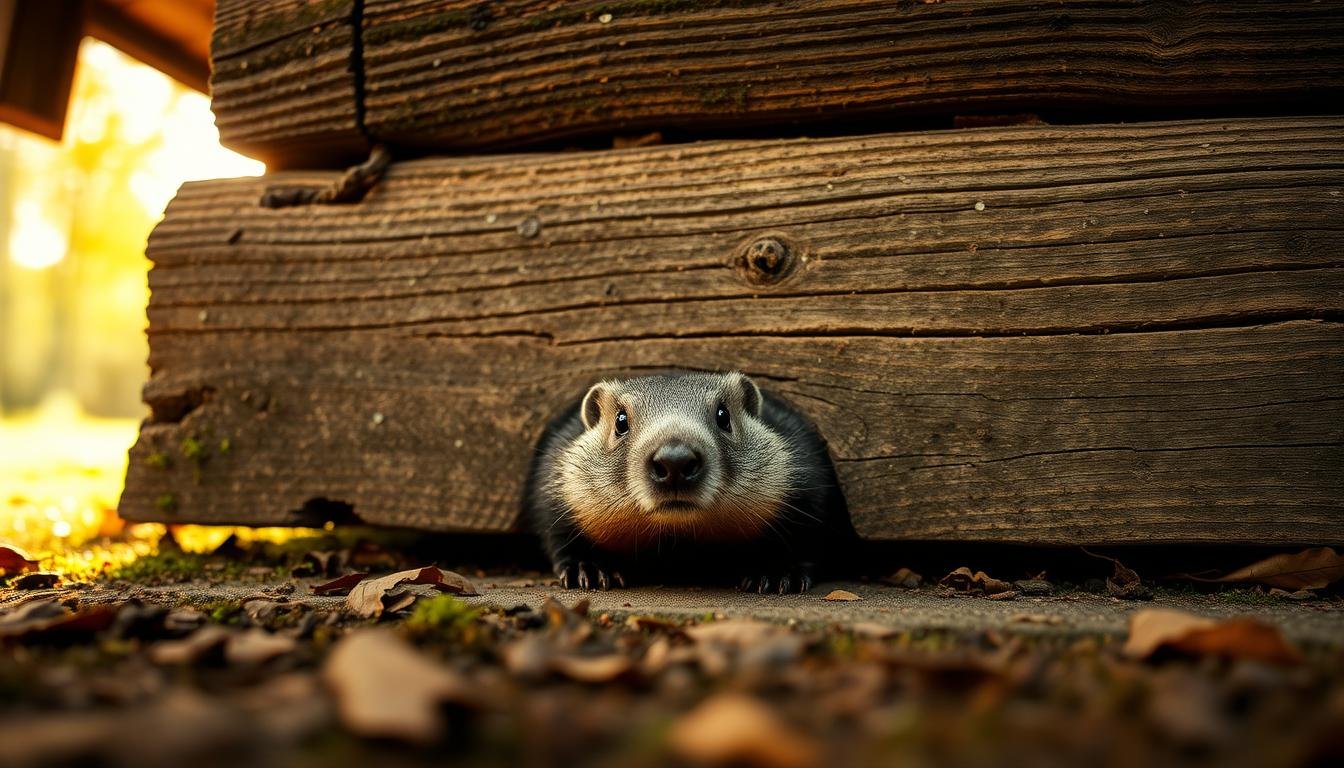
Dealing with groundhogs under your porch could seem tough. These animals, also called woodchucks, harm your garden, lawn, and landscaping. They love to eat plants. Luckily, there are good ways to get rid of them. This guide will teach you how to prevent and control groundhog problems.
First, you need to understand groundhogs and how they behave. This knowledge is key to getting them to leave. With these tips, you’ll not only remove the groundhogs but also keep them away. Let’s get started!
Key Takeaways
- Groundhog removal typically takes 3 to 5 days.
- Costs for professional groundhog removal range from $150 to $200.
- Fencing should be at least 3 feet tall, buried 12 inches underground.
- Moving trapped groundhogs requires a significant distance away from your property.
- Groundhogs are most active during early morning and evening hours.
- Common repellents include ammonia, red pepper flakes, and garlic.
- Proper yard maintenance can prevent groundhog re-infestation.
Understanding Groundhogs and Their Behavior
Groundhogs, also called woodchucks, are interesting creatures that may impact your property. They wake up from hibernation in February. Their breeding season starts from late February to early March. Pups arrive in April. This knowledge helps us predict their moves near our homes.
Groundhogs weigh between 5 to 13 pounds and are 16 to 22 inches long. Their homes underground are large, stretching up to 65 feet with many rooms and paths. The entrance to their home is 6 to 12 inches wide. When they dig, they can move 275 pounds of earth, changing your yard.
What groundhogs eat is quite interesting. They are herbivores and love eating vegetables and plants. This makes gardens a perfect snack spot for them. Their constant garden visits can ruin your veggies and plants. Knowing what they eat helps us protect our gardens from them.
Groundhog tunnels can be a big problem for homeowners. These tunnels can make the ground under buildings weaker, causing damage. They might also chew on cables and pipes underground, which can be expensive to fix. Their love for digging shows why it’s crucial to understand them to stop damage.
Groundhogs might be more social than we thought, which changes how we manage them. Their complex social lives mean we need to know more about how they interact. This is vital for removing them humanely and effectively.
In short, understanding groundhogs—their habits, what they look like, and what they eat—is key to dealing with them. This knowledge leads to better ways to prevent and fix problems, keeping our homes safe from these busy diggers.
Assessing the Situation
Noticing signs of groundhogs is key to controlling them. Look for burrows with two entrances that can reach 50 feet in length. You might see chewed plants, disturbed soil, and paths through your garden. These signs help in evaluating groundhog damage.
Knowing when and how bad the infestation is helps us choose the right removal method. For instance, in milder winters, groundhogs don’t hibernate much. This means they’re active all year, requiring quicker action. It’s important to know their patterns when starting control measures.
Climate change means warmer winters, which lets groundhogs reproduce more. This issue is worse in cities where building and cutting down forests push groundhogs closer to people. Our big lawns and gardens attract them. Recognizing signs of groundhogs quickly is crucial.
Deciding if you need DIY or professional help depends on evaluating the damage. DIY methods often don’t work because removing just a few groundhogs doesn’t fix a big problem. Professionals use traps near the burrows to catch and move the groundhogs without harming them.
If you need more help, check out this guide on getting rid of groundhogs. Professionals make sure their methods are legal and effective. They know how to deal with groundhogs the right way.
Safe and Humane Ways to Remove Groundhogs
Dealing with groundhogs can be tricky. You’ll need to use humane groundhog traps, natural repellents, or call the experts. These methods are kind but effective. They make sure groundhogs are handled without harm.
Natural repellents work well to keep groundhogs away. Epsom salts, ammonia, or predator urine make them want to leave. Fencing is another smart option. A strong mesh fence buried 18 inches deep will stop them from digging under. Electric fences also work as a mild deterrent.
If groundhogs keep coming back, try humane traps. A Hav-A-Heart trap with cantaloupe inside can catch them safely. Just remember to check your local wildlife laws. It’s usually best to relocate them from early July to late September.
Sometimes, you might need professional help. Experts are available in over 500 locations in the USA. They know how to deal with groundhogs safely and effectively. This keeps both you and the groundhogs safe.
In the end, combining traps, repellents, and expert help is best for managing groundhogs. Using these methods together keeps your property safe. It also treats the groundhogs kindly.
Preventive Measures for Future Control
To stop groundhogs, mix different methods together. Keep your yard neat and clean first. Remove things like fallen fruits and veggies to not attract them. A good fence around your garden also keeps groundhogs away.
Your fence must be 3 feet tall and made of strong wire. Dig the bottom part 1 foot into the ground so they can’t get under. For extra safety, put a steel mesh fence 18 inches under the ground. This greatly lowers groundhogs’ chances of getting into your garden.
Also, use plants that groundhogs don’t like, such as hyacinths and daffodils. Changing your yard’s layout can help keep them out too. Since groundhogs are out in the day, it’s easier to watch for where they might sneak in.
Try natural repellents like Epsom salts around your garden. You must apply these again every two weeks or after it rains. Planting certain plants can make your yard less welcoming for groundhogs. It’s smart to put wire mesh around sheds and structures. This mesh should go 12 inches into the ground to stop them from burrowing.
If groundhogs keep being a problem, you might need professional help. Over 500 places in the USA offer expert, kind methods to remove them. Groundhogs can ruin crops, like corn and soybeans, so protect your space early on.
Here’s a quick comparison of preventive techniques:
| Method | Description | Effectiveness |
|---|---|---|
| Fencing | Install heavy-gauge wire mesh, burying 1 foot underground | High |
| Groundhog-Resistant Plants | Planting hyacinths and daffodils around the garden | Medium |
| Natural Deterrents | Use Epsom salts, mothballs, or ammonia | Low |
| Professional Services | Engage pest control experts for removal and prevention | High |
Repairing Damage After Removal
After you’ve removed the groundhogs, it’s important to fix the harm they’ve caused. Repairing the damage is essential to make your property look good again. Groundhogs can create large burrows, up to 45 feet, which may lead to serious issues like soil erosion and harm to foundations. First, you need to fill in the burrows properly.
Start by backfilling the tunnels with good soil. Make sure the soil is packed tight to stop any future holes and keep groundhogs from digging there again. Placing mesh or tough landscape fabric over the area helps keep them away. This is especially helpful for gardens that groundhogs have damaged, protecting your plants for the future.
It’s also critical to check nearby buildings and utility lines for damage. Groundhog burrows can be deep, 3 to 6 feet, and may weaken foundations or let water in, causing more damage.
If you live in a place with lots of groundhogs, like Michigan, fixing the damage is super important. You might need a professional to check it and maybe strengthen it with concrete or other supports.
Here’s a detailed table on immediate actions for restoring affected areas:
| Area | Action | Materials Needed |
|---|---|---|
| Burrows | Backfill and compact soil | Quality soil, compactor |
| Gardens | Replant, apply deterrents | New plants, meshes, deterrents |
| Foundations | Inspect and repair cracks | Concrete, waterproofing materials |
| Utility Lines | Professional assessment | Professional services |
By taking care of these repairs and prevention steps, you can lessen the damage and avoid big costs. Keeping up with maintenance and watching for new holes will help stop future problems. This makes sure your property stays in great shape.
Additional Resources and Tools
Dealing with groundhog problems under your porch? It’s vital to have the right tools for removal. Groundhogs can be quite big, reaching 8 pounds and 3 feet long. They make large burrows, going 5 feet deep and 40 feet long. If you need more help, think about contacting professional wildlife removal services. Available in 500 places across the USA, these pros are ready to tackle groundhog problems safely and humanely.
For those who like to do things themselves, there are products to control groundhogs. Set humane traps in areas where groundhogs are active. Be sure these traps are shaded to prevent the animals from overheating. Choose products that are safe for both the animals and your family. For instance, Critter Ridder Animal Repellent can keep groundhogs away. Use it at a rate of 1 lb. per 40 sq. ft. Blocking entrances with stone, concrete, or wire mesh helps prevent them from coming back.
If groundhogs have already damaged your property, it’s critical to fix this damage. These animals eat crops and can hurt buildings and farm gear. They can also carry ticks, which pose health risks. Keeping your land well-maintained, like cutting the grass to 3 inches, can keep them away.
Knowing how to spot groundhogs is key. Look for their medium-sized scat on the ground or in tunnels. Spotting these signs early lets you take quick action. Use the right products and maybe get help from wildlife professionals. This way, you’ll keep your property safe from these digging pests.