
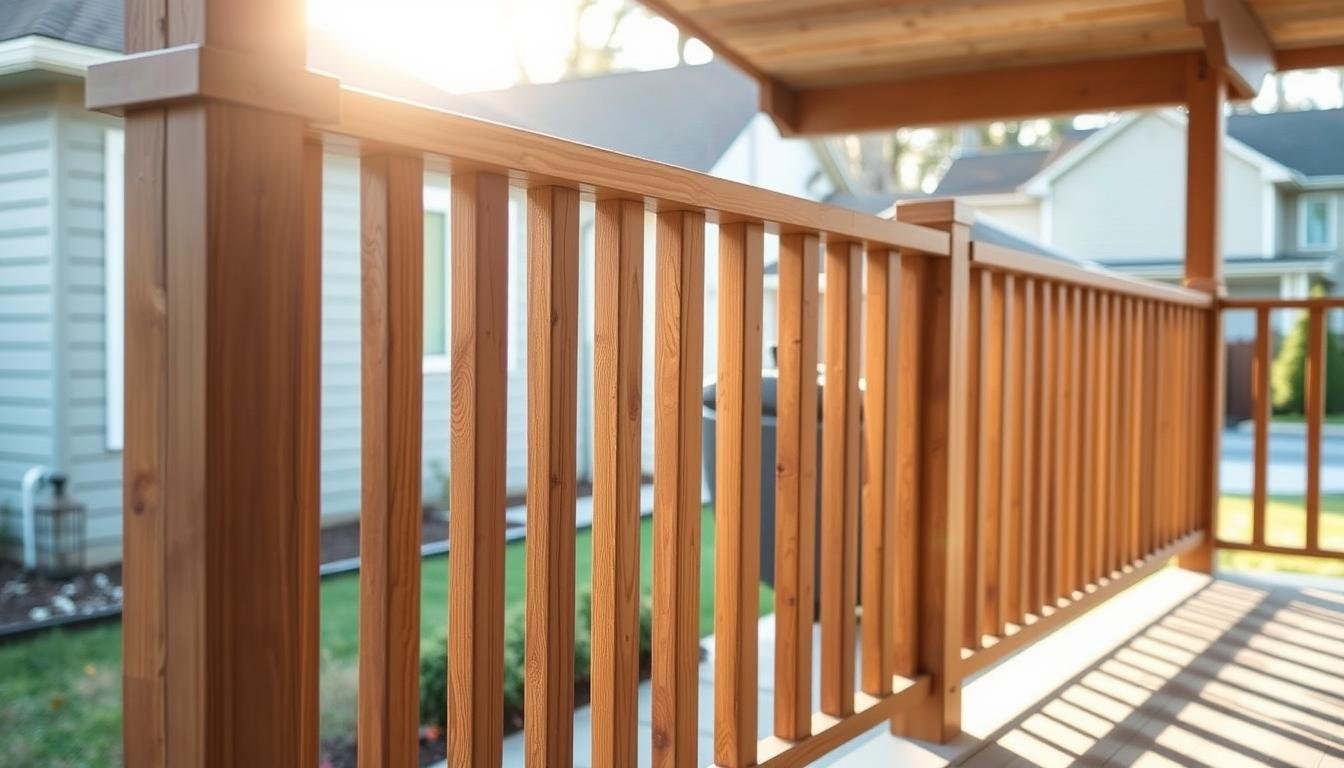
Starting a DIY project to build porch railing brings beauty and safety to your home. This guide will show you how to choose materials, get your tools ready, and make a strong railing. By doing this, you make the outside of your home more inviting and useful.
Key Takeaways
- There are 14 different tools required for building porch railing.
- You will need 30 pieces of various dimensions and types of treated lumber and cedar boards.
- 10 bags of 80-lb concrete mix are required for the project.
- Each baluster should have a width of 1-1/2 inches, with a total of 10-1/2 inches allocated for three balusters and four spaces.
- Posts should be set deep enough according to local climate and building codes, often requiring concrete footings that extend beneath the frost line.
Why Building Your Own Porch Railing Is a Great Idea
Starting a DIY home project like making your own porch railing has many porch railing benefits. It gives you pride and improves your home look and safety. You get to choose the design that fits your home perfectly. For example, a railing height of about 25 inches can keep your view clear, as tests have shown.
One big plus of doing it yourself is following building rules easily. If your porch is under 30 inches high, like 20 inches, you may not need a 36-inch railing. This lets you pick designs that match your windows, which are often 19 inches above the porch. Also, adding a hand railing for four or more steps is needed to follow building codes and make it safer.
Building your own porch railing saves you money too. Choosing affordable materials like new 2×4 lumber for parts and old deck boards for balusters lowers costs while keeping quality. Using cedar posts with waterproof glue and caulking adds strength and longevity.
| Height (inches) | Visual Impact | Meeting Code |
|---|---|---|
| 28 | Covered a little bit of the window | Not required (if porch is under 30 inches) |
| 25 | Preferred height, looked open | Not required (if porch is under 30 inches) |
| 36 | Obstructed the view out of the windows | Required for porches 30 inches and higher |
It’s important to install your railing well. Using right drilling, waterproof glue, and shimming stops water damage and makes it last. By handling every step, like cutting and painting balusters to fixing bottom rails, you ensure it looks good, is safe, and follows rules.
Tools and Materials You’ll Need
Making your own porch railing is rewarding and detailed. You need the right DIY tools and materials. Start with pressure-treated lumber because it’s strong and great for the outdoors. Most people use 4×4 or 6×6 inch posts. The 4×4 size is popular for its strength and easy handling.
For decks at homes, railings must be at least 36 inches high. Some places, like California and Washington, set this at 42 inches. Your cross rails should be 2×4 or 2×6 boards. A 2×6 is great for a cocktail rail top.
To cut slats accurately, a miter saw or table saw is key. A pocket-hole jig helps a lot for strong joints. Use stainless steel screws for a long-lasting build. If you’re near the sea, choose hot-dip galvanized screws to resist rust.
Safety is key; always wear glasses and gloves. Having a detailed plan and accurate measurements helps a lot. This ensures a smooth construction and a professional look.
- Pressure-treated lumber
- Miter saw or table saw
- Pocket-hole jig
- Stainless steel screws
- Safety glasses and gloves
- CAMO Marksman Pro Kit
| Tools & Supplies | Purpose |
|---|---|
| Pressure-treated lumber | Material for constructing posts and rails |
| Miter saw | Cutting wooden slats to precise lengths |
| Pocket-hole jig | Creating secure joints |
| Stainless steel screws | Fastening wooden components |
| Safety gear | Protective equipment for safe construction |
| CAMO Marksman Pro Kit | Enhances ease and speed in installation |
Using the necessary DIY tools and the right materials for porch railing construction helps make a strong, lasting, and beautiful railing. It will meet safety and building standards.
Planning Your Porch Railing Design
Creating a porch railing that is safe and looks good requires careful planning. Begin by choosing the right materials. Pressure-treated lumber is a common choice. However, it often needs to dry for a week or more because it’s usually wet when you buy it. Selecting the right kind of wood and treatment helps it stand up to the weather and stay attractive. This is essential in porch railing design.
Then, your plan should include the architecture of your house and how to make the railing sturdy. Decide if through-deck, surface-mounted, or fascia-mounted posts work best for your porch. Here’s a quick guide to the parts you’ll need and their sizes for a typical do-it-yourself railing:
| Component | Description | Dimensions |
|---|---|---|
| Large Slats (B) | Flat balusters, providing a modern aesthetic | 5-1/2 inches wide |
| Small Slats (C) | Smaller balusters for balanced spacing | 1-1/2 inches wide |
| Bottom Rail (E) | Base support for slats | Positioned 3-1/2 inches from post bottom |
| Cap (F) | Finishing top piece | 10-inch overhang included |
| Slat Rails (D) | Holds slats in place | Pocket holes drilled at ends |
Safety and following local building rules are also key in railing design. For safety, railings should be at least 36 inches tall. The space between slats should be less than 4 inches so kids can’t slip through. You can use a special jig to keep slat spaces even and aligned correctly.
To make your porch unique, add both useful and decorative elements. Using a Ryobi One+ 16-gauge nail gun makes the job easier and more mobile. Finish with two coats of outdoor enamel paint for extra durability and to make your home look great. With thoughtful design, your porch railing will be both secure and stylish, transforming the look of your home.
Step-by-Step Instructions for Building Porch Railing
Starting a DIY railing project can be easy. With the right tools and knowledge, you can make your porch safer and more beautiful. This porch railing guide will guide you.
First, collect all the tools and materials you need. Measure and cut your posts and rails. Make sure your deck railing posts are 6 to 8 feet apart for good support. Most people use 4×4 posts for their decks.
Fix each post with concrete footings to make them stable. After mounting the posts with stainless steel screws, attach the rails. You can use 2×4 or 2×6 boards for the rails, but 2×6 boards are better for a cocktail rail-style top.
Put in the balusters with a space of 4-1/2 inches between them. This follows safety rules that prevent openings bigger than 4 inches. Use a spirit level to ensure the rails are even. The railing must be at least 36 inches high from the deck.
If you want, add post caps and trim skirts. These parts protect the wood from water and bugs and make your porch look better. Finally, think about staining or painting the railing to protect it from weather and make it look nicer.
Below is a table that summarizes the main points:
| Component | Specifications |
|---|---|
| Minimum Railing Height | 36 inches |
| Common Post Spacing | 6 to 8 feet apart |
| Baluster Spacing | 4-1/2 inches |
| Standard Post Size | 4×4 inches |
| Rail Board Options | 2×4 or 2×6 boards |
| Preferred Screw Type | Stainless steel screws |
With these detailed steps and specifications, you’re ready to start your DIY railing project.
Tips for Finishing Touches
Making your porch railing aesthetic perfect is more than building. The final details really make your work stand out. Start by picking the right paint and stain for your railing. The calm gray and white paint chosen for this project looked great and protected against weather. Two coats of paint make sure your work lasts longer against the elements.
For DIY projects, think about adding cool touches like post caps or metal and glass pieces to make it better. Adding post caps and lights not only looks good but might also boost your home’s value by as much as 10%. Remember to put non-slip tape on each post to keep dirt off and prevent slipping.
Securing everything well is crucial for looks, safety, and lasting value. Use screws, not nails, for more stability, especially with treated wood for strength and handrails. Installing lights in your rails early can cut future electrical costs by about 20%. Materials like composite, aluminum, and PVC offer great durability despite different installation steps.
Details matter for your railing’s safety and strength, reducing accidents by 15%. Using strong braces for support and hiding screws can make it look even better. If you’re painting or staining, spend 30 minutes on each part for a consistent appearance. Good finishing practices take your porch railing from good to great.
Troubleshooting Common Issues
After installing your porch railing, you may see some common problems. It’s important to check your railing often. This helps it last longer and stay safe. A common issue is that screws or nails can get loose. To fix this, you need to tighten them. The writer used specific screws and nails for better stability. Make sure to regularly check these fasteners and tighten them if needed.
Wood damage like cracks or splits is another issue. This happens if the wood was not dry enough before being finished. You should wait about six months before sanding and priming, as recommended. Replace any split sections to keep your railing strong. When using pressure-treated wood, use specific screws to avoid damage.
Staining or fading from the sun can also happen. Use a weather-resistant stain once the wood is dry. Check often and reapply stain to keep your porch looking good. Having the right tools makes maintenance easier and helps your railing last longer.


