Your garden fence serves as more than a boundary—it’s a vertical design plane that can manipulate sight lines, control microclimates, and define spatial zones within your landscape. The height, material density, and pattern spacing you choose will directly impact wind flow, sun exposure, and privacy levels throughout your outdoor areas. Understanding these technical relationships between fence design and environmental factors lets you transform a functional barrier into a strategic element that shapes how you’ll experience every corner of your property.
Classic White Picket Fences
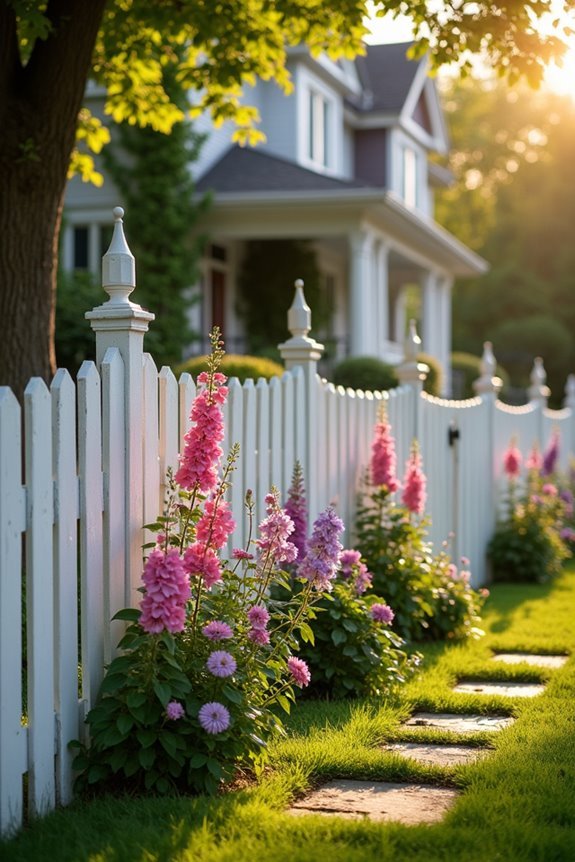
While modern materials tempt homeowners with low-maintenance promises, the classic white picket fence remains an enduring choice that defines property boundaries with unmistakable charm. You’ll find white fence styles ranging from traditional pointed tops to contemporary flat-cap designs, each affecting your garden’s visual weight differently. Standard picket spacing runs 2-3 inches apart, though you can adjust this based on your privacy requirements and aesthetic goals.
Picket fence maintenance demands attention—expect to repaint every 3-5 years depending on your climate exposure. You’ll need to inspect joints annually for moisture damage and tighten hardware as wood naturally expands and contracts. Position your fence 36-48 inches high for decorative borders, or extend to 60 inches when you’re establishing firmer boundaries. The fence’s vertical lines create excellent backdrops for layered plantings while maintaining accessible sightlines.
[affiai keyword=”white picket fences” template=”carousel” count=”3″]
Horizontal Slat Modern Design
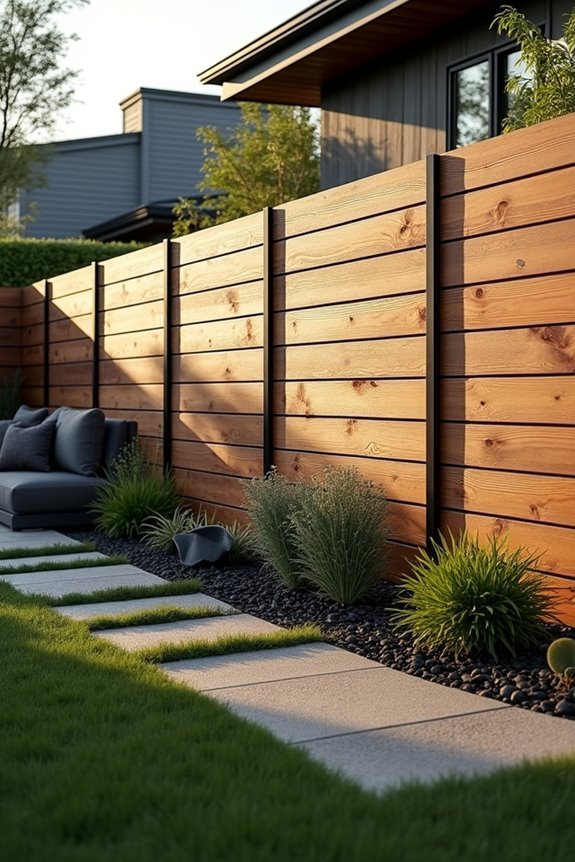
Horizontal slat fencing transforms vertical tradition into clean, contemporary lines that visually expand your garden’s perceived width. You’ll achieve maximum impact by selecting horizontal slat materials that complement your architecture—cedar weathers to elegant silver-gray, composite resists warping, and aluminum offers maintenance-free longevity.
Spacing determines privacy levels and shadow patterns. You can set slats 1-2 inches apart for filtered views or install them edge-to-edge for complete screening. Mount slats to robust vertical posts spaced 6-8 feet apart, ensuring structural integrity.
Horizontal slat finishes range from natural oil penetrants that showcase wood grain to powder-coated colors matching your home’s palette. Dark charcoal or black creates striking contrast against greenery, while lighter tones recede visually, making compact gardens feel more spacious.
[affiai keyword=”horizontal slat modern fence” template=”carousel” count=”3″]
Natural Bamboo Privacy Screen
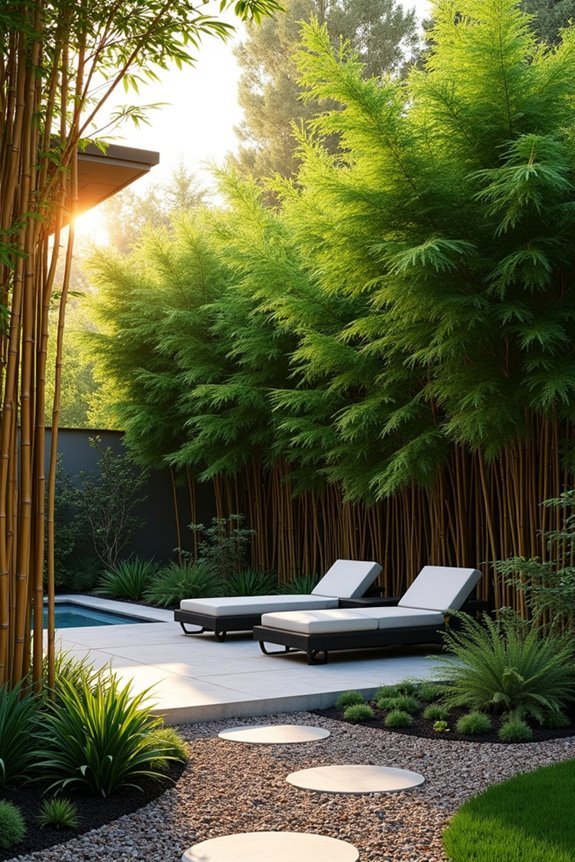
Because bamboo grows in dense vertical columns reaching 8-15 feet, you’ll create immediate privacy while maintaining an organic aesthetic that softens hard landscape edges. Install running bamboo varieties in reinforced HDPE barriers extending 24-30 inches deep to contain aggressive rhizome spread. Position screens 3-4 feet from property lines, allowing sufficient clearance for culm development and air circulation.
Privacy screen benefits include natural sound dampening, wind filtration, and year-round visual blocking without seasonal gaps. Your bamboo maintenance tips should prioritize annual thinning of older culms, removing dead foliage, and monitoring barrier integrity. Water newly established groves deeply twice weekly during establishment, then reduce to drought-tolerance levels. Apply slow-release nitrogen fertilizer in spring to maximize vertical growth and foliar density, ensuring peak screening performance throughout growing seasons.
[affiai keyword=”bamboo privacy screens” template=”carousel” count=”3″]
Rustic Split Rail Perimeter
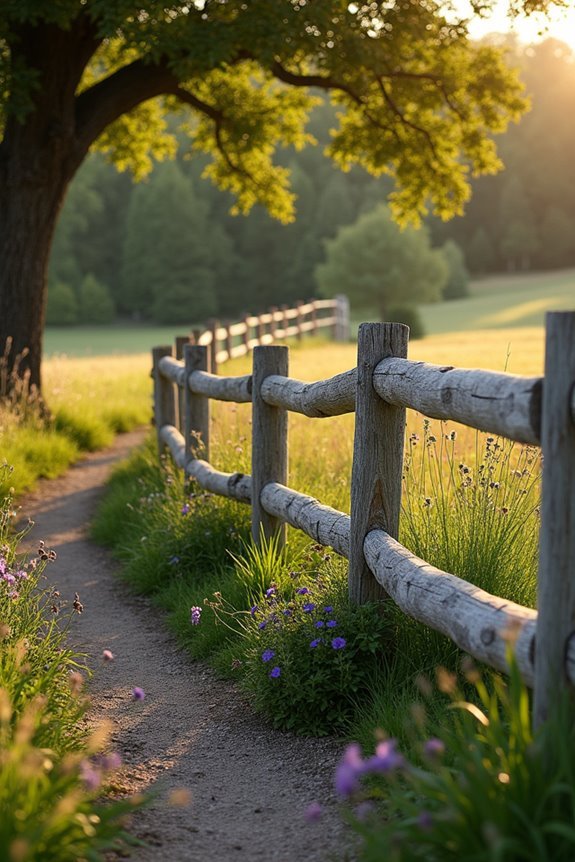
Split rail fencing establishes pastoral boundaries through horizontal timber members mortised into upright posts, creating open sightlines that preserve landscape views while marking property divisions. You’ll achieve rustic charm through cedar or locust rails that weather naturally to silvered gray tones, requiring no maintenance beyond occasional post stabilization. The two- or three-rail configuration demands precise mortise depth—typically 4-6 inches—to guarantee structural integrity across terrain variations. This permeable barrier integrates seamlessly with naturalistic plantings while deterring casual trespassing without creating visual obstruction. Your outdoor aesthetics benefit from the fence’s agricultural heritage, particularly effective when spanning meadow-style gardens or acreage perimeters. Consider 8-foot rail lengths with posts set 8-10 feet apart for ideal strength-to-material ratios, accommodating ground slopes through stepped post heights rather than angled rails.
[affiai keyword=”rustic split rail fencing” template=”carousel” count=”3″]
Decorative Metal Panel Borders
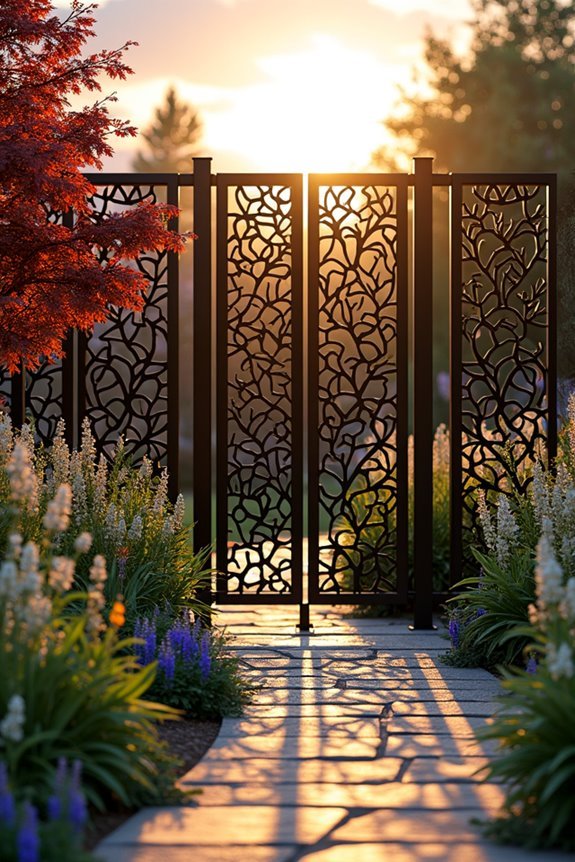
Laser-cut metal panels transform garden perimeters into architectural statements through geometric patterns, botanical motifs, or abstract compositions that filter light while defining spatial boundaries. You’ll find these panels available in powder-coated aluminum, weathering steel, or galvanized finishes that withstand environmental exposure while maintaining structural integrity. Install them as freestanding screens between posts spaced 4-6 feet apart, ensuring proper foundation depth of 24-30 inches for stability. The interplay between solid metal and negative space creates dynamic shadow patterns throughout the day, functioning as both decorative edging and focal points. Consider combining multiple panel designs to establish rhythm along your property line, or integrate them with complementary metal sculptures to develop cohesive visual narratives that elevate your garden’s aesthetic sophistication.
[affiai keyword=”decorative metal garden panels” template=”carousel” count=”3″]
Living Wall Vertical Garden
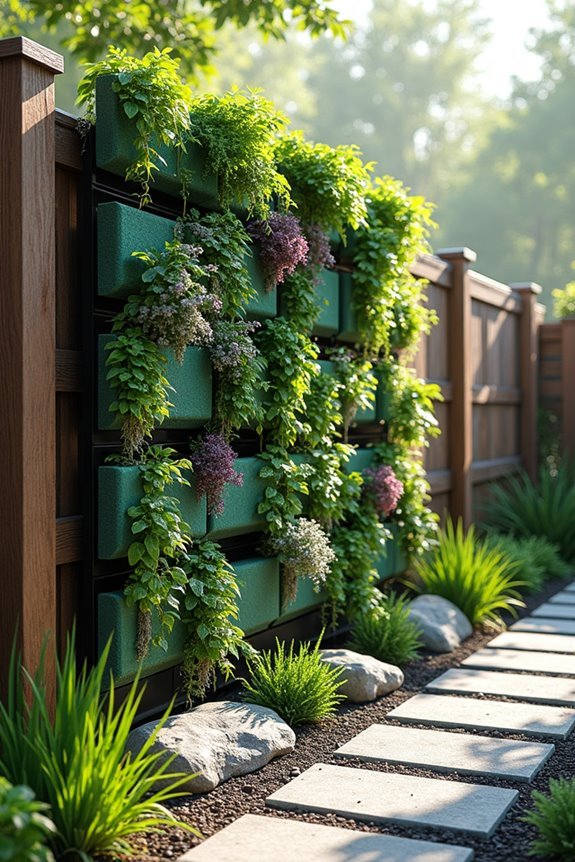
Vertical garden systems maximize spatial efficiency by transforming fence surfaces into three-dimensional planting zones through modular panels, pockets, or trellis frameworks that support vegetation at multiple elevations. You’ll achieve excellent space optimization by installing felt pocket systems, which accommodate diverse plant species while maintaining proper drainage through layered textile construction. Consider hydroponic wall units for controlled nutrient delivery and reduced maintenance intervals. These systems function similarly to indoor greenery installations but require weather-resistant materials and UV-stable components.
Select mounting hardware rated for your fence material’s load capacity—wooden fences need reinforced backing boards, while metal structures accept direct bracket attachment. Position drought-tolerant succulents in upper sections where irrigation reaches less frequently, reserving lower pockets for moisture-dependent herbs and ornamental varieties that benefit from gravitational water distribution.
[affiai keyword=”vertical garden wall systems” template=”carousel” count=”3″]
Woven Willow Branch Panels
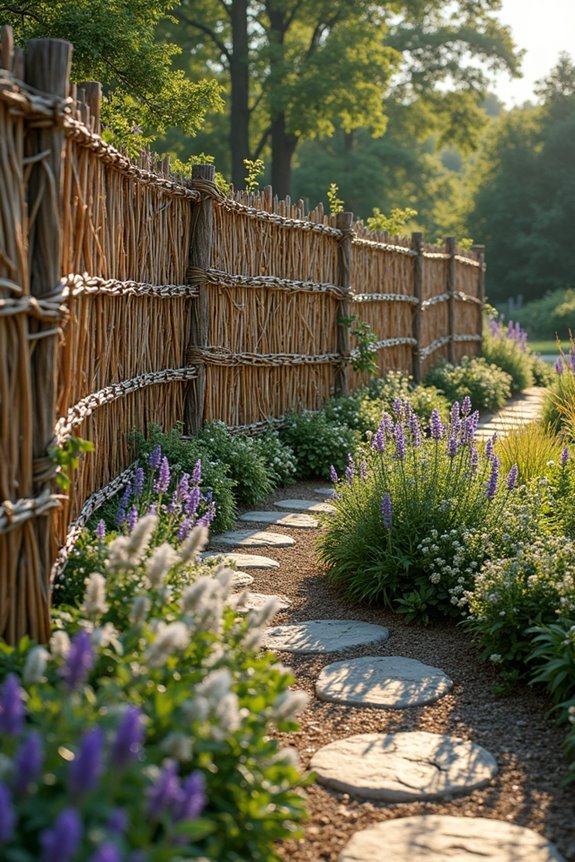
Traditional basketweaving techniques produce naturally flexible fence panels through interlaced willow withes that create semi-permeable barriers with organic textural depth. You’ll uncover woven willow benefits include exceptional wind filtration, natural biodegradability, and structural elasticity that withstands seasonal movement without rigid framework requirements. Install vertical stakes at 6-8 inch intervals, weaving horizontal willow rods in alternating over-under patterns to achieve 4-6 foot height variations.
Creative willow designs extend beyond standard horizontal weaves—you can execute diagonal herringbone configurations, diamond lattice formations, or curved undulating patterns that follow irregular property lines. The material’s inherent flexibility accommodates radius installations around garden beds or water features. Living willow constructions root when kept moist, transforming inert barriers into self-sustaining green screens that require annual coppicing for density management and continued structural integrity.
[affiai keyword=”woven willow fence panels” template=”carousel” count=”3″]
Stone and Wood Combination
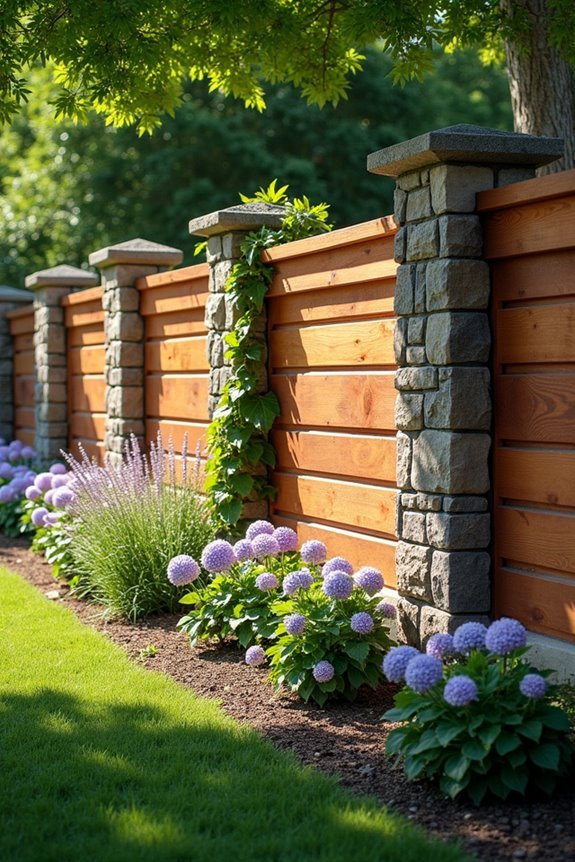
Hybrid stone-and-timber fencing systems combine mass-bearing masonry columns with infill wood sections, creating structural hierarchies that distribute lateral loads while introducing material contrast through textural variation. You’ll achieve maximum performance by specifying pressure-treated lumber or naturally rot-resistant species like cedar to maximize wood durability between stone posts. The masonry pillars—constructed from stacked fieldstone, cut granite, or formed concrete—provide permanent anchoring points that won’t deteriorate, while wooden panels remain replaceable components. This configuration lets you exploit stone aesthetics for vertical accents without committing to full masonry construction costs. Position posts at 6-8 foot intervals to prevent wood panel sagging. You can vary the stone-to-wood ratio depending on your budget, privacy requirements, and desired visual weight along property boundaries.
[affiai keyword=”stone and wood fencing” template=”carousel” count=”3″]
Corrugated Metal Industrial Style

Galvanized corrugated metal panels transform residential perimeters into bold architectural statements by introducing manufacturing-scale materials into domestic landscapes. You’ll achieve maximum visual impact by installing full-height sheets vertically, creating uninterrupted lines that emphasize your property’s vertical dimensions. The material’s inherent rigidity eliminates traditional framework requirements—you’ll need only minimal steel posts spaced 8-10 feet apart.
Corrugated metal’s reflective surface interacts dynamically with natural light throughout the day, producing shifting shadow patterns across your garden. You can specify custom powder-coating to integrate industrial design elements with your home’s existing palette, or maintain raw galvanization for authentic warehouse aesthetics. The corrugation depth—typically 2.67 inches—provides structural strength while creating dimensional texture that contrasts effectively against organic plantings and smooth hardscaping surfaces.
[affiai keyword=”corrugated metal panels” template=”carousel” count=”3″]
Colorful Painted Pallet Fence
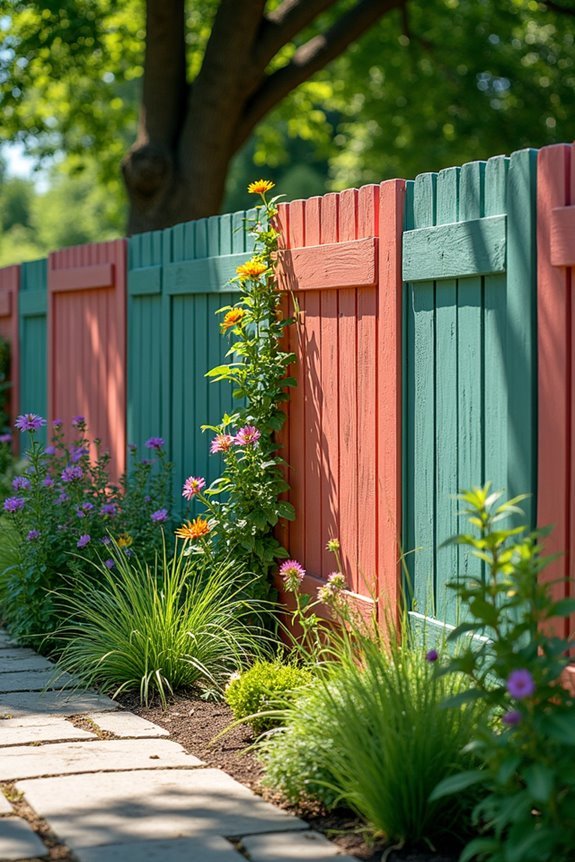
Reclaimed wooden pallets offer cost-effective fencing solutions when you’re working within budget constraints while prioritizing creative expression. You’ll need to disassemble pallets carefully, removing nails and checking for structural integrity before installation. Sand rough surfaces to prevent splinters while maintaining rustic charm.
Position vertical posts at 6-foot intervals, securing horizontal pallet boards with galvanized screws. Apply exterior-grade primer before painting to guarantee longevity. You can create painted patterns using geometric designs, alternating colors, or ombre effects that complement your garden’s aesthetic.
Consider these specifications: maintain 2-inch spacing between boards for air circulation, use weather-resistant paint with UV protection, and seal with polyurethane topcoat. This approach transforms discarded materials into distinctive boundary markers while reducing material costs by approximately 60%.
[affiai keyword=”pallet fence supplies” template=”carousel” count=”3″]
Glass Panel Contemporary Fence
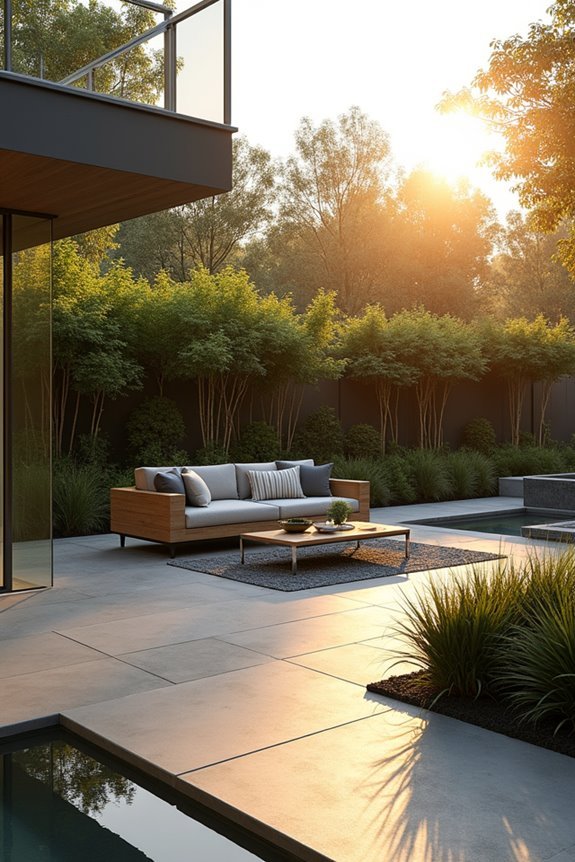
Transparent barriers revolutionize outdoor spaces by creating defined boundaries without visual obstruction. Glass panel designs deliver architectural sophistication while maximizing sightlines to gardens, pools, and landscapes beyond. You’ll achieve seamless integration between interior and exterior zones, particularly effective for compact yards where solid fencing creates claustrophobic conditions.
Install tempered or laminated safety glass within aluminum or stainless steel frames for structural integrity. Position panels using point-fixed systems or continuous channels, ensuring proper drainage to prevent water accumulation. UV-resistant sealants maintain weatherproofing between glass and framework.
Fence maintenance requires regular cleaning with non-abrasive solutions to preserve transparency. Remove mineral deposits promptly using diluted vinegar. Inspect mounting hardware quarterly for corrosion, particularly in coastal environments. Frame powder coating protects against oxidation while complementing contemporary aesthetics.
[affiai keyword=”glass panel contemporary fence” template=”carousel” count=”3″]
Lattice Trellis With Climbing Vines
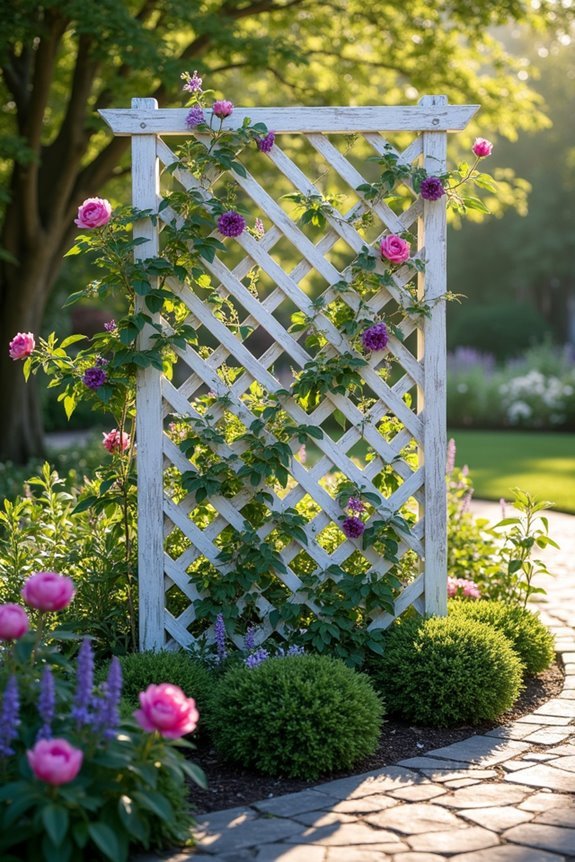
While glass panels emphasize transparency and minimalist aesthetics, lattice structures embrace organic integration by supporting vertical plant growth. You’ll create functional privacy screens through strategic placement of climbing plants like clematis, jasmine, or climbing roses. Install lattice panels with 2-4 inch spacing to optimize vine grip while maintaining structural integrity.
Vertical gardening transforms standard boundaries into living architecture. You’ll maximize limited ground space by directing growth upward, establishing green walls that filter noise and improve air quality. Consider your fence’s sun exposure when selecting climbing plants—south-facing installations accommodate heat-tolerant varieties, while shaded areas require woodland species.
Attach lattice sections 6-8 inches from primary fencing to guarantee adequate air circulation. This spacing prevents moisture retention and promotes healthy root development while creating dimensional depth.
[affiai keyword=”lattice trellis for climbing vines” template=”carousel” count=”3″]
Rope-Tied Nautical Border
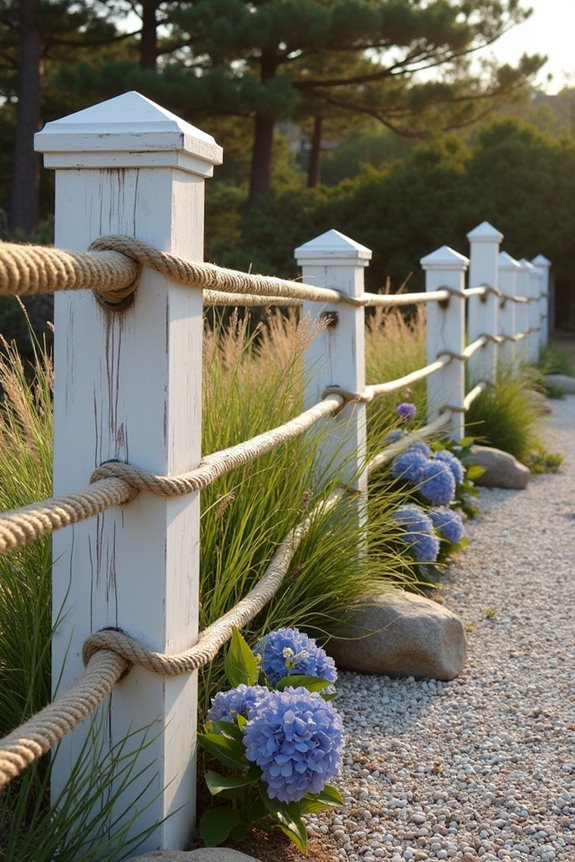
Nothing evokes coastal architecture quite like marine-grade rope installations that transform conventional fence posts into maritime focal points. You’ll achieve authentic nautical themes by selecting three-strand twisted Manila or synthetic polypropylene rope in 1.5 to 2-inch diameters. Install stainless steel eye bolts at 18-inch vertical intervals along your posts, threading rope horizontally to create clean, parallel lines. Tension matters—you’ll need proper rope decor with turnbuckles at terminal points to prevent sagging. For weatherproofing, apply marine varnish to natural fibers or choose UV-resistant synthetic alternatives. This design works exceptionally well in 36 to 48-inch fence heights, where the rope’s horizontal emphasis creates visual width. Pair with whitewashed posts and weathered wood accents to complete your coastal aesthetic.
[affiai keyword=”nautical rope fencing” template=”carousel” count=”3″]
Reclaimed Door Artistic Panels
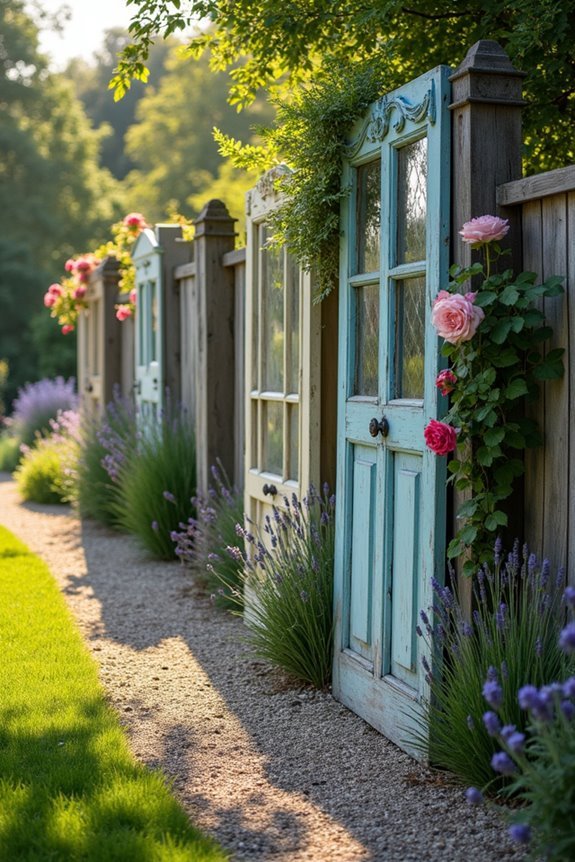
Architectural salvage transforms vintage doors into statement fence panels that command visual attention while solving privacy and boundary needs. You’ll achieve reclaimed creativity by selecting doors with matching heights but varied textures—weathered paint, carved details, or glass inserts create rhythm along your property line. Mount doors vertically on reinforced posts spaced according to each door’s width, typically 30-36 inches. Secure with heavy-duty hinges or through-bolts capable of supporting 50-80 pounds per panel.
Door transformations require structural assessment before installation. Strip loose paint, treat wood rot with epoxy consolidant, and seal all surfaces against moisture penetration. Position solid doors where privacy matters most, reserving glass-paneled varieties for areas requiring filtered light. This configuration balances enclosure with openness while maximizing each door’s architectural character.
[affiai keyword=”reclaimed doors for fences” template=”carousel” count=”3″]
Gabion Wire Mesh Walls
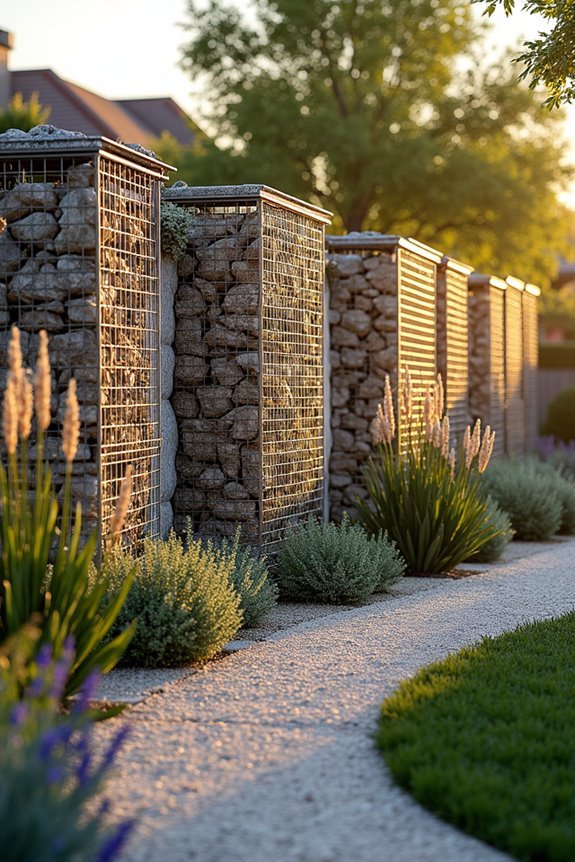
When budget constraints meet contemporary design ambitions, gabion walls deliver industrial elegance through wire-enclosed stone or recycled materials. You’ll appreciate how gabion wire cages transform ordinary rocks into structural art, creating dimensional boundaries that double as retaining walls. The mesh durability withstands harsh weather while allowing water drainage—essential for sloped properties.
Consider filling your cages with locally sourced fieldstone for regional authenticity, or opt for glass chunks and colored aggregates for artistic expression. You’ll need 4mm galvanized or PVC-coated wire for longevity, with cage depths ranging from 6-12 inches depending on wall height. Stack units horizontally for privacy screens or vertically for terraced gardens. The modular construction lets you install sections progressively, spreading costs across seasons while achieving professional results.
[affiai keyword=”gabion wire mesh walls” template=”carousel” count=”3″]