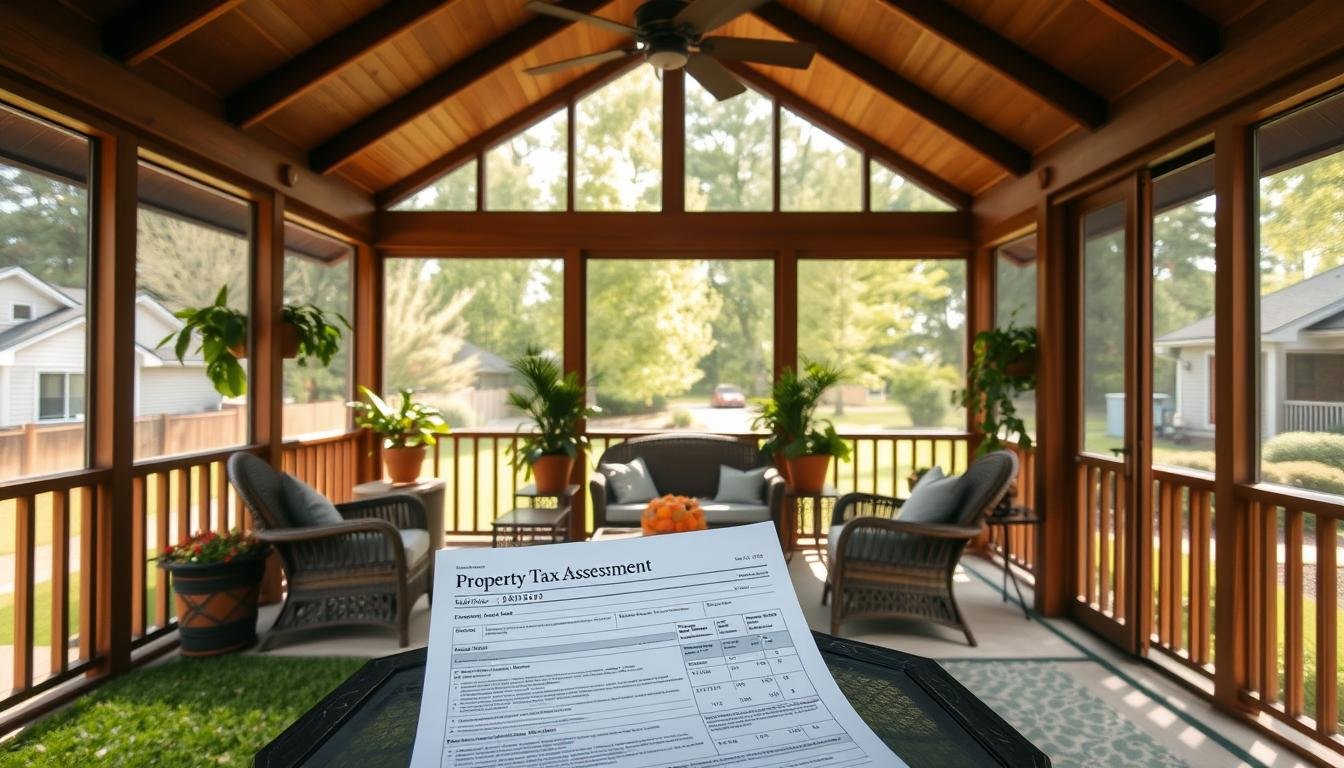
Thinking about adding a screened-in porch to your house? It can make your living space better, but it’s key to know how it might affect your property tax. The value it brings to your house, the tax rates in your area, and rules about home upgrades affect if your taxes will go up. In general, the screened-in porch’s quality, use, and look could significantly influence your property taxes.
Key Takeaways
- Four-season rooms are treated as full additions and may lead to a noticeable tax increase.
- Screened-in patios may have little to no effect on property taxes since they often don’t significantly alter home usability or footprint.
- Local tax laws vary by state and county, influencing the tax impact of adding a screened-in porch.
- Larger patio enclosures generally result in higher property taxes.
- Integrating the porch with the main HVAC system can classify it as a full addition, affecting tax rates.
Understanding Property Taxes and Home Improvements
Thinking about making changes to your home? It’s important to know how these could change your property taxes. Property taxes depend on your home’s value, which considers its size, location, and shape. Knowing about these can help you avoid surprises on your next tax bill.
Renovating your home can affect your taxes. Adding something big, like a porch, can make your home’s value go up. This means your property taxes might increase, especially with large additions.
Where you live also affects your taxes. Tax rates can change to meet local budget needs. Having the right advice can help you understand how renovations affect your taxes in different markets.
What kind of project you choose matters too. Big projects, like adding a room, can raise your home’s value and taxes. But smaller updates, like painting, usually don’t have the same effect. Getting the right permits is important to ensure your tax bill is correct.
Here’s a breakdown of costs for adding or updating a screened-in porch:
| Type of Improvement | Cost Range (per sq ft) |
|---|---|
| Building a new screened-in porch | $25 to $120 |
| Screening an existing porch | Around $2,000 |
| Concrete flooring | $4 to $8 |
| Aluminum screens | $5 to $7 |
| Fiberglass screens | $4 to $5.50 |
| Exotic hardwood and luxury stone flooring | $11 to $20 |
Knowing these costs helps you plan smarter renovations. A good project can make your home nicer and manage tax impacts well.
The Role of Screened-In Porches in Property Valuation
Adding a screened-in porch boosts your property’s look and use, raising its value. It’s a smart move whether you’re upgrading an existing porch or building a new one. This change can greatly increase your home’s home improvement value and market price.
Screening an existing porch costs about $2,000 to $5,000, which is roughly $10 to $25 per square foot. Building a new one can cost between $10,000 and $35,000. That’s about $50 to $175 per square foot. These costs directly increase your screened-in porch’s value, making your home more attractive on the market.
The quality of construction, materials, and design are key to the home improvement value. Extras like high-end screens, outdoor fireplaces, or ceiling fans raise the screened-in porch value even more.
| Cost Factor | Price Range |
|---|---|
| Screening Existing Porch | $2,000 – $5,000 |
| Building New Screened-In Porch | $10,000 – $35,000 |
| Labor Costs | $4 – $60 per sq ft |
| Permit Costs | $200 – $500 |
| Materials Cost | $0.20 – $3.00 per sq ft |
| Annual ROI | 80% – 100% |
A nicely designed screened-in porch adds comfort and real value to your home. This makes the initial cost worth it for your property’s value. Such improvements can lead to better real estate offers, making your home more appealing to buyers.
Your Local Tax Laws: What You Should Know
Before you add a screened-in porch, learn about local tax regulations. Home improvement rules and property tax laws differ widely by area. They can majorly affect what you pay in taxes. For example, a “homestead” exemption can save you taxes on part of your home’s value.
It’s key to know how a new porch might hike your taxes. Home values can change due to location, size, and improvements. So, a $10,000 improvement might mean you’ll pay more taxes over time.
Adding a porch can also up your home’s base cost. This matters because it can lower the taxes you owe when you sell. The IRS sees such additions as boosts that make your home worth more.
Understanding local tax regulations is very important. Sadly, many folks pay too much tax because they don’t challenge their home’s set tax value. Knowing your area’s tax laws can save you from unexpected costs. It can also help you use any tax breaks fully.
Here’s a brief look at what might change your property taxes and home improvements:
| Factor | Impact | Example |
|---|---|---|
| Location | High | Urban vs. Rural Areas |
| Square Footage | Medium | Larger Homes |
| Zoning Restrictions | Variable | Residential vs. Commercial |
| Improvements | High | Screened-In Porches |
Getting to know home improvement regulations in your area is smart. Capital improvements not only raise your home’s value. They also extend its life or make it fit for new purposes. This affects your home’s adjusted cost basis.
Potential Tax Implications of Adding a Screened-In Porch
When thinking about making changes to your home, it’s key to know the tax implications home renovations may have. Adding a screened-in porch can make your home more enjoyable. But, it’s also smart to think about how it might affect your taxes in the future.
In places like New Jersey, adding onto your home could mean your property’s value gets reassessed. Adding a screened-in porch might increase your home’s market value quite a bit. For instance, a porch could add as much value as $30,000, similar to an extra bathroom. This boost depends on your area’s tax laws and how they assess property value.
Understanding how these assessments work is critical. Adding something like a porch is seen as a home improvement, which can raise your property’s assessed value. This usually means your property taxes might go up because of the increased value. For example, a simple $15,000 deck could make your property taxes rise. Meanwhile, spending over $100,000 on fancy patios could hike up your taxes even more.
Including the tax implications home renovations in your planning is very important. Building codes and tax rules can vary greatly in different parts of New Jersey. So, talking to local assessors or tax professionals can give you a better idea of how your taxes might change. By knowing these potential adding porch tax effects early, you can avoid surprises later.
Benefits of a Screened-In Porch Beyond Taxes
Adding a screened-in porch to your home does more than affect taxes. It creates a wonderful outdoor living space that’s protected. Here, you can enjoy being outside without worrying about the weather. This means you can breathe in fresh air, have friends over, or enjoy a quiet read, no matter if it’s sunny or raining.
A screened-in porch also boosts your home’s value a lot. It’s appealing to those looking to buy, making your home stand out. With its attractiveness, you’re likely to see a good return on investment thanks to its appeal.
Here’s what it might cost to add a sunroom to different parts of your home:
| Conversion Type | Cost Range |
|---|---|
| Porch to Sunroom | $8,000 to $50,000 |
| Balcony to Sunroom | $10,000 to $50,000 |
| Deck to Sunroom | $20,000 to $100,000 |
| Patio to Sunroom | $20,000 to $100,000 |
Investing in a screened-in porch means more than just adding space. It brings indoor comfort to the beauty of outdoor living. Whether for chilling, eating, or having fun, a screened-in porch’s advantages are many. It’s a smart move for any homeowner wanting to enhance their home’s appeal and value.
Preparing for a Property Tax Assessment
When preparing for tax assessment, especially after adding a screened-in porch, make sure you have all permits. Having the right documents shows the value the porch adds. This detail is important for your tax evaluation.
Knowing your area’s zoning laws is key, as they affect your taxes. The Township of Dennis, for instance, has specific rules for buildings. These rules ensure the land and open spaces keep their value. So, a new porch might change your tax amount.
Having a full property tax evaluation is smart. It shows how things like building height affect your taxes. Local rules about things like how dense buildings can be are important too.
Follow these tax assessment tips:
- Keep your permits and documents up to date.
- Record all improvements you make to your property.
- Look into local zoning laws to see their effect on taxes.
- Challenge any tax amounts that seem too high.
By using these tips, you can better handle tax increases or even challenge high valuations. Being ready for your tax assessment makes the process easier.
Tips for Reducing Property Tax Increases
Adding things like a screened-in porch can make your property taxes go up. But, there are ways to handle these increases. Start by learning about tax breaks or deductions you can get for home improvements. Many places offer tax-saving options for homeowners, like rebates for making your home more energy-efficient.
Talking to a tax expert is really important. They can give you advice that fits your exact needs and where you live. Home improvement tax tips can be different based on your location. For instance, some areas have special tax breaks or deductions for making your home better, such as adding energy-efficient features.
Also, keep detailed records of all your building costs and work. This information is very useful when it’s time for your property to be assessed for taxes. Another important thing is to stay aware of changes in local tax laws. By knowing about new laws, like the Taxpayer Certainty and Disaster Tax Relief Act, you can better handle the costs related to improving your home.