You don’t need to sacrifice your deck’s open-air appeal to achieve effective shade coverage. The right overhead structure transforms your outdoor space into a functional room while maintaining proper ventilation and natural light flow. Whether you’re working with 120 square feet or 400, understanding how different shade systems interact with your deck’s dimensions and sun exposure patterns will determine which of these thirteen solutions best addresses your specific site conditions.
Retractable Awnings for Flexibility
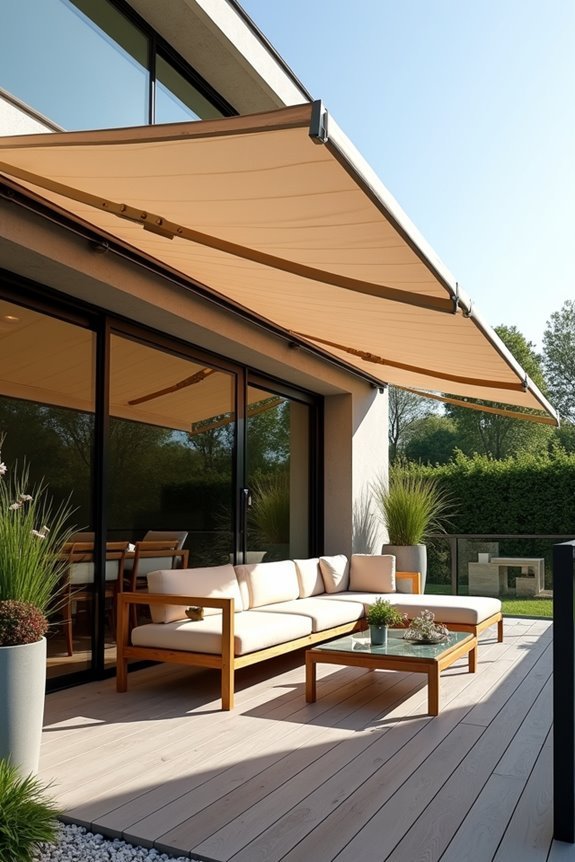
When you need shade coverage that adapts to changing sun angles and weather conditions throughout the day, retractable awnings deliver precise environmental control for your deck. These systems extend up to 14 feet from your house, creating dynamic shade zones that you’ll adjust based on solar positioning. Motorized options integrate with smart home systems, allowing you to program extension schedules or respond to wind sensors that automatically retract the fabric during storms. Custom designs accommodate irregular deck geometries, including angled walls and projecting rooflines that complicate standard installations. Fabric selections range from light-filtering mesh that maintains visibility to opaque materials blocking 98% of UV radiation. Installation requires secure mounting to structural framing members, not just exterior cladding, ensuring the cantilever forces don’t compromise your home’s envelope.
[affiai keyword=”retractable awnings for decks” template=”carousel” count=”3″]
Pergolas With Climbing Vines
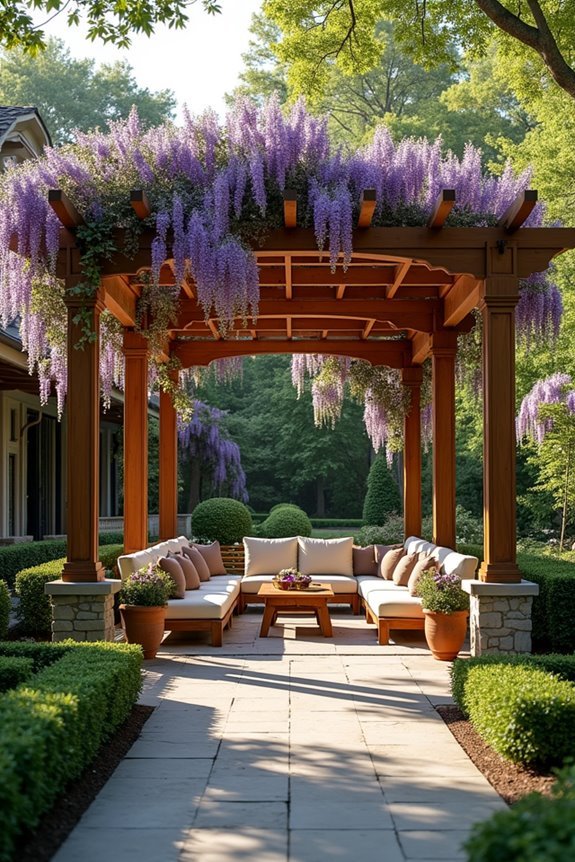
By combining structural geometry with biological growth patterns, pergolas establish semi-permanent shade frameworks that you’ll customize through strategic vine selection and training techniques. Your pergola design determines coverage density—rafters spaced 12-16 inches create denser shade than 24-inch intervals, while orientation controls sun exposure throughout the day.
Climbing plant choices directly impact maintenance requirements and aesthetic outcomes. Wisteria delivers spectacular spring blooms but demands aggressive pruning. Grape vines provide edible yields with moderate upkeep. Clematis offers varied bloom times across cultivars. Boston ivy creates dense coverage rapidly but requires containment.
Install guide wires or vertical supports between posts and overhead beams to direct growth patterns. You’ll achieve 70-90% shade coverage within two growing seasons using vigorous species, establishing natural cooling that reduces surface temperatures by 15-20 degrees.
[affiai keyword=”pergola with climbing vines” template=”carousel” count=”3″]
Sail Shade Canopy Systems
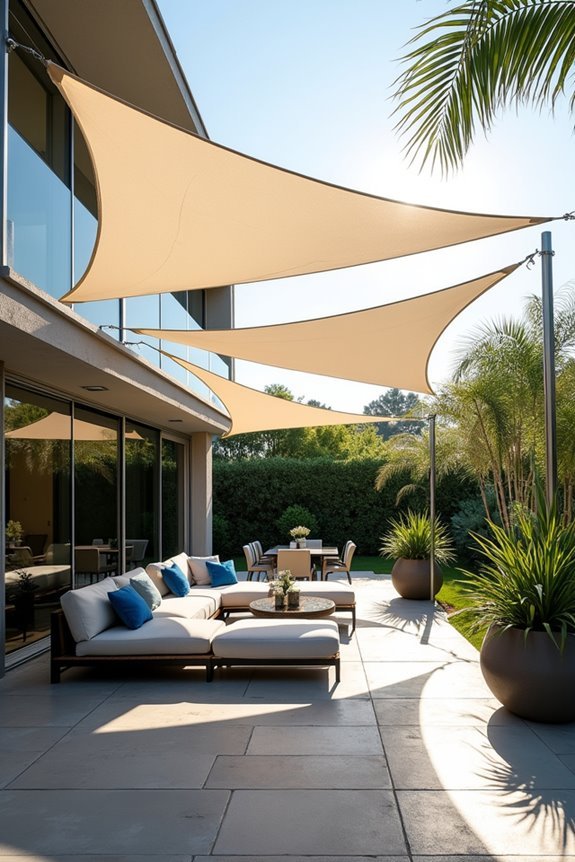
Tensioned fabric geometries transform deck spaces through engineered shade solutions that combine architectural impact with thermal performance. You’ll achieve UV protection exceeding 95% while creating dynamic visual elements that adapt to your spatial requirements. Sail shade benefits include versatile mounting configurations, superior airflow beneath the canopy, and dramatic shadow patterns that shift throughout the day.
Sail shade materials determine longevity and performance metrics. High-density polyethylene fabrics withstand sustained tension loads while resisting degradation from ultraviolet exposure. You’ll select between waterproof PVC-coated textiles for complete rain protection or breathable knitted weaves that permit moisture evaporation. Installation requires precise anchor point calculations—tensioned corners distribute forces across structural members. Configure triangular, square, or overlapping formations to maximize coverage while maintaining adequate pitch for water runoff and ideal fabric tension.
[affiai keyword=”sail shade canopy systems” template=”carousel” count=”3″]
Umbrella and Parasol Options
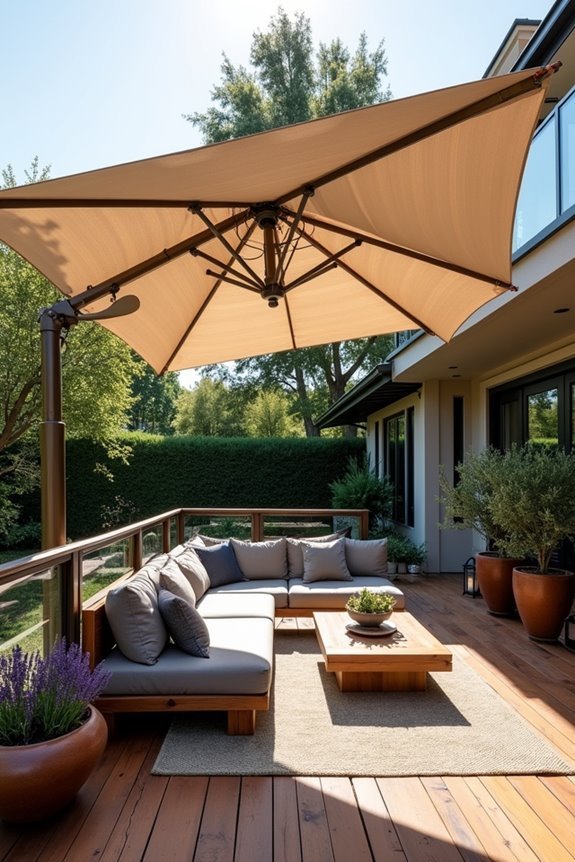
Because vertical clearance and repositioning flexibility define practical shade deployment, freestanding umbrella systems deliver immediate coverage without permanent structural modifications to your deck. Market-grade cantilever models extend 9-13 feet from their weighted bases, enabling strategic placement beyond furniture clusters. Choose umbrella materials rated for UV resistance—solution-dyed acrylic fabrics withstand 1,500+ hours of sun exposure while maintaining structural integrity. Aluminum frames with powder-coated finishes resist coastal corrosion better than wooden ribs. You’ll find parasol colors ranging from neutral grays that deflect heat to saturated terra cottas that complement natural wood decking. Tilt mechanisms allow 45-degree angle adjustments, tracking solar movement throughout the day. Base weights require minimum 75-pound anchoring for 9-foot canopies, scaling proportionally with diameter to prevent wind displacement.
[affiai keyword=”outdoor umbrellas and parasols” template=”carousel” count=”3″]
Built-In Roof Extensions

Permanent roof extensions transform deck perimeters into climate-controlled zones through structural integration with your home’s existing architecture. You’ll need to match roof materials precisely—asphalt shingles, metal panels, or standing seam systems—to maintain visual continuity with your primary structure.
Extension styles range from flat overhangs to pitched configurations. Flat designs create modern profiles but require proper drainage planning. Gabled extensions offer traditional aesthetics while directing water away efficiently. Hip roof additions provide multi-directional coverage, ideal for L-shaped decks.
Consider structural loading requirements: beams must support snow accumulation and wind forces. Attach ledger boards directly to house framing, not just siding. Install flashing where extensions meet existing walls to prevent moisture infiltration. These permanent solutions add property value while creating year-round outdoor functionality.
[affiai keyword=”roof extensions for decks” template=”carousel” count=”3″]
Curtains and Outdoor Drapes
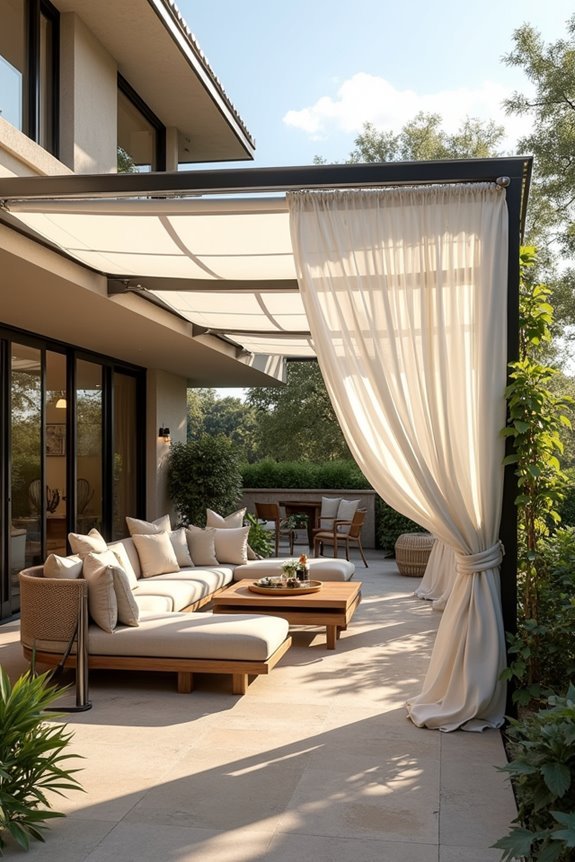
Outdoor drapes introduce flexible shade control through fabric panels mounted on overhead tracks or rods. You’ll position these systems along pergola beams or beneath covered deck areas, creating adjustable sun barriers that complement your outdoor color schemes while maintaining sight lines when retracted.
Select solution-dyed acrylic fabrics that resist UV degradation and moisture absorption. These materials won’t fade or mildew like conventional textiles, eliminating constant fabric maintenance concerns. Install stainless steel hardware with corrosion-resistant finishes to withstand environmental exposure.
Configure curtain placement based on solar orientation—position panels on south and west exposures for maximum heat reduction. You can layer sheer and opaque fabrics to adjust light filtration throughout the day. Integrate tie-backs at strategic intervals to secure panels during windy conditions, preventing damage while maintaining your desired shade coverage.
[affiai keyword=”outdoor patio drapery” template=”carousel” count=”3″]
Lattice Panels With Greenery
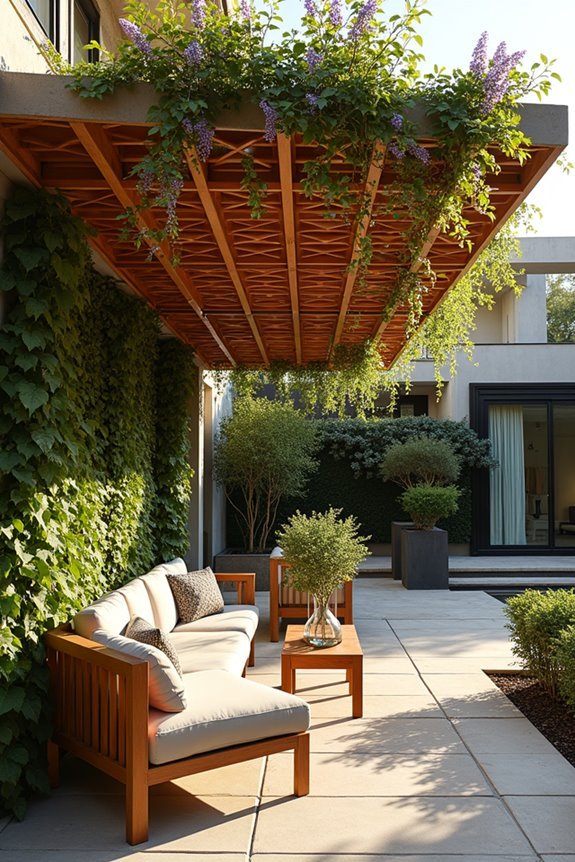
When you integrate lattice panels with climbing plants, you’ll create a living shade system that provides thermal regulation through evapotranspiration while establishing vertical green architecture. Strategic placement of lattice designs optimizes solar control—position panels on western and southern exposures where heat gain demands mitigation. Select climbing plants based on growth rate and canopy density: wisteria delivers robust coverage, jasmine provides fragrance with moderate shade, and Boston ivy guarantees seasonal variation. Engineered lattice spacing determines light filtration percentages—tighter grids create denser shade patterns. Install pressure-treated frameworks with rust-resistant fasteners to support substantial plant weight. You’ll need irrigation integration for sustained growth and maintenance access pathways. This approach transforms static shade structures into dynamic environmental systems that improve air quality while reducing ambient temperatures by 10-15 degrees.
[affiai keyword=”lattice panels with climbing plants” template=”carousel” count=”3″]
Louvered Roof Shade Systems
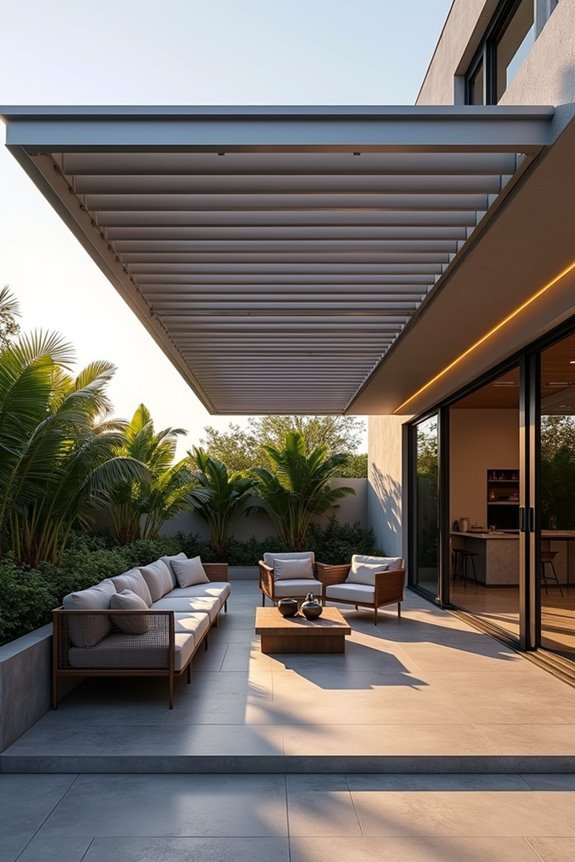
How do adjustable aluminum louvers transform static overhead coverage into precision-engineered climate control? You’ll rotate individual slats from 0 to 90 degrees, modulating sunlight penetration and airflow with mechanical exactness. When closed, interlocking blades create weatherproof barriers; at intermediate angles, they diffuse harsh rays while maintaining visual connection to sky planes above.
Louvered roof benefits extend beyond shade manipulation—integrated drainage channels route rainfall away from your deck’s perimeter, while motorized systems respond to wind sensors automatically. You’re investing in architectural permanence that requires minimal intervention.
Following louvered roof maintenance tips guarantees longevity: quarterly hinge lubrication, annual track debris removal, and periodic fastener inspection. Powder-coated finishes resist corrosion in coastal environments, while structural aluminum frames support snow loads exceeding conventional fabric alternatives.
[affiai keyword=”adjustable aluminum louvered roof” template=”carousel” count=”3″]
Bamboo Roll-Up Shade Screens
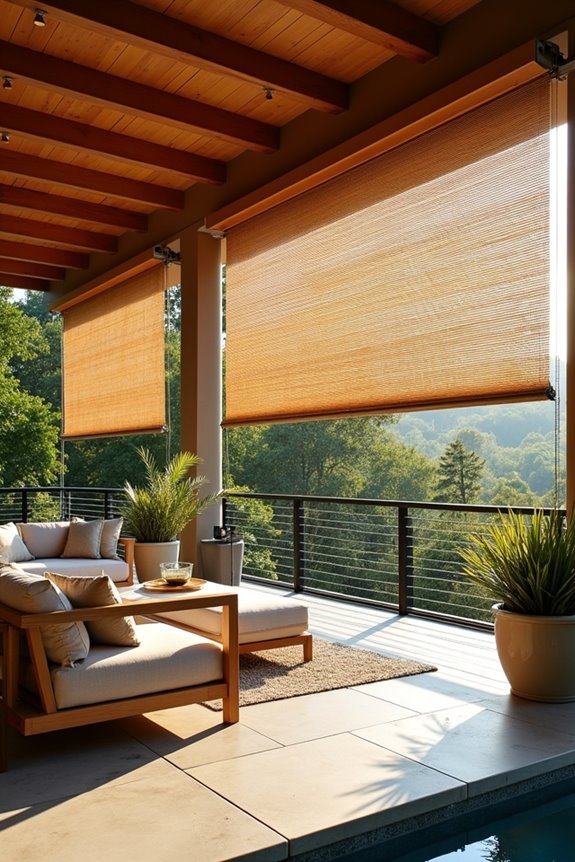
Natural bamboo slats suspended in vertical planes provide UV filtration while maintaining horizontal sightlines across your deck’s perimeter. You’ll appreciate bamboo material benefits including natural rot resistance, dimensional stability across temperature fluctuations, and inherent strength-to-weight ratios exceeding conventional wood alternatives.
Mount the roll-up mechanisms to overhead beams or fascia boards using corrosion-resistant hardware rated for your region’s wind loads. Follow roll up installation tips by positioning pulleys at 24-inch intervals to prevent binding during operation. Tension the bottom rail with weighted bars to eliminate flutter in moderate winds.
The slats’ spacing determines your privacy gradient—select 1/4-inch gaps for maximum screening or 1/2-inch intervals for enhanced airflow. Maintain bamboo screens by applying penetrating oil sealants annually to preserve their golden patina and structural integrity.
[affiai keyword=”bamboo roll up shades” template=”carousel” count=”3″]
Freestanding Gazebo Shade Structures
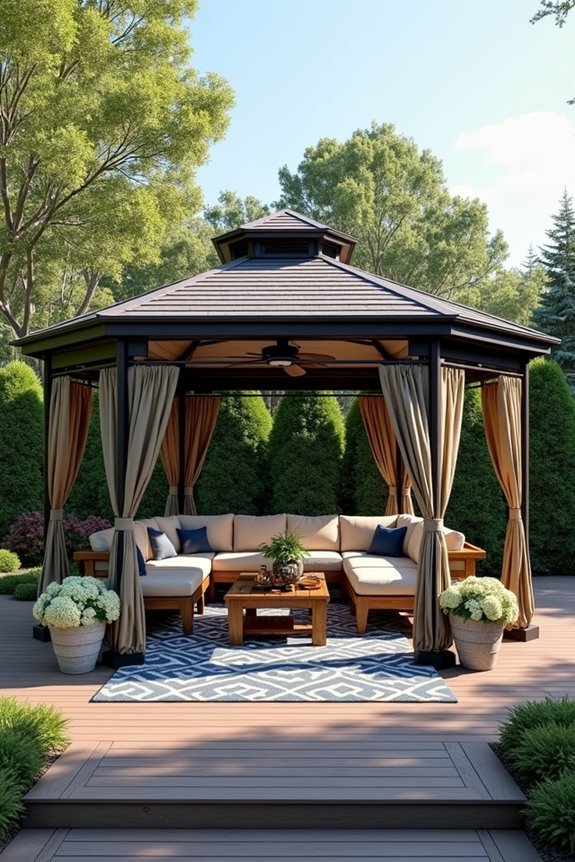
Architectural permanence distinguishes gazebos from temporary shade solutions—these standalone structures anchor your deck’s design while delivering 100% overhead coverage within their footprint. You’ll find freestanding styles ranging from traditional octagonal pavilions to contemporary rectangular frameworks, each establishing a defined outdoor room.
Gazebo designs typically incorporate solid roofing materials—metal, shingles, or polycarbonate panels—providing superior weather protection compared to fabric alternatives. When selecting a structure, you’ll need to account for your deck’s load-bearing capacity, as these installations add significant weight. Position your gazebo strategically to maximize coverage during peak sun hours while maintaining traffic flow around seating areas. Many municipalities classify permanent gazebos as structures requiring building permits, so verify local regulations before installation. Consider integrated lighting, ceiling fans, and weatherproof electrical outlets during the planning phase.
[affiai keyword=”freestanding gazebo shade structures” template=”carousel” count=”3″]
Shade Trees and Landscaping

While built structures offer immediate shade, strategically planted trees create evolving canopy coverage that appreciates in value and effectiveness over time. You’ll need to evaluate shade compatibility with your deck’s orientation—southern and western exposures demand species with dense foliage, while eastern placements allow lighter canopies.
Tree placement requires precise spatial calculations. Position deciduous varieties 15-25 feet from deck perimeters, accounting for mature crown spread and root systems that won’t compromise structural foundations. Fast-growing options like red maples provide coverage within 5-7 years, whereas slower oaks deliver superior longevity.
Consider layered plantings: tall canopy trees for overhead protection, understory specimens for filtered light, and strategic shrubs to block low-angle sun. You’re designing a living architecture that transforms seasonal light patterns while enhancing property value.
[affiai keyword=”shade trees for landscaping” template=”carousel” count=”3″]
Cantilevered Offset Shade Umbrellas
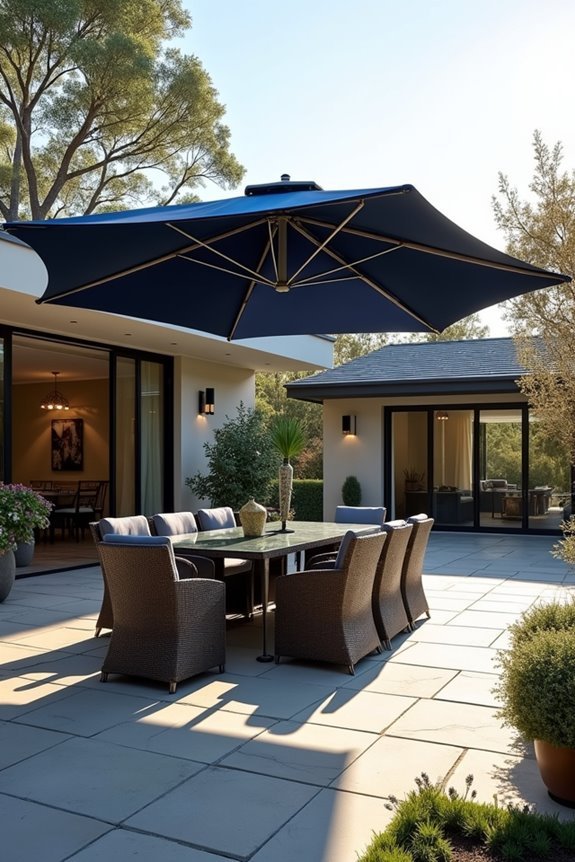
For maximum deck surface flexibility, cantilevered offset umbrellas position their support poles outside the coverage zone, liberating your furniture arrangement from the constraints of center-pole obstruction. The cantilevered design employs a horizontal arm extending from a side-mounted base, creating uninterrupted shade coverage that you’ll position precisely where needed. This offset functionality proves essential when shading dining sets, lounge areas, or poolside furniture without compromising sightlines or movement patterns.
You’ll find models offering 360-degree rotation and multi-angle tilt mechanisms, enabling you to track the sun’s movement throughout the day. The weighted bases—typically requiring 75-150 pounds of ballast—anchor these structures against wind loads. Premium units feature marine-grade fabrics with UV protection ratings, aluminum frames with powder-coat finishes, and crank-operated deployment systems for effortless adjustment.
[affiai keyword=”offset patio umbrellas” template=”carousel” count=”3″]
Tension Fabric Shade Structures
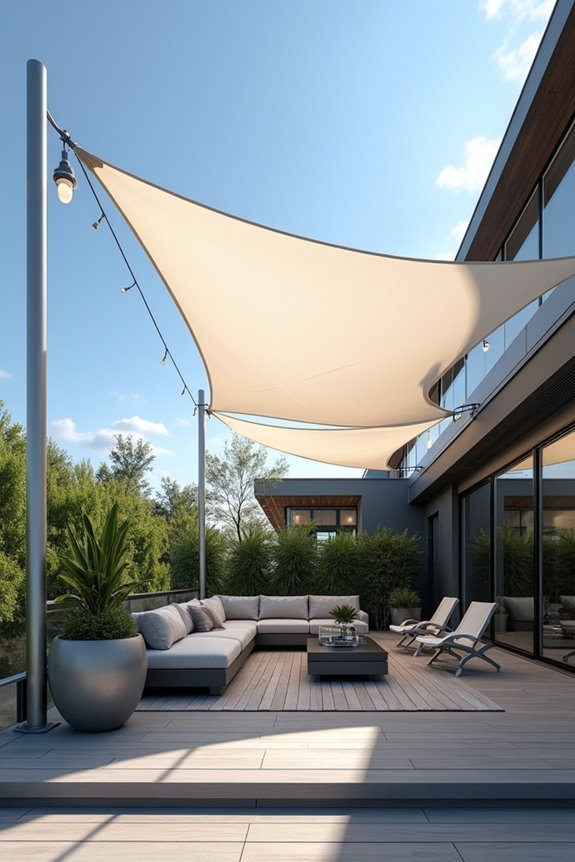
Tension fabric shade structures transform deck environments through engineered membrane systems that suspend UV-resistant textiles between strategic anchor points, creating sculptural canopies with superior coverage-to-material ratios. You’ll achieve optimal performance through precise fabric tension design, which eliminates water pooling while maintaining structural integrity during wind events. These artistic shade solutions integrate seamlessly with contemporary architecture, offering customizable geometries from hyperbolic paraboloids to planar configurations.
Install mounting hardware at calculated heights and intervals to generate intended fabric curves and load distribution. Select high-performance textiles rated for 90-95% UV blockage, with reinforced perimeter hems and stainless steel attachment grommets. The tensioned membrane principle maximizes shaded area while minimizing support structures, creating open, flowing spaces that enhance your deck’s aesthetic sophistication and functional efficiency.
[affiai keyword=”tension fabric shade structures” template=”carousel” count=”3″]