Your outdoor boundaries could use a refresh, and you’re facing more than just a simple weekend project. You’ll need to balance material durability with architectural impact while considering load-bearing requirements, post spacing, and local zoning restrictions. Whether you’re working with pressure-treated lumber, galvanized metal panels, or natural stone aggregates, each design demands specific installation techniques and structural calculations. The right combination of materials and methodology will transform your property line into something that actually matters.
Modern Horizontal Slat Fences
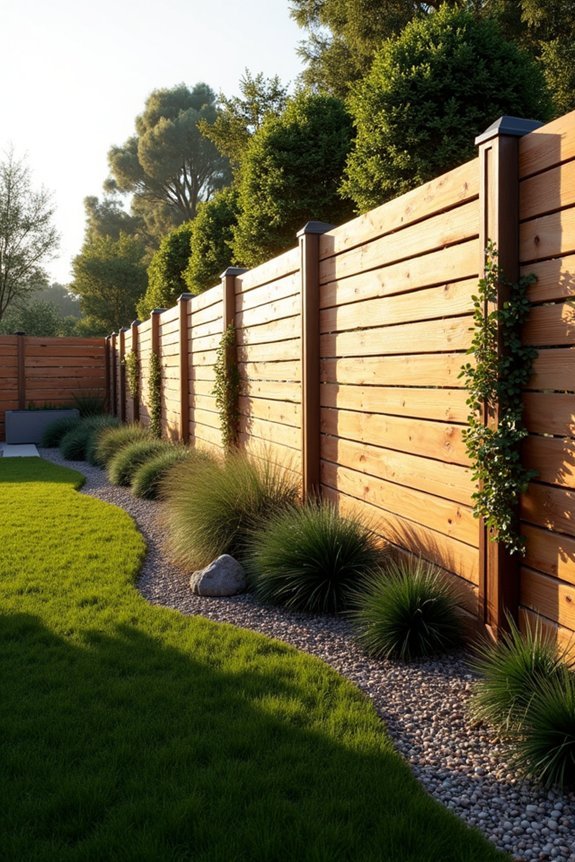
Modern horizontal slat fences transform traditional vertical picket designs by rotating the orientation 90 degrees, creating clean lines that complement contemporary architecture. You’ll need to plan spacing between slats carefully—typically 1/4 inch to 2 inches—to balance privacy with airflow. For horizontal slat materials, select pressure-treated pine, cedar, or composite boards measuring 1×4 or 1×6 inches. Install posts at 6-foot intervals with reinforced concrete footings since horizontal configurations create increased wind load. Mount rails vertically as your structural framework, then attach slats horizontally using galvanized screws. Modern minimalist aesthetics demand consistent gap spacing and perfectly level installation. Consider adding a top cap rail for structural integrity and visual completion. Pre-stain materials before assembly to guarantee uniform coverage between slats.
[affiai keyword=”modern horizontal wood slat fences” template=”carousel” count=”3″]
Rustic Split-Rail Designs
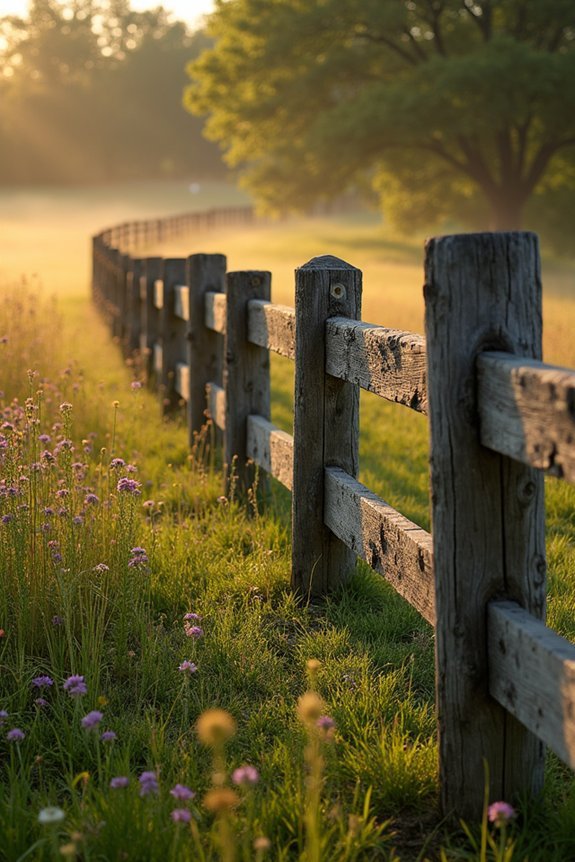
While horizontal slat fences emphasize contemporary minimalism, split-rail designs deliver authentic frontier character through hand-hewn timber and mortise-and-tenon joinery. You’ll construct these fences using cedar, locust, or pine posts measuring 8-10 feet in length with 4-6 inch diameters. The standard configuration requires vertical posts spaced 8 feet apart with two or three horizontal rails inserted through mortised openings.
[affiai keyword=”rustic split rail fence” template=”carousel” count=”3″]
Living Wall Vertical Gardens
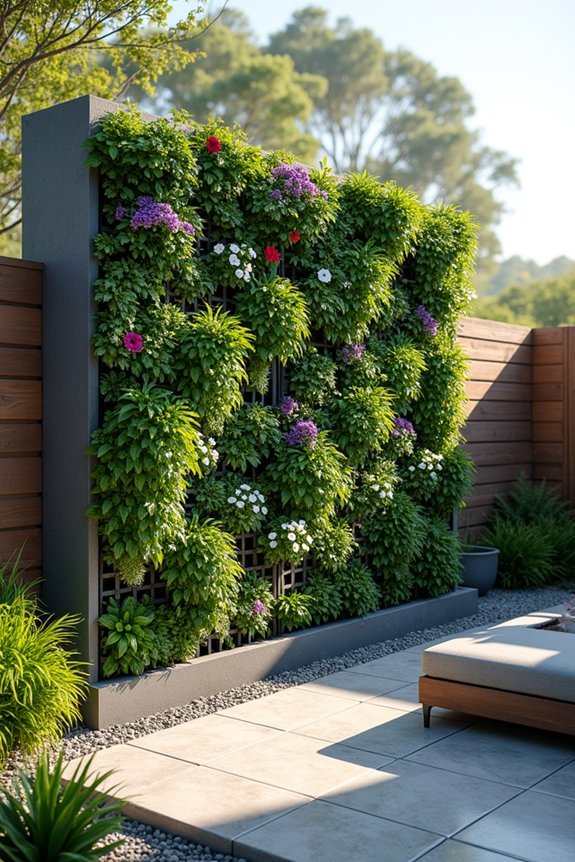
Transform your fence into a self-sustaining ecosystem by installing modular pocket systems that accommodate 4-6 inch root depths for herbaceous plants and shallow-rooted perennials. Mount marine-grade felt pockets at 8-inch intervals vertically and 12-inch spacing horizontally to optimize drainage and prevent root competition. You’ll need to install drip irrigation lines with pressure-compensating emitters rated at 0.5 GPH for consistent moisture distribution.
The vertical garden benefits include reduced ambient temperature by 10-15°F and improved air quality through particulate filtration. Living wall maintenance requires bi-weekly pruning and monthly nutrient supplementation using balanced 10-10-10 liquid fertilizer at quarter-strength concentration. Specify UV-resistant polyethylene backing with integrated moisture barriers to protect fence substrates from water infiltration and fungal deterioration.
[affiai keyword=”vertical garden modular systems” template=”carousel” count=”3″]
Corrugated Metal Industrial Style
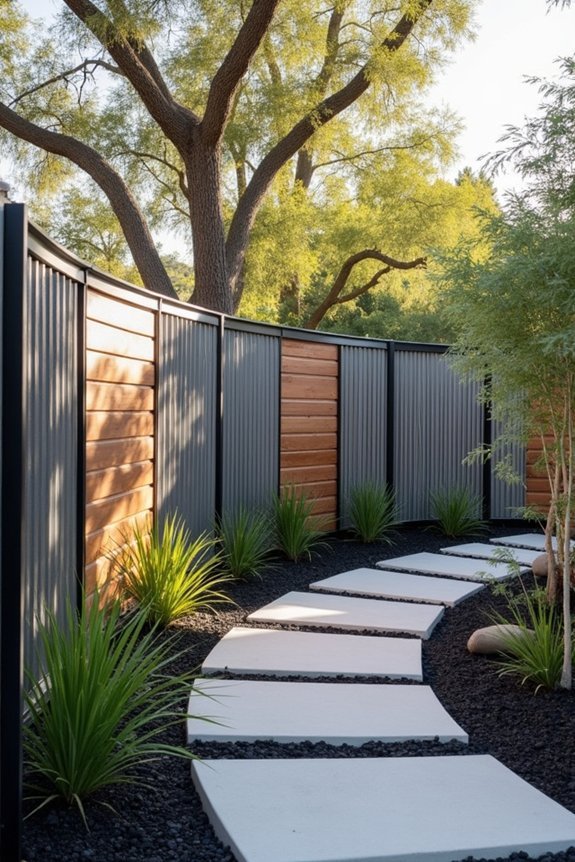
Corrugated metal panels deliver raw architectural character when installed vertically or horizontally across fence frameworks. You’ll achieve industrial design aesthetics by selecting galvanized steel or weathering steel panels in 26- or 29-gauge thickness. Metal fence durability extends 30-50 years with proper fastening systems using self-tapping screws at 12-inch intervals.
Install panels against 4×4 posts spaced 8 feet apart, securing them to 2×4 horizontal rails. You can orient corrugations perpendicular to rails for enhanced structural rigidity. Consider powder-coated finishes in matte black, bronze, or charcoal for contemporary appeal.
Mix corrugated sections with wood slats or concrete posts to soften the industrial effect. Leave panels natural for progressive oxidation, or apply clear sealant to maintain original galvanized appearance. This approach suits urban properties and modern architectural styles.
[affiai keyword=”corrugated metal fencing” template=”carousel” count=”3″]
Painted Pallet Wood Sections
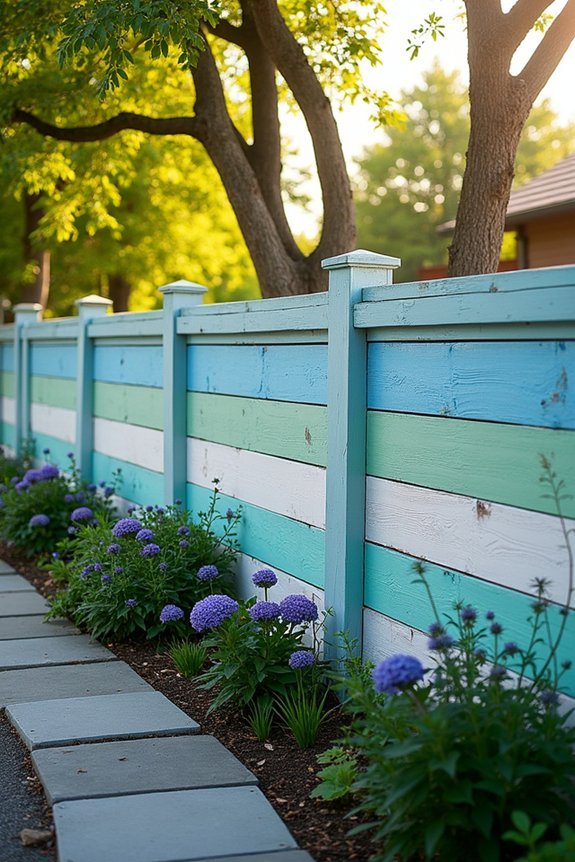
Reclaimed pallet lumber provides fence material at minimal cost when you source heat-treated (HT-stamped) pallets free from chemical treatments like methyl bromide. You’ll need to disassemble pallets carefully, removing nails with a pry bar while preserving board integrity. Sand surfaces to 120-grit smoothness before applying exterior-grade primer.
Design your fence layout with 4×4 pressure-treated posts spaced 8 feet on center. Attach reclaimed wood horizontally or vertically using 2-inch galvanized screws. Apply two coats of exterior acrylic paint in alternating colors to create colorful patterns—consider chevrons, stripes, or geometric blocks.
Seal painted surfaces with clear polyurethane rated for outdoor use. This protects your colorful patterns from UV degradation and moisture penetration. Install sections between posts at 6-foot heights for standard privacy screening.
[affiai keyword=”painted pallet wood fence” template=”carousel” count=”3″]
Bamboo Privacy Screen Panels
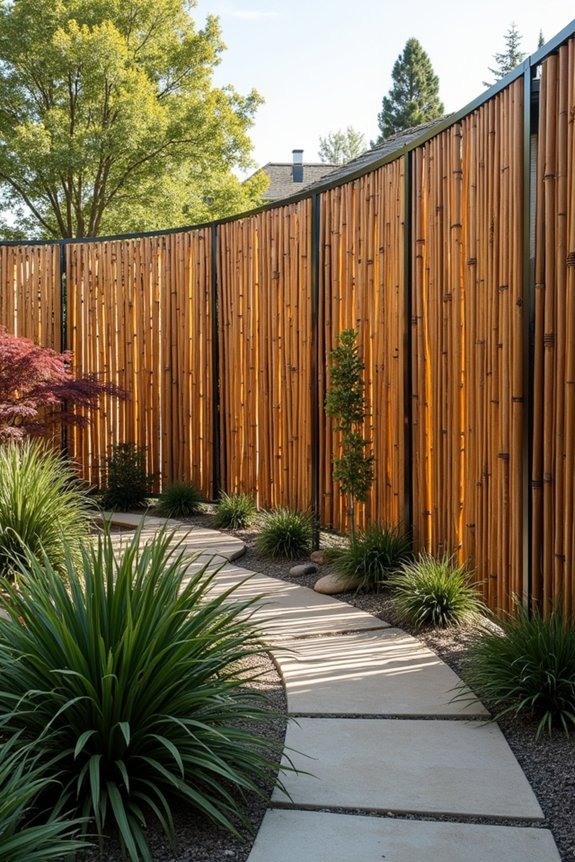
Although bamboo offers natural aesthetic appeal, proper installation requires understanding its structural limitations and moisture response characteristics. You’ll need to secure panels with galvanized hardware, spacing posts 6-8 feet apart for maximum stability. Install bamboo fence panels using concrete footings that extend below frost lines, preventing seasonal shifting. Apply UV-resistant sealant annually as essential bamboo maintenance tips to prevent splitting and color degradation. Pre-drill mounting holes to avoid cracking during bamboo fence installation, and maintain 2-inch ground clearance for airflow. Select rolled bamboo fencing for curved applications or rigid panels for straight runs. Monitor joint connections quarterly, tightening hardware as bamboo contracts during dry seasons. Consider backing panels with weather-resistant fabric to extend lifespan and enhance privacy density in high-wind zones.
[affiai keyword=”bamboo privacy screen panels” template=”carousel” count=”3″]
Woven Willow Branch Panels
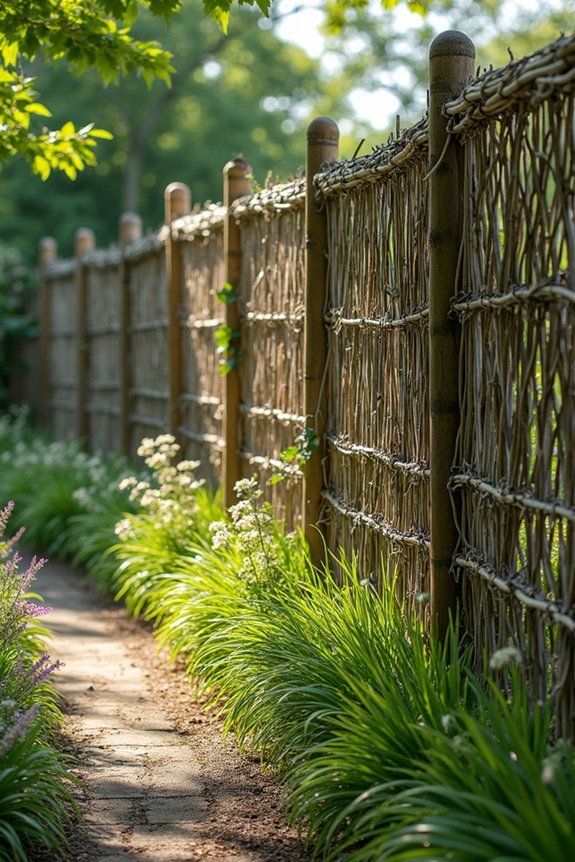
Woven willow branch panels function as living fence systems when installed with fresh-cut shoots during dormant seasons, typically January through March. You’ll need 6-8 foot willow rods spaced at 12-inch intervals along your fence line. Drive vertical stakes 18 inches deep, leaving 4-5 feet exposed. Weave horizontal branches in alternating patterns—over-under configurations create structural integrity while maintaining woven branch aesthetics. Species like Salix viminalis and Salix purpurea root readily, establishing permanent barriers within one growing season. These flexible fencing options accommodate curved layouts and irregular terrain better than rigid materials. Plan for 40-50% material shrinkage as branches dry. Maintain soil moisture during establishment. Panels achieve full density at 70-80% coverage, providing privacy screening while requiring minimal framework investment compared to traditional construction methods.
[affiai keyword=”willow branch fencing” template=”carousel” count=”3″]
Stained Glass Window Inserts
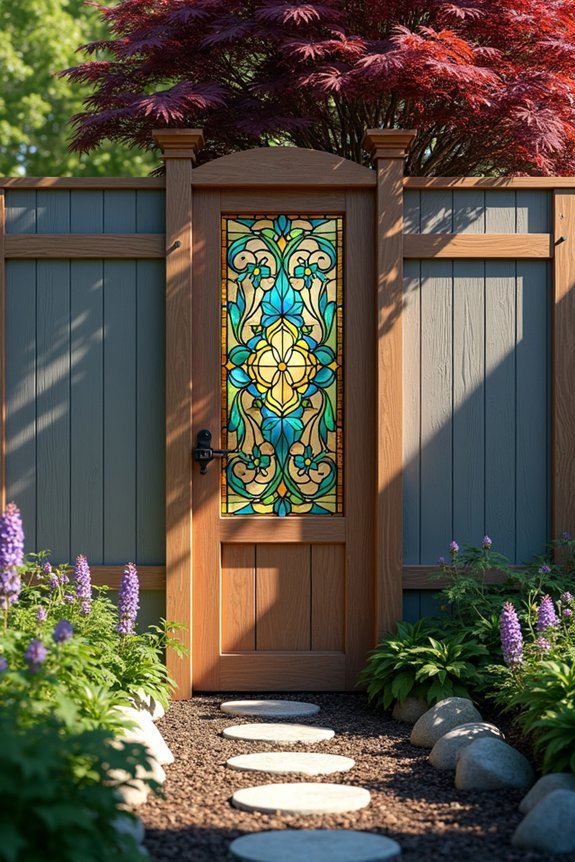
Stained glass window inserts transform standard fence panels into decorative focal points by incorporating salvaged architectural elements within custom-built frames. You’ll need to measure your fence opening precisely, leaving 1/4-inch clearance for thermal expansion. Install pressure-treated 2×4 blocking between fence posts, creating a 24-inch square frame that’ll support the glass art weight. Secure the stained glass piece using exterior-grade glazing putty and stainless steel retaining clips spaced every 6 inches. Apply weatherproof silicone sealant along all window framing edges to prevent moisture infiltration. Mount a clear polycarbonate sheet 2 inches behind the glass for protection against impact damage. This configuration maintains structural integrity while allowing light transmission to create prismatic color displays throughout your yard.
[affiai keyword=”stained glass window inserts” template=”carousel” count=”3″]
Gabion Stone Cage Walls
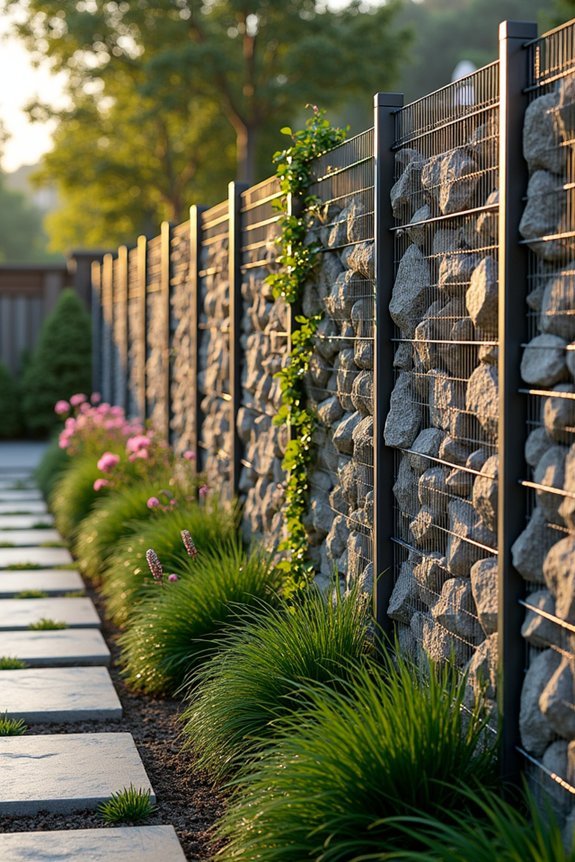
Gabion stone cage walls offer a modular alternative to traditional fence construction, combining structural strength with natural aesthetics through wire mesh containers filled with decorative rock. You’ll need galvanized or PVC-coated wire cages in standardized dimensions—typically 3’×3’×1′ or 6’×3’×1’—guaranteeing structural stability through proper stacking and anchoring protocols.
Select stone fill materials based on gabion aesthetics and functional requirements: river rock provides smooth visual appeal, while crushed granite delivers angular texture. Maintain 4-6 inch minimum stone diameter to prevent mesh bulging and guarantee proper drainage.
Install these systems on compacted gravel bases with geotextile fabric beneath. Connect adjacent cages using helical spiral wire or cage clips at 6-inch intervals. You’ll achieve ideal stability by offsetting joints in successive tiers, similar to brick laying patterns.
[affiai keyword=”gabion stone cage wall” template=”carousel” count=”3″]
Mixed Material Combination Fences
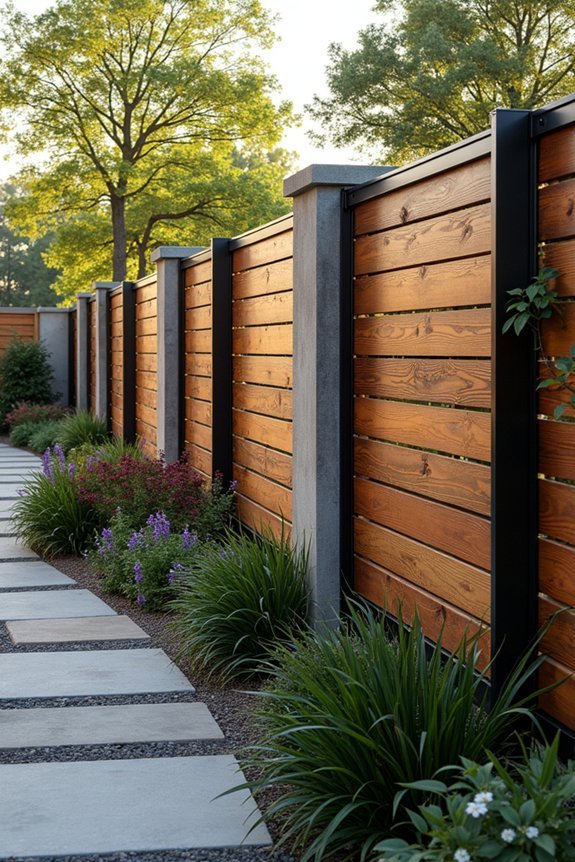
Mixed material combination fences maximize design flexibility by integrating complementary structural elements—typically pairing metal frames with wood infill, concrete posts with horizontal slats, or masonry pillars with decorative panels. You’ll achieve superior durability by selecting composite materials that offset individual weaknesses: steel posts resist rot while cedar panels provide thermal insulation and visual warmth. Plan your layout with 8-foot spacing between structural supports, ensuring load distribution across primary framework components. Aesthetic contrasts emerge through intentional material juxtaposition—dark metal against light timber creates bold definition, while textured stone alongside smooth composites delivers tactile variation. Specify fastener types carefully: stainless steel hardware prevents galvanic corrosion when joining dissimilar metals. Calculate expansion coefficients for temperature-responsive materials, allowing quarter-inch gaps between components to accommodate seasonal movement without structural compromise.
[affiai keyword=”mixed material combination fences” template=”carousel” count=”3″]