You’ll need to evaluate your site’s sun exposure patterns, prevailing wind directions, and existing architectural elements before selecting a canopy structure. The right design balances thermal comfort with aesthetic integration—whether that’s a fixed louver system for precise solar control or a retractable fabric solution for seasonal flexibility. Your choice directly impacts not just shade coverage, but also structural loads, drainage requirements, and long-term maintenance demands. The fourteen options ahead address distinct environmental challenges.
Retractable Fabric Shade Structures
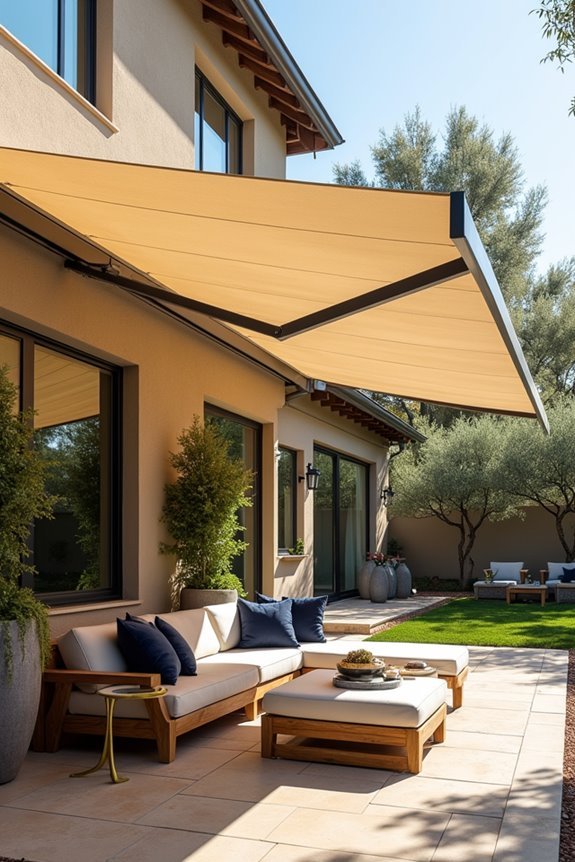
Retractable fabric shade structures offer superior flexibility in managing solar exposure and outdoor comfort levels throughout shifting daily conditions. You’ll find these outdoor shade solutions integrate seamlessly with various architectural styles while providing on-demand protection from UV radiation and heat gain.
When evaluating retractable awning benefits, you’re investing in systems that extend covered square footage without permanent structural modifications. Modern mechanisms utilize weather-resistant fabrics rated for 1,500+ hours of UV exposure, supported by powder-coated aluminum frames engineered for wind loads up to 25 mph when extended.
You’ll need to assess mounting surfaces for load-bearing capacity, verify clearance dimensions for full extension cycles, and consider motorized versus manual operation based on frequency of use. Proper installation requires precise angle calculations ensuring ideal water runoff and fabric tensioning.
[affiai keyword=”retractable fabric shade structures” template=”carousel” count=”3″]
Pergolas With Climbing Vines
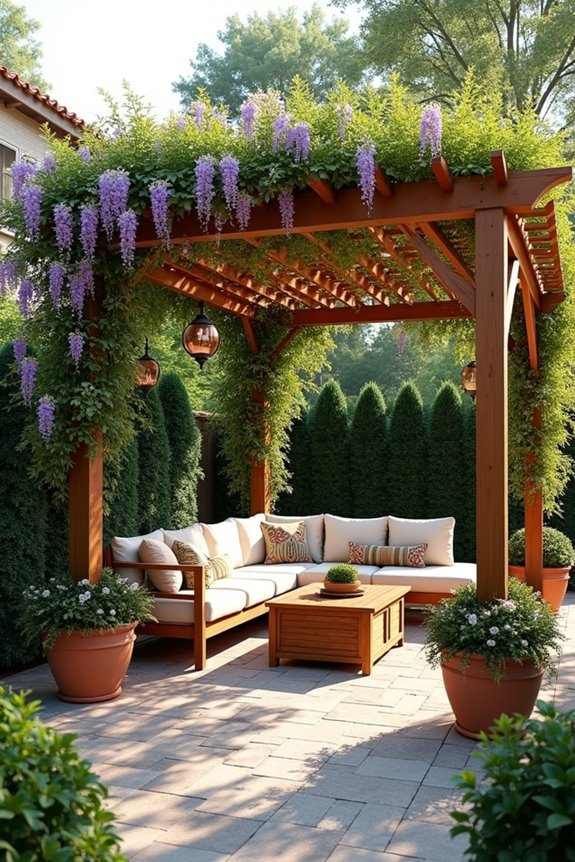
Pergolas paired with climbing vines create living canopy systems that merge structural function with biological shade production. You’ll need to select vine species based on your hardiness zone, growth rate requirements, and maintenance capacity. Wisteria delivers dense coverage but demands aggressive pruning, while clematis offers seasonal blooms with moderate spread. Your pergola’s structural load capacity determines viable plant selections—heavyweight vines require reinforced beams and cross-members.
Install a decorative trellis system between pergola posts to guide vertical growth patterns and accelerate canopy development. Wire grids, lattice panels, or cable systems provide essential support frameworks. Space planting locations 18-24 inches from structural posts to prevent moisture damage. You’ll achieve 60-80% shade density within three growing seasons using fast-establishing climbing vines like trumpet vine or climbing hydrangea, depending on sun exposure and irrigation consistency.
[affiai keyword=”pergola climbing vines” template=”carousel” count=”3″]
Sail Shade Canopy Systems
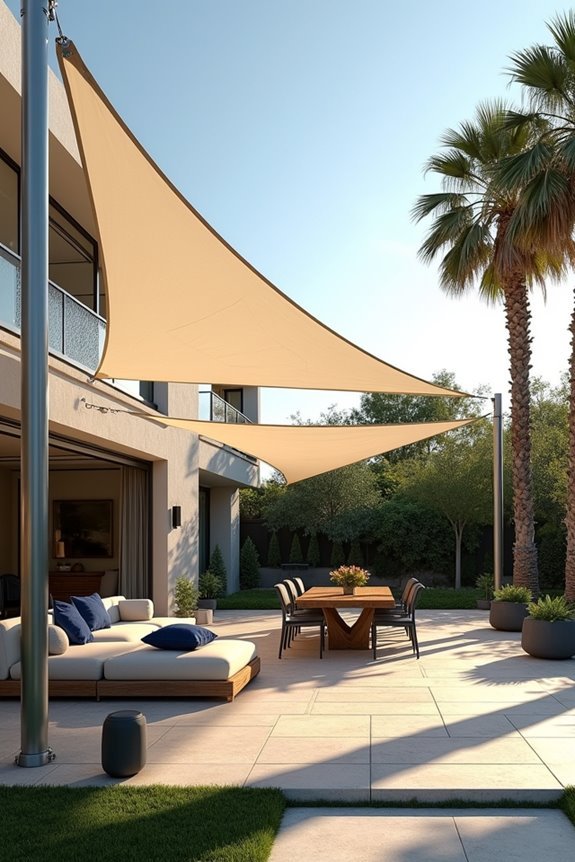
Tensioned fabric structures transform outdoor spaces through engineered shade solutions that combine architectural geometry with UV-resistant materials. You’ll need to evaluate your site’s anchor points—existing posts, building facades, or dedicated poles—before selecting sail shade materials. High-density polyethylene (HDPE) fabrics offer 90-98% UV blockage, while PVC-coated polyester provides waterproof protection.
Installation techniques require precise tension calculations to prevent sagging and guarantee structural integrity. You’ll position corner grommets at varying heights to create proper water runoff angles, typically maintaining 10-20 degree slopes. Stainless steel hardware—turnbuckles, D-rings, and carabiners—allows tension adjustments throughout seasons.
Triangle, square, and rectangle configurations suit different coverage areas. You’ll achieve ideal shade by orienting your canopy perpendicular to peak sun angles, maximizing protection during afternoon hours.
[affiai keyword=”outdoor patio shade structures” template=”carousel” count=”3″]
Gazebo With Weather Protection
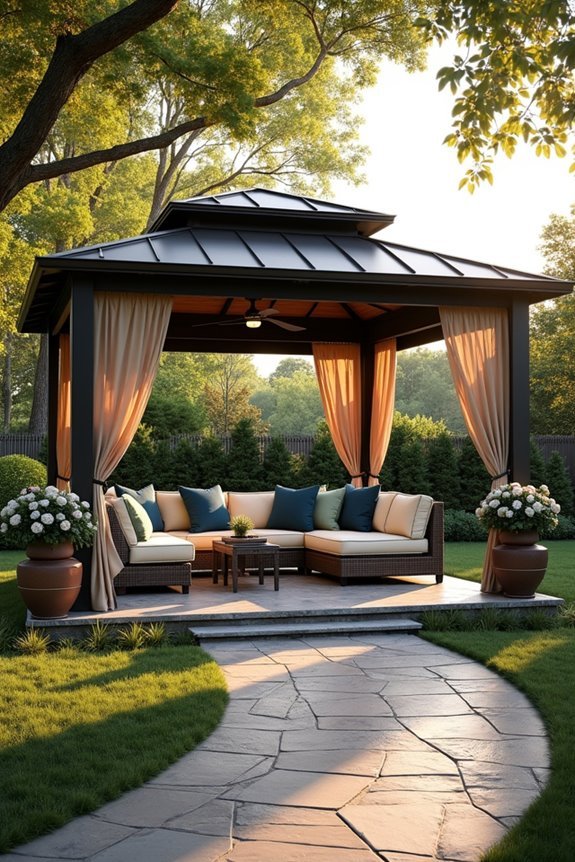
When selecting a permanent shade solution, gazebos offer year-round functionality through engineered roof systems that withstand wind loads, snow accumulation, and heavy rainfall. You’ll need to specify structural requirements based on your climate zone—coastal regions demand corrosion-resistant fasteners, while northern installations require increased rafter spacing for snow loads.
Weather resistant materials like powder-coated aluminum frames and polycarbonate panels provide durability without frequent maintenance. You can optimize your customizable design by integrating retractable side panels, built-in guttering systems, and reinforced corner posts anchored to concrete footings. Consider electrical conduit pathways during installation for future lighting or heating elements.
Your site analysis should account for drainage patterns, sun trajectory, and prevailing wind direction to maximize protection while maintaining aesthetic integration with existing landscape architecture.
[affiai keyword=”weather resistant gazebos” template=”carousel” count=”3″]
Wooden Louvered Roof Systems
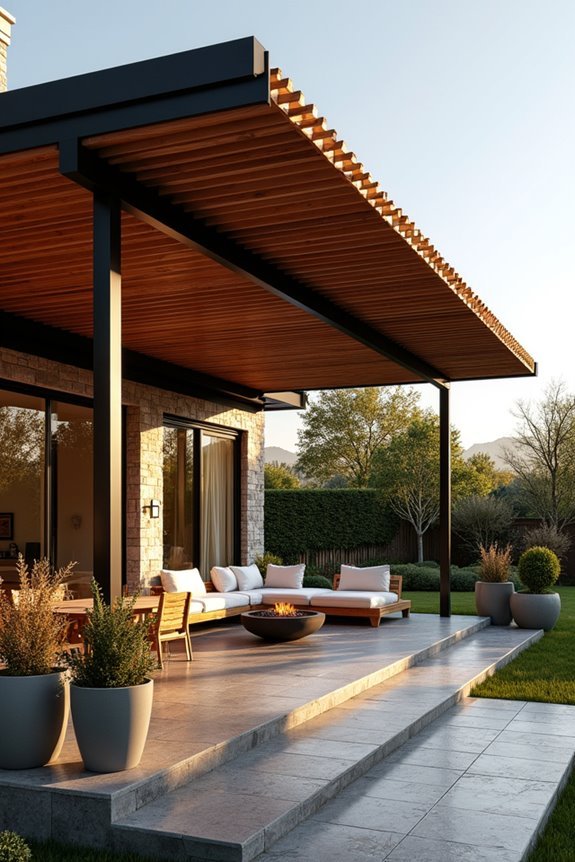
Adjustable louvre systems allow you to control light penetration and airflow through motorized or manual rotation mechanisms, typically operating within a 0-to-135-degree range. When specifying wooden louvered roof systems, you’ll need to evaluate your site’s solar orientation, prevailing wind patterns, and drainage requirements. Cedar and ipe deliver superior weather resistance while maintaining structural integrity under dynamic loading conditions.
Louvered roof benefits include precise microclimate management and extended seasonal use of your outdoor space. You can select customizable louvered designs that integrate with existing architecture through parametric spacing ratios—typically 4:1 blade width to gap distance. Install perimeter gutters to channel water efficiently when blades close. Consider blade thickness between 2-4 inches for spans exceeding 12 feet, ensuring adequate deflection resistance without compromising operational smoothness.
[affiai keyword=”wooden louvered roof systems” template=”carousel” count=”3″]
Cantilever Umbrella Patio Cover
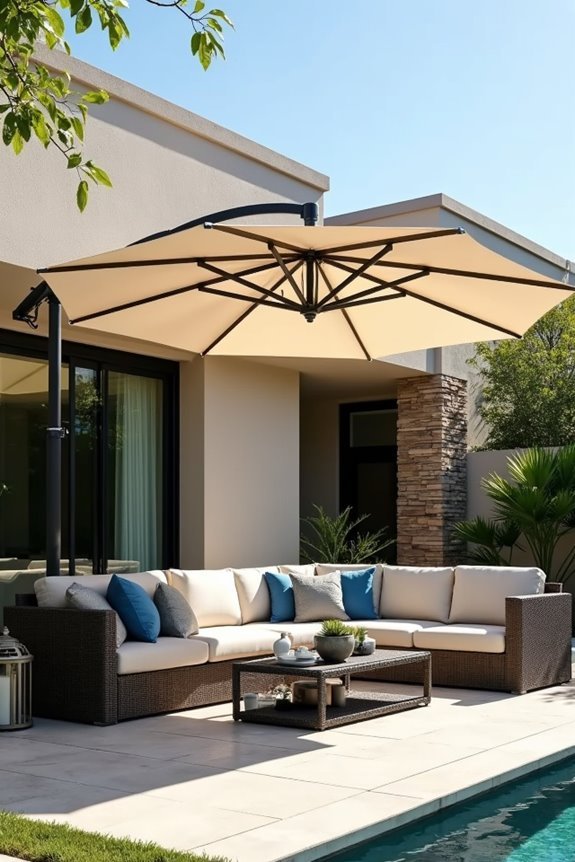
Offset-mount umbrella systems cantilever shade coverage over furniture arrangements without center pole obstructions, utilizing counterweighted bases or ground anchors to resist overturning moments up to 1,200 foot-pounds. When selecting cantilever umbrella materials, you’ll find marine-grade aluminum frames with powder-coated finishes withstand 60+ mph winds, while solution-dyed acrylic fabrics resist UV degradation and maintain colorfastness for 5-7 years. Your cantilever umbrella design should account for rotational arc clearances—typically 360 degrees—and vertical adjustment mechanisms that provide 8-12 inches of height variation. Install units minimum 18 inches from structures to prevent abrasion during wind-induced movement. Cross-base configurations require 150-pound minimum weight, while in-ground sleeves demand 24-inch embedment depth in concrete footings for permanent installations.
[affiai keyword=”cantilever patio umbrellas” template=”carousel” count=”3″]
Transparent Polycarbonate Panel Awning
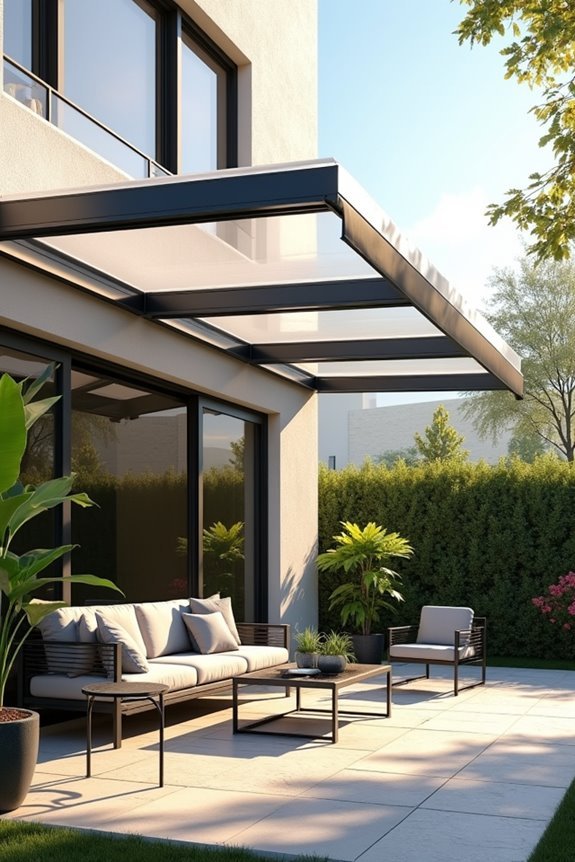
Transparent polycarbonate panel awnings deliver unobstructed overhead protection while maintaining 88-92% light transmission, creating bright, weather-resistant outdoor zones without the visual enclosure of traditional solid roofing. You’ll need to specify panel thickness (6mm, 8mm, or 10mm) based on your span requirements and snow load calculations for your region. Custom polycarbonate installations require aluminum or steel framework with thermal expansion gaps of 3mm per linear meter to prevent buckling during temperature fluctuations. Install panels with UV-protective coating facing outward to extend lifespan beyond 15 years. Consider pitch angles between 5-15 degrees for proper water runoff. Weather resistant transparency makes these awnings ideal for patios requiring rain protection while preserving garden views and natural illumination beneath the structure.
[affiai keyword=”polycarbonate patio awnings” template=”carousel” count=”3″]
Living Wall Pergola Hybrid
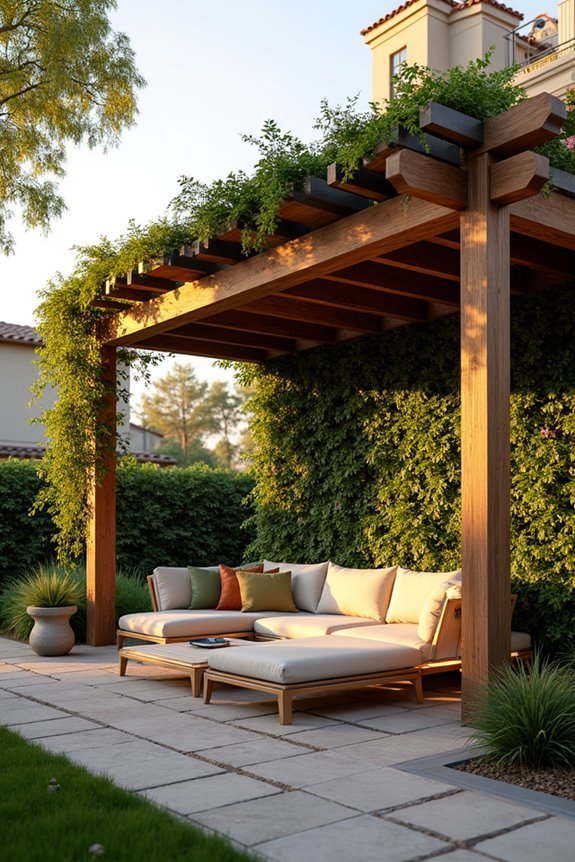
Living wall pergola hybrids integrate structural overhead frameworks with vertical planting systems, transforming standard pergolas into three-dimensional green architecture that provides shade, air filtration, and thermal regulation through strategic plant placement. You’ll maximize living wall benefits by selecting drought-tolerant species like succulents for sun-exposed surfaces and ferns for shaded sections. Install modular panel systems with integrated irrigation on pergola posts and side walls, ensuring proper drainage prevents structural deterioration. Your pergola designs must account for additional weight loads—typically 15-30 pounds per square foot when saturated. Incorporate galvanized steel or pressure-treated timber rated for increased capacity. Position climbing plants like jasmine or clematis at posts, while pocket planters accommodate herbs and flowering varieties. This approach creates microclimates that reduce ambient temperatures by 5-10 degrees Fahrenheit.
[affiai keyword=”living wall pergola” template=”carousel” count=”3″]
String Light Canopy Design
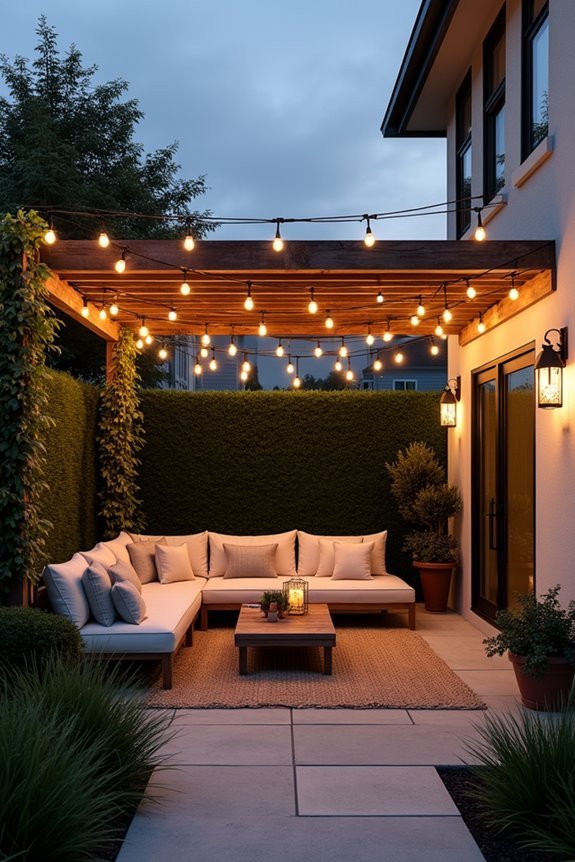
String light canopy designs transform outdoor spaces into illuminated gathering areas through calculated suspension systems that distribute ambient lighting across defined overhead zones. You’ll achieve ideal coverage by implementing a catenary curve pattern, where lights drape naturally between anchor points spaced 10-15 feet apart. Strategic string light placement requires structural assessment of load-bearing capacity—pergola beams, posts, or dedicated poles must support cable tension without deflection. Install heavy-gauge guide wires first, then suspend decorative strands beneath using carabiners or zip ties at 18-inch intervals. Layer multiple strands at varying heights to create depth and dimensional interest. Edison-style bulbs spaced 12-24 inches apart deliver warm illumination while maintaining a festive atmosphere. Consider dimmer controls and weatherproof connections rated for continuous outdoor exposure to guarantee system longevity and adaptable ambiance.
[affiai keyword=”string light canopy design” template=”carousel” count=”3″]
Metal Frame Bamboo Canopy
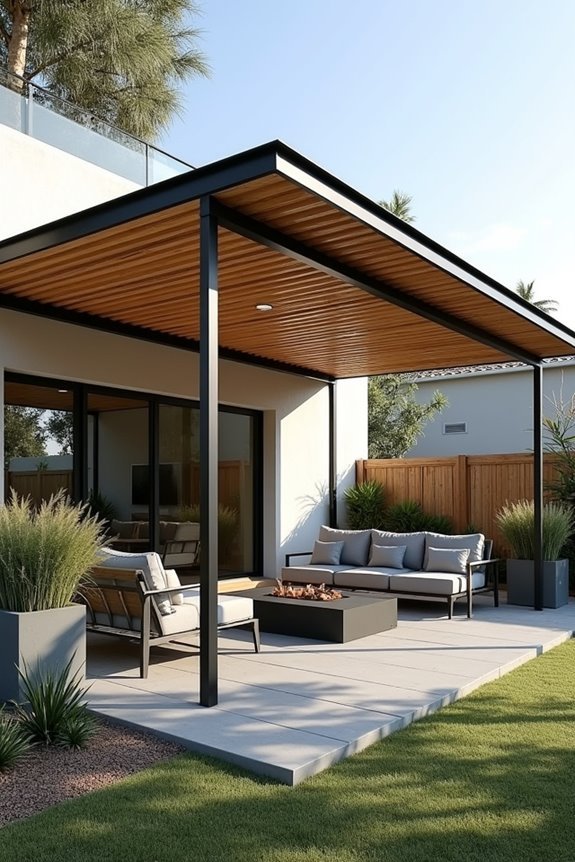
Metal frame bamboo canopies combine structural engineering with organic aesthetics through galvanized steel frameworks that support natural bamboo screening elements. You’ll need to assess your site’s wind loads and soil conditions before installation, as these factors determine foundation depth and frame specifications. The metal aesthetics provide clean lines while maintaining structural integrity through welded connections at stress points.
Consider bamboo durability when selecting materials—treated poles resist moisture and insects for 15-20 years in temperate climates. Position vertical supports at 6-8 foot intervals to prevent sagging, and integrate cross-bracing for lateral stability. You can adjust bamboo density to control light filtration, spacing poles 2-4 inches apart for partial shade or tighter for maximum coverage. Apply marine-grade sealant to metal connections where bamboo contacts steel, preventing moisture accumulation and extending lifespan.
[affiai keyword=”bamboo metal frame canopy” template=”carousel” count=”3″]
Green Roof Garden Canopy
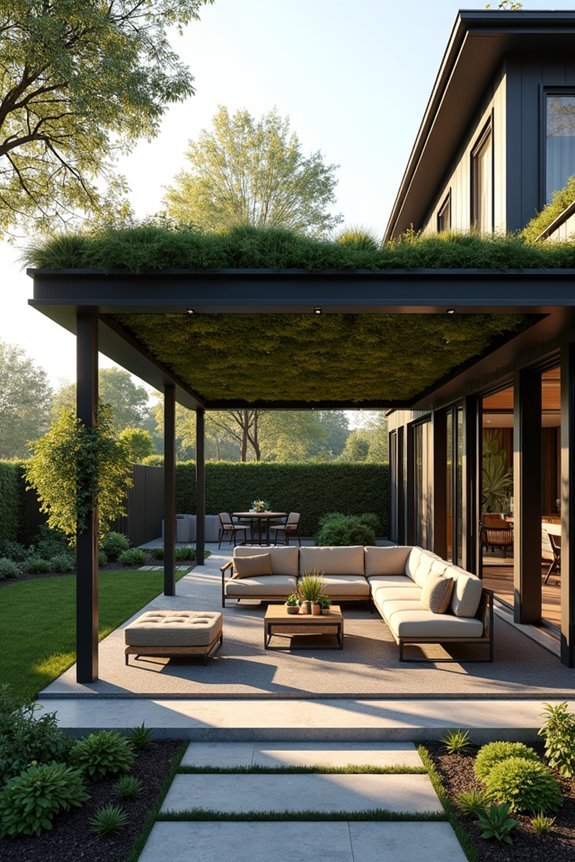
When engineered correctly, green roof garden canopies transform horizontal surfaces into multi-layered ecosystems that provide structural shade while reducing heat island effects. You’ll need to assess your structure’s load-bearing capacity before selecting sustainable planting options like sedums, native grasses, or drought-tolerant perennials. Install waterproof membranes, drainage layers, and growing mediums specified for overhead applications. Consider integrating vertical garden techniques along support posts to maximize plant coverage without compromising structural integrity. Your plant selection should account for sun exposure, wind patterns, and maintenance access requirements. Calculate irrigation needs based on canopy size and plant water requirements. Establish root barriers to prevent penetration into roofing materials, and incorporate slow-release fertilizers into your growing medium for sustained nutrient delivery.
[affiai keyword=”green roof garden canopy” template=”carousel” count=”3″]
Rustic Thatched Palm Roof
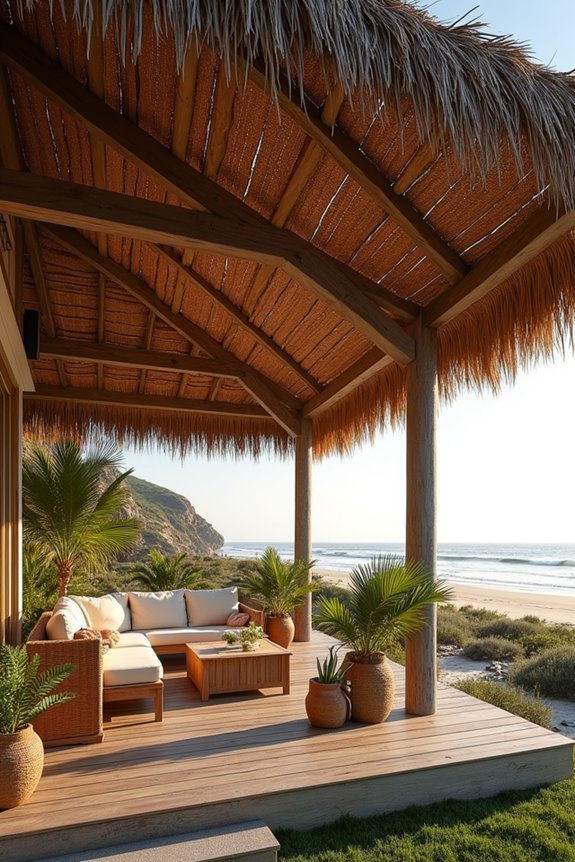
Thatched palm roofing delivers authentic tropical aesthetics while providing natural insulation values between R-2 and R-3, depending on thatch density and layering techniques. You’ll need to verify local fire codes before installation, as many jurisdictions require fire-retardant treatments. The thatched roof advantages include excellent rainwater shedding when installed at minimum 45-degree pitch angles and natural UV protection for your outdoor furniture. Palm roof maintenance demands annual inspections for pest infiltration, particularly termites and rodents. You’ll replace individual fronds showing deterioration rather than entire sections, extending lifespan to 8-12 years in temperate climates. Install galvanized wire mesh beneath thatch layers to prevent wildlife nesting while maintaining proper ventilation. Position your canopy away from fire pits and grilling areas to minimize ignition risks.
[affiai keyword=”thatched palm roof” template=”carousel” count=”3″]
Tensioned Cable Architectural Canopy
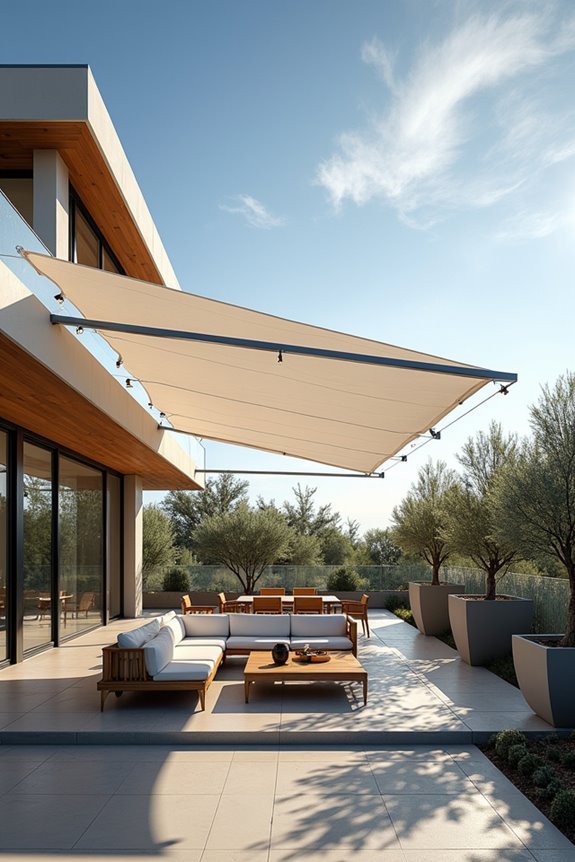
By employing pre-stressed stainless steel cables as the primary structural system, you’ll achieve clear spans of 30-60 feet without intermediate support posts, creating unobstructed outdoor spaces. Your tensioned cable design requires precise engineering calculations accounting for material elongation, thermal expansion coefficients, and dynamic wind loads specific to your geographic location.
Install outdoor tensioning systems using turnbuckles or hydraulic jacks to maintain ideal cable tension between 15-25% of breaking strength. Position anchor points on existing structures or purpose-built concrete foundations with adequate bearing capacity.
The fabric membrane—typically PVC-coated polyester or PTFE-coated fiberglass—attaches to cables via specialized edge details, creating elegant anticlastic or synclastic curves. You’ll need professional structural analysis to verify load paths and guarantee code compliance for permanent installations.
[affiai keyword=”tensioned cable architectural canopy” template=”carousel” count=”3″]
Motorized Rolling Glass Canopy
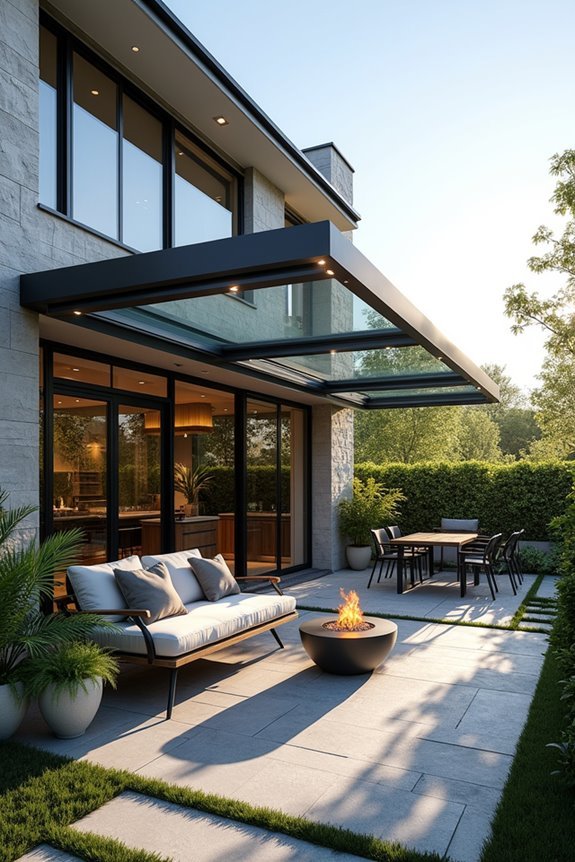
Motorized rolling glass canopy systems combine transparent protection with adjustable coverage through precision-engineered track mechanisms and weatherproof glass panels. You’ll maintain unobstructed views while controlling sunlight exposure and weather protection at the touch of a button.
Motorized glass advantages include year-round usability, UV filtering without visibility reduction, and seamless integration with existing architectural lines. These systems withstand wind loads up to 90 mph when properly specified.
Installation considerations demand structural analysis of load-bearing points, electrical integration for motor operation, and drainage planning for water management. You’ll need 8-12 inch header clearance for track mounting and minimum 3-inch slope for proper runoff.
Specify tempered or laminated safety glass with low-E coatings. Track systems require quarterly maintenance of rollers, seals, and motor mechanisms for peak performance longevity.
[affiai keyword=”motorized glass canopy systems” template=”carousel” count=”3″]
Convertible Hardtop Pavilion Structure
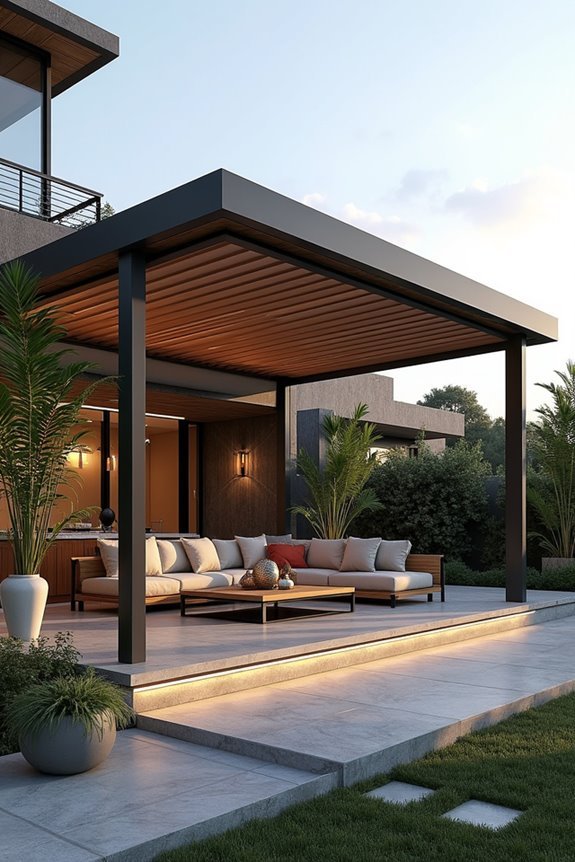
Convertible hardtop pavilion structures deliver permanent shelter with seasonal adaptability through engineered roof systems that shift between enclosed and open configurations. You’ll find these installations feature aluminum or steel frameworks supporting retractable louvered panels, sliding hardtop sections, or bi-fold roof modules. The modular design allows you to adjust coverage based on weather conditions, switching from full protection during winter months to ventilated shade in summer.
Install these structures on reinforced concrete footings with proper drainage integration. You’ll need to account for snow loads, wind ratings, and local building codes during planning. The mechanisms typically operate via manual cranks or motorized systems with weather sensors. Consider site orientation for best sun control and integrate gutters with your existing drainage infrastructure to manage water runoff effectively.
[affiai keyword=”convertible hardtop pavilions” template=”carousel” count=”3″]