A fence does for your backyard what a frame does for artwork—it defines boundaries while enhancing what’s inside. You’re likely weighing privacy needs against curb appeal, durability against budget, and maintenance requirements against aesthetic preferences. The right fence materials and design patterns can transform your outdoor space from exposed to intimate, from ordinary to architectural. Whether you’re drawn to natural wood grain, sleek metal panels, or living greenery, these ten approaches offer distinct solutions worth your consideration.
Classic Wood Picket Fences

While traditional picket fences aren’t typically associated with privacy, you can modify their design to create effective screening without sacrificing their classic appeal. Reduce spacing between 3-4 inch wide cedar or pressure-treated pine pickets to one inch or less, creating a semi-private barrier. Increase fence height to 6 feet while maintaining proportional picket widths and decorative top profiles. Traditional styles like dog-ear, French Gothic, or spade-top pickets work effectively at taller dimensions.
Choose rot-resistant wood species to minimize picket fence maintenance requirements. Apply penetrating oil-based stains or solid-color exterior paints every 3-5 years. Install aluminum or stainless steel fasteners to prevent rust staining. Space posts 6-8 feet apart using concrete footings below frost lines. Add horizontal rails at top, middle, and bottom positions for structural integrity and visual balance.
[affiai keyword=”classic wood picket fences” template=”carousel” count=”3″]
Horizontal Slat Privacy Panels
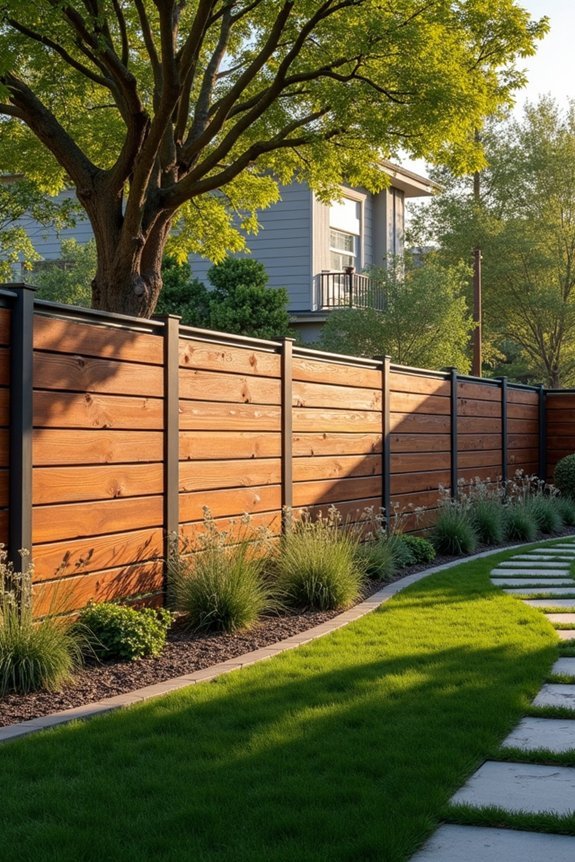
Horizontal slat panels deliver contemporary aesthetics while providing superior privacy control compared to vertical picket configurations. The horizontal orientation creates clean, linear sight lines that complement modern architectural styles.
You’ll need to evaluate slat spacing considerations carefully—gaps between 1/4 inch and 1 inch offer varying privacy levels while maintaining airflow. Tighter spacing blocks visual penetration entirely, while wider gaps create filtered views and enhanced ventilation.
Material selection greatly impacts performance and longevity. Cedar and ipe resist warping better than pressure-treated pine when installed horizontally. Composite materials eliminate seasonal expansion issues but require proper framework support.
Mount slats to vertical posts using concealed fasteners for seamless horizontal slat aesthetics. Stagger joints across multiple posts to prevent structural weakness and maintain visual continuity throughout your fence run.
[affiai keyword=”horizontal privacy slat panels” template=”carousel” count=”3″]
Modern Metal Panel Designs
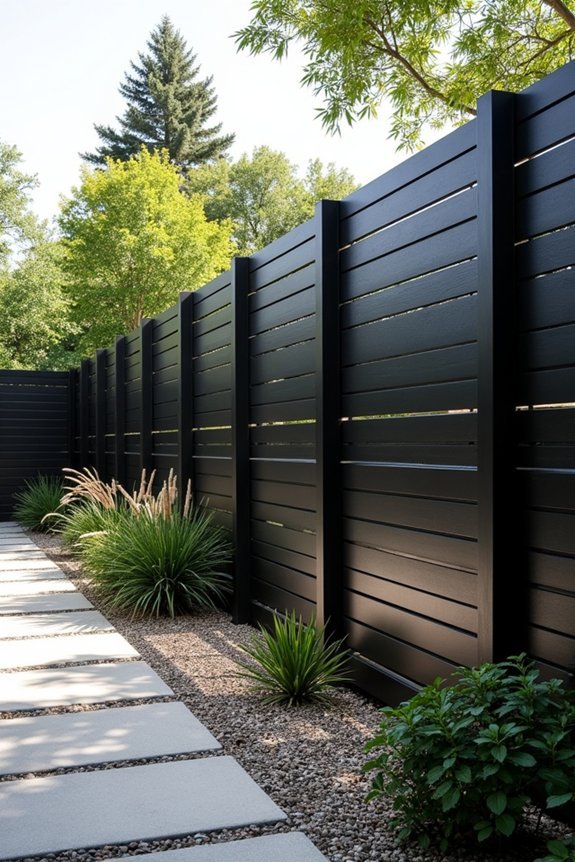
Metal panel fencing systems transform residential boundaries into architectural statements through material durability and design versatility. You’ll find options in aluminum, steel, and corten that deliver exceptional weather resistance while maintaining clean lines. These panels integrate seamlessly with contemporary homes, offering powder-coated finishes in matte black, charcoal, or custom colors that complement modern exteriors.
The industrial aesthetics work particularly well in urban settings, where you can combine solid panels with perforated sections for controlled visibility. Corrugated metal creates textural interest, while flat panels provide minimalist sophistication. You’re investing in low-maintenance solutions that won’t warp, rot, or require regular refinishing.
Installation typically involves steel posts set in concrete, with panels mounting via concealed brackets. This creates flush surfaces without visible fasteners, emphasizing the fence’s geometric precision and architectural intent.
[affiai keyword=”modern metal panel designs” template=”carousel” count=”3″]
Natural Living Plant Walls
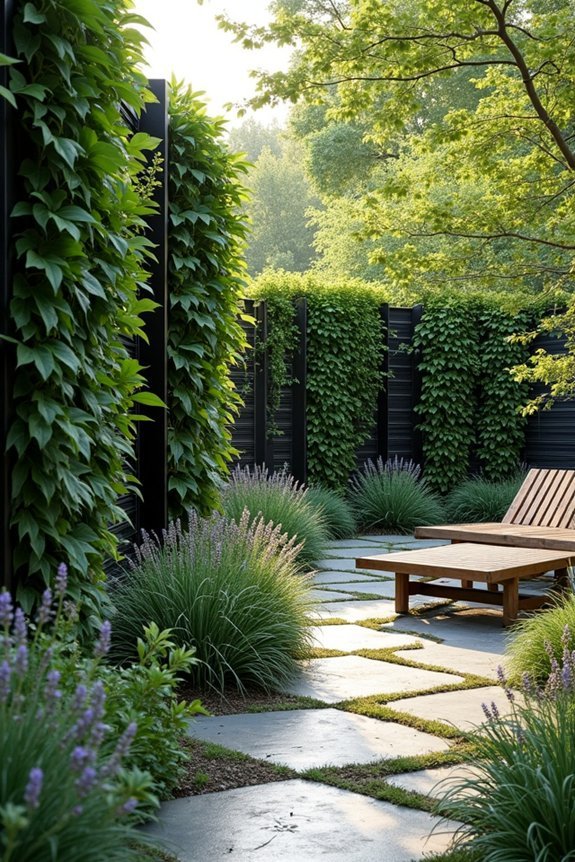
Living plant walls substitute manufactured materials with botanical architecture, creating privacy barriers that evolve with seasonal growth cycles. You’ll engineer these vertical gardens using modular panel systems or cable-trained frameworks that support dense vegetation from ground to desired height.
Your plant selections determine wall density and maintenance requirements. Evergreen climbing varieties like English ivy, climbing hydrangea, or Carolina jessamine provide year-round screening. Deciduous options including Boston ivy and trumpet vine offer seasonal color shifts. For rapid establishment, you’ll combine fast-growing vines with structural shrubs positioned at regular intervals.
Living walls require integrated irrigation systems and periodic pruning to maintain uniform coverage. Install sturdy support structures rated for saturated soil weight and mature plant biomass. Consider growth rates when spacing installations—aggressive climbers need eighteen to twenty-four inches between specimens.
[affiai keyword=”living plant walls” template=”carousel” count=”3″]
Decorative Lattice Screen Fences
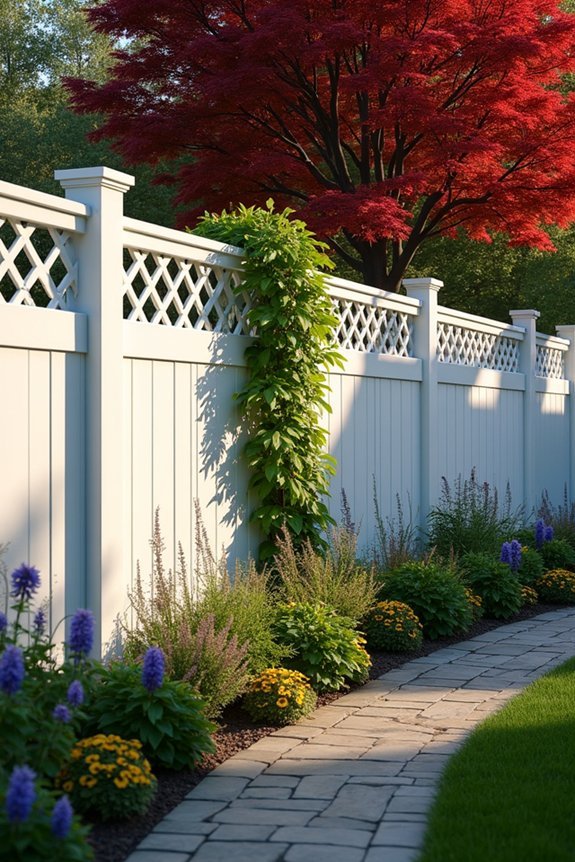
While solid panels block sightlines completely, decorative lattice screens filter visibility through geometric apertures that balance privacy with airflow and filtered light transmission. You’ll find lattice screen benefits include reduced wind load, natural ventilation, and dappled shade that prevents dead zones in adjacent planting beds. Decorative screen styles range from traditional diagonal crosshatch patterns in cedar or pressure-treated pine to contemporary laser-cut metal panels featuring custom geometrics. Square-grid configurations offer maximum obscurity, while horizontal slat arrangements create directional privacy. Install powder-coated aluminum screens for corrosion resistance in coastal environments, or specify hardwood varieties like ipe for dimensional stability. Frame mounted lattice panels between posts using trim boards, ensuring proper spacing allows material expansion. Layer climbing vines—jasmine, clematis, or passionflower—to enhance visual density while maintaining structural airflow.
[affiai keyword=”decorative lattice screen fences” template=”carousel” count=”3″]
Bamboo Screen Fence Panels
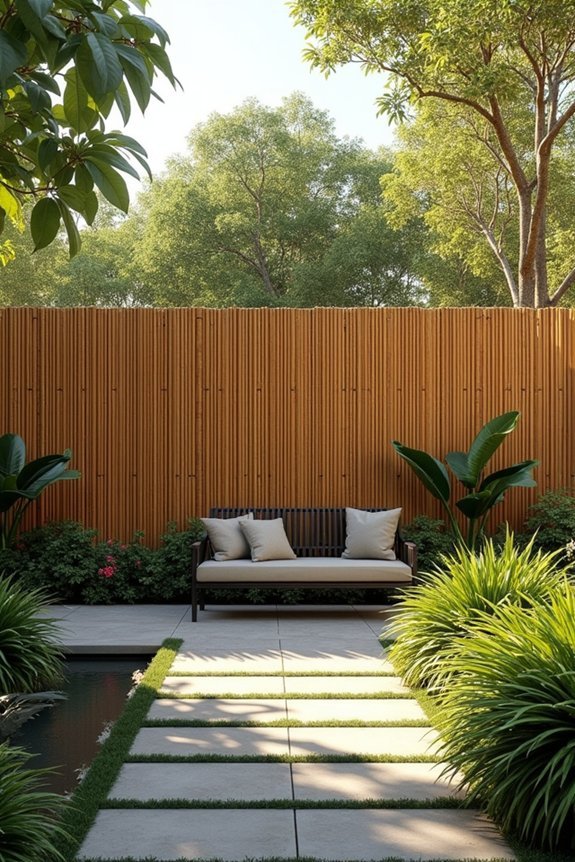
Bamboo screen fence panels deliver organic texture and rapid installation through pre-fabricated sections that mount directly to existing framework or independent post systems. You’ll find these eco friendly options in rolled formats (typically 6-8 feet heights) or rigid panels with reinforced wire backing. Natural bamboo varieties include tonkin, moso, and black bamboo, each offering distinct coloration from golden honey to deep charcoal tones.
Installation requires galvanized wire or zip ties at 12-inch intervals along horizontal rails. For maintenance tips, apply UV-protective sealant annually to prevent weathering and gray patina development. Consider thickness density—thicker poles (1-2 inches diameter) provide superior privacy screening compared to slim reed varieties. You can layer panels for enhanced opacity or integrate them with metal frames for contemporary aesthetic contrast.
[affiai keyword=”bamboo fence panels” template=”carousel” count=”3″]
Composite Material Fence Options

Composite Material Fence Options
Composite material fence options combine recycled wood fibers and polymer resins to create low-maintenance barriers that won’t rot, warp, or require staining. You’ll find these engineered products resist moisture, insects, and UV degradation while maintaining structural integrity for decades. The sustainability benefits are significant—manufacturers typically use 95% recycled content, diverting plastic waste from landfills.
Modern composites offer extensive color options, from natural wood tones like cedar and walnut to contemporary grays and charcoals. These pigments penetrate throughout the material, eliminating visible scratching or fading issues. You can select from horizontal slat designs, vertical picket styles, or board-on-board configurations. Installation requires aluminum or steel framework for proper support, as composite boards lack the load-bearing capacity of solid wood. Expect initial costs 40-60% higher than traditional lumber, offset by eliminated maintenance expenses.
[affiai keyword=”composite material fence” template=”carousel” count=”3″]
Stone and Brick Walls
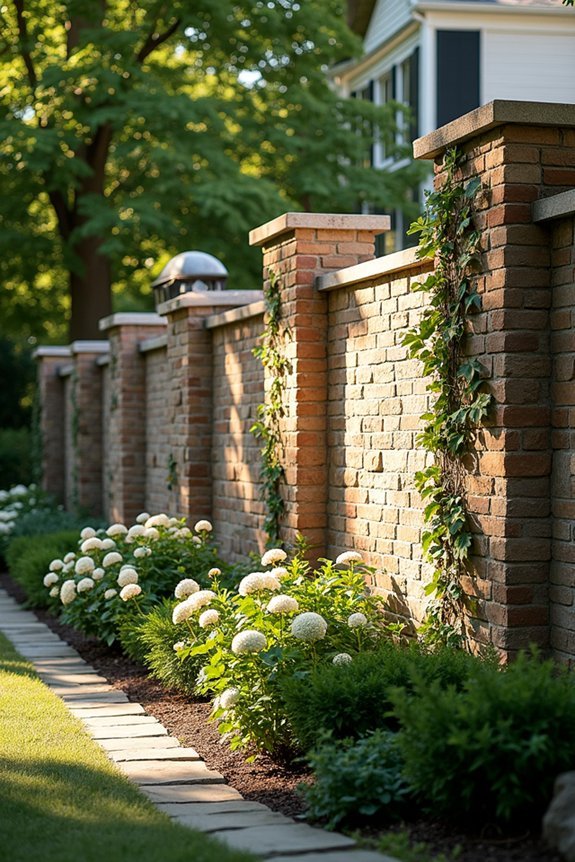
Stone and brick walls establish permanent privacy barriers with thermal mass properties that reduce noise transmission by 45-55 decibels. You’ll find natural stone options including limestone, sandstone, and granite that integrate seamlessly with stone garden accents throughout your landscape design. Full-thickness brick walls require 8-12 inch foundations with proper drainage systems, while brick veneer styles offer cost-effective alternatives at 4-inch depths backed by concrete block cores. Consider mortared dry-stack patterns for contemporary aesthetics or traditional running bond layouts for classic appeal. Installation costs range from $30-75 per square foot depending on material selection and wall height. You’ll need structural engineering assessments for walls exceeding 4 feet to guarantee compliance with local building codes and wind load requirements.
[affiai keyword=”stone and brick walls” template=”carousel” count=”3″]
Glass Panel Privacy Screens
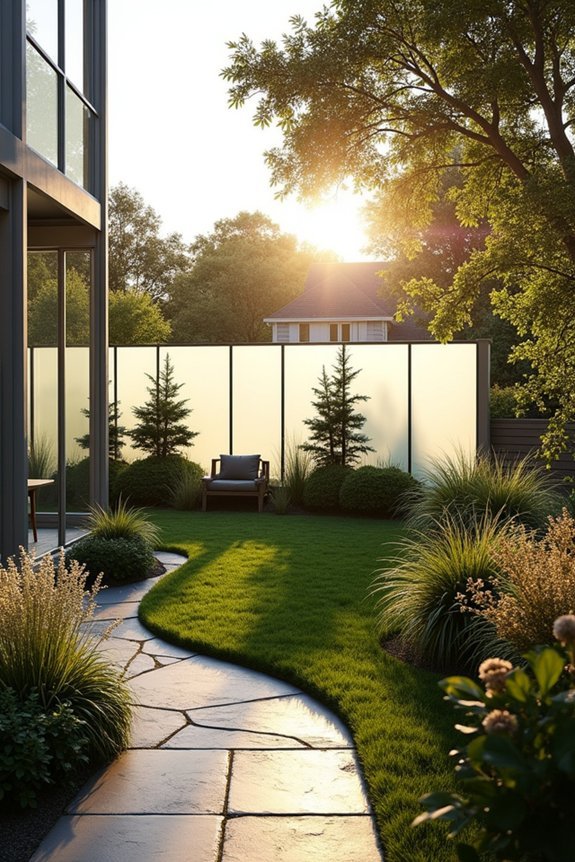
Glass panel privacy screens deliver 60-80% visual obscurity while maintaining light transmission rates of 40-70%, creating semi-private outdoor zones without sacrificing illumination. You’ll find frosted glass panels offer the most consistent privacy performance, with acid-etched or sandblasted surfaces diffusing sightlines while preserving natural brightness. Tempered glass panels (minimum 10mm thickness) provide structural integrity for freestanding installations, withstanding wind loads up to 110 mph in properly anchored aluminum or stainless steel frames.
Consider etched designs for customized privacy gradients—geometric patterns, botanical motifs, or horizontal striping create visual interest while controlling visibility zones. Installation requires post spacing at 4-6 foot intervals with silicone gaskets preventing glass-to-metal contact. You can achieve complete opacity with back-painted glass panels or integrate translucent sections for strategic view corridors. Maintenance involves quarterly cleaning with non-abrasive solutions.
[affiai keyword=”frosted glass privacy screens” template=”carousel” count=”3″]
Corrugated Metal Rustic Fencing

Corrugated metal fencing transforms agricultural materials into contemporary privacy barriers, offering 95-100% visual blockage with superior durability ratings. You’ll appreciate the industrial aesthetic these panels bring while maintaining rustic charm through weathered finishes and natural patina development.
These galvanized or Corten steel panels resist warping, rot, and pest damage, making them exceptionally low maintenance. You can install them vertically or horizontally on wood or metal frameworks, with standard 26-gauge thickness providing structural integrity against wind loads up to 90 mph.
The material’s inherent corrugation pattern adds dimensional interest while deflecting sound. You’ll find pre-finished options in aged copper, bronze, or zinc coatings that complement both modern farmhouse and industrial design schemes. Frame spacing at 6-8 feet guarantees proper panel support without compromising visual continuity.
[affiai keyword=”corrugated metal rustic fencing” template=”carousel” count=”3″]