Your patio’s potential extends far beyond a simple umbrella stuck in a stand. When you’re planning overhead shade structures, you’ll need to balance sun protection, weather resistance, and architectural integration with your home’s existing design language. The right awning system transforms unusable midday spaces into functional outdoor rooms, but selecting between fixed installations, retractable mechanisms, and semi-permanent solutions requires understanding how each performs across different climates and spatial configurations.
Retractable Fabric Shade Solutions
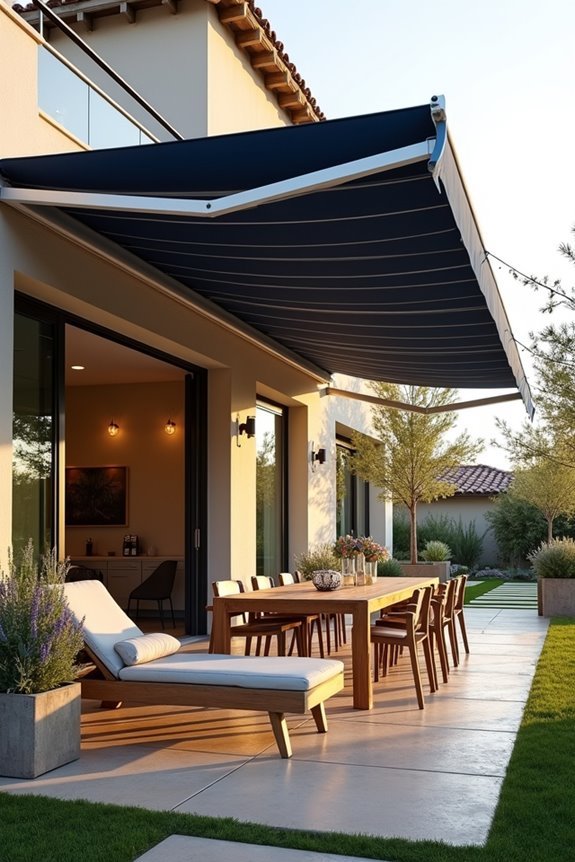
Retractable fabric awnings transform outdoor spaces through engineered shade systems that balance solar control with architectural flexibility. You’ll find these mechanisms deploy weather-resistant acrylic or polyester canopies across spans up to 40 feet, mounted via wall brackets or freestanding frames. Motorized systems integrate pitch adjustments from 5 to 35 degrees, optimizing UV protection while managing heat gain.
The retractable awning benefits extend beyond shade—you’re creating adaptable zones that respond to seasonal shifts and daily weather patterns. When conditions change, you’ll retract the canopy to prevent wind damage or snow accumulation.
Outdoor fabric maintenance requires quarterly cleaning with mild detergent solutions and annual inspections of tension cables, pivot arms, and waterproof seam integrity. Proper care extends fabric lifespan to 10-15 years while maintaining color-fastness ratings.
[affiai keyword=”retractable fabric awnings” template=”carousel” count=”3″]
Pergola With Climbing Vines
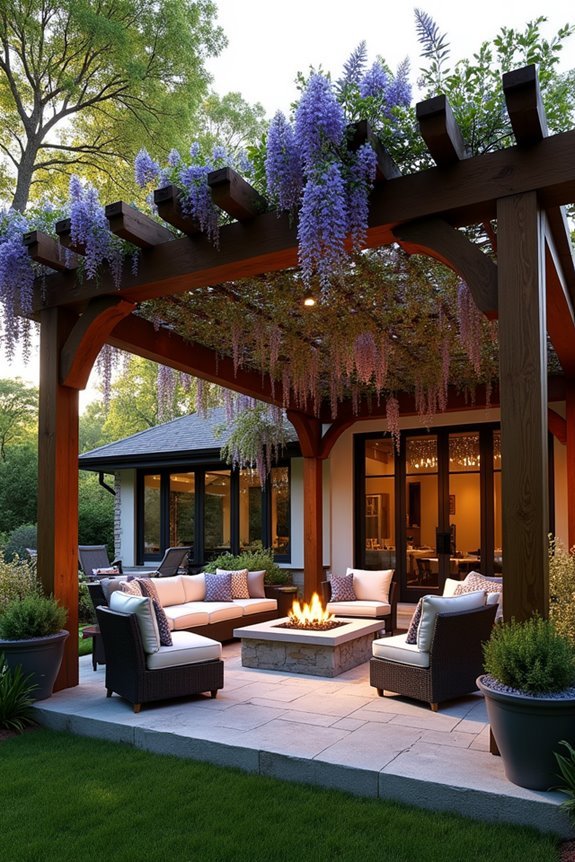
When structural shade meets botanical architecture, pergolas establish vertical growing frameworks that mature into living canopies over 3-5 seasons. You’ll need pressure-treated posts (6×6 minimum) anchored 36 inches deep, supporting rafters spaced 16-24 inches for ideal vine coverage. Climbing plants like wisteria, trumpet vine, or clematis create progressive shade density—year one establishes roots, years two-three produce moderate coverage, years four-five deliver full canopy performance.
Your vertical gardens require tensioned wire guides or wooden lattice panels between posts, directing growth patterns across overhead beams. Select species based on sun exposure: full-sun locations suit bougainvillea and jasmine, while partial shade accommodates climbing hydrangea. Install drip irrigation along post bases for consistent moisture delivery. This bio-integrated approach reduces ambient temperature 10-15°F while providing seasonal color variation.
[affiai keyword=”pergola climbing vines” template=”carousel” count=”3″]
Permanent Metal Roof Structures
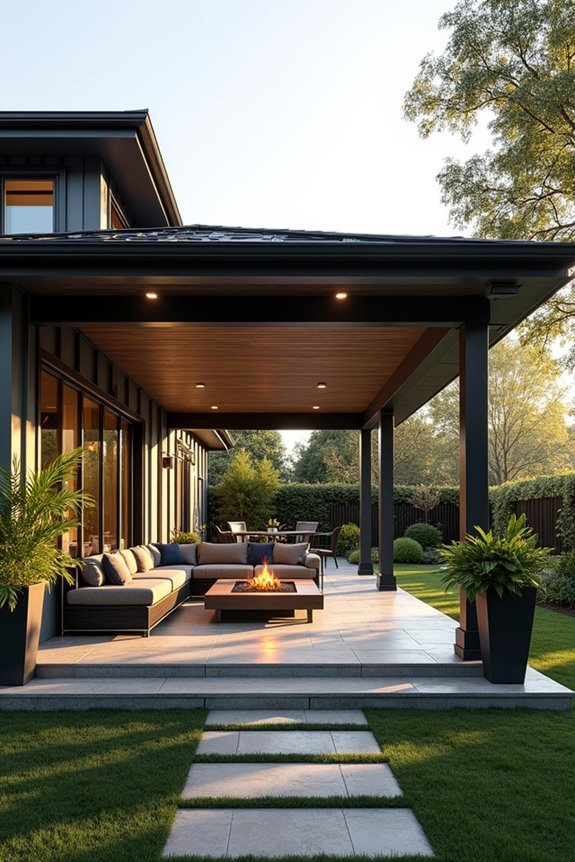
Permanent metal roof structures deliver year-round weather protection through engineered aluminum or steel frameworks that withstand wind loads up to 130 mph and snow accumulation exceeding 40 pounds per square square foot. You’ll find metal roofing advantages include powder-coated finishes in architectural colors that resist fading, corrosion, and thermal expansion for 25-30 years without maintenance.
Configure your structure with insulated panel systems that reduce heat transfer by 40% compared to traditional awnings. Among outdoor durability options, standing seam profiles provide superior water shedding while flat-panel designs complement modern architecture. Integrated gutters and downspouts channel runoff away from foundation walls. You can anchor these systems directly to concrete footings or attach them to existing structural members, creating covered spaces that function identically to interior rooms throughout all seasons.
[affiai keyword=”permanent metal roofs” template=”carousel” count=”3″]
Motorized Louvered Roof Systems
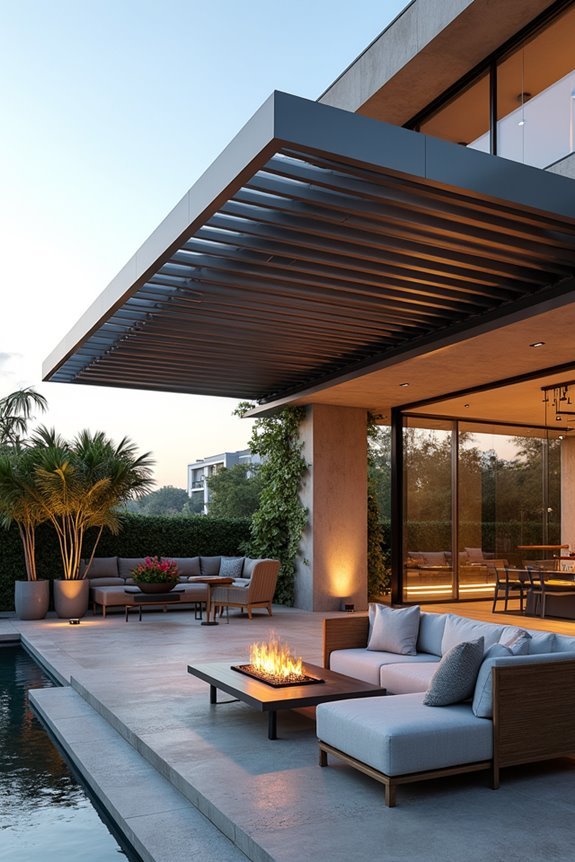
Motorized louvered roof systems transform outdoor spaces into climate-responsive environments through rotating aluminum slats that pivot 0-160 degrees via weatherproof actuators and programmable controls. You’ll achieve precise sun exposure management while maintaining architectural continuity with your home’s design language.
These systems integrate seamlessly with rain sensors that automatically close louvers during precipitation, creating watertight seals through interlocking blade profiles. Solar panel integration options allow off-grid operation, reducing electrical infrastructure requirements while supporting sustainable design objectives. The waterproof materials—typically powder-coated aluminum with PVDF finishes—withstand coastal corrosion and UV degradation.
You can specify single-zone or multi-zone configurations based on patio dimensions, with load-bearing capacities accommodating wind ratings up to 130 mph. Remote controls, smartphone apps, and home automation integration provide operational flexibility for dynamic weather response.
[affiai keyword=”motorized louvered roof systems” template=”carousel” count=”3″]
Sailcloth Canopy Installations
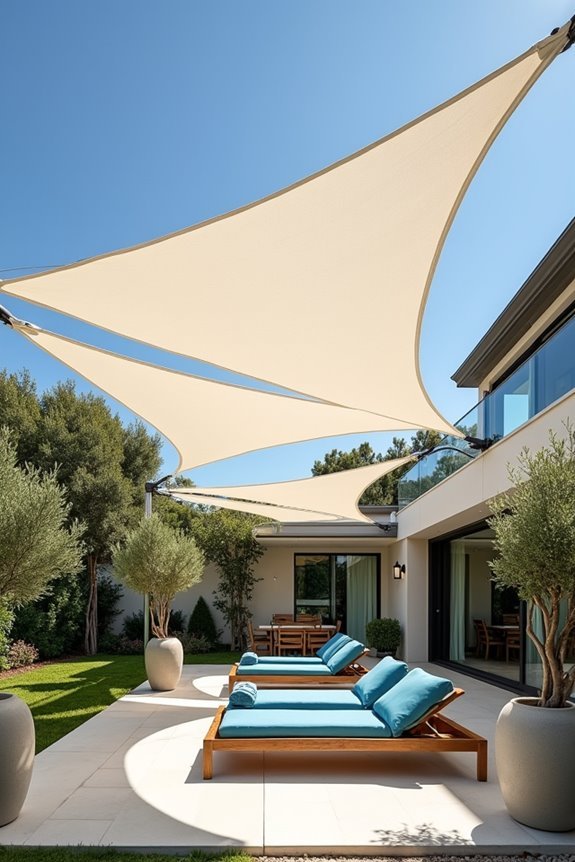
Triangular or quadrilateral fabric panels suspended from perimeter anchor points create sailcloth canopies that filter sunlight through tensioned membrane structures. You’ll achieve ideal shade coverage by calculating sun angles and positioning panels at 20-30 degree inclines. Sailcloth shade installations require UV-resistant HDPE fabric rated at 185-340 GSM for durability against wind loads up to 85 mph.
Mount stainless steel D-rings or turnbuckles to existing posts, walls, or dedicated anchor poles positioned 8-15 feet apart. Layer multiple panels in overlapping configurations to maximize coverage while maintaining visual lightness. Nautical themes integrate seamlessly through marine-grade hardware and rope detailing. You can adjust tension seasonally using adjustable fixtures, preventing water pooling during rain. Remove panels before winter storms in regions experiencing heavy snow accumulation.
[affiai keyword=”sailcloth canopy fabric” template=”carousel” count=”3″]
Bamboo Roll-Up Shade Screens
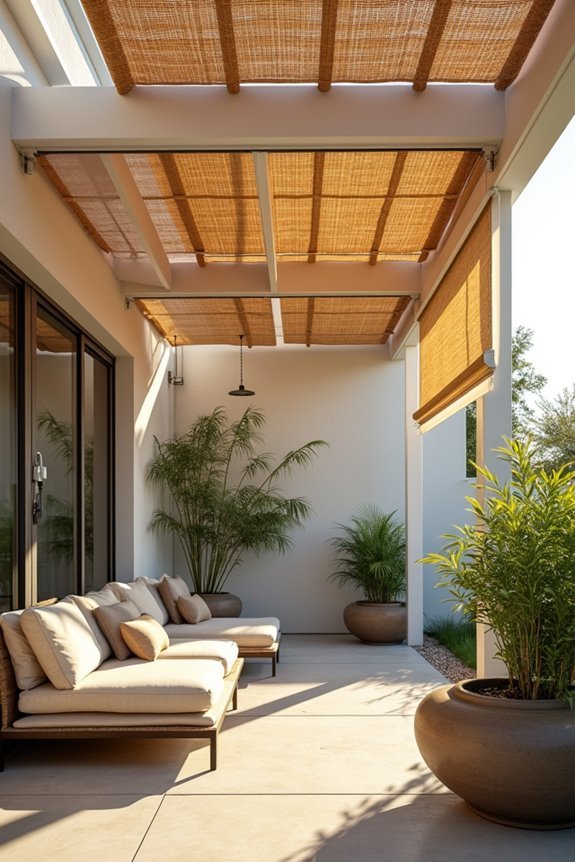
Natural bamboo reeds woven into roll-up screens offer versatile light filtration while maintaining airflow through your patio structure. You’ll find these screens deploy via corded mechanisms or motorized systems, allowing precise control over sun exposure throughout the day. The bamboo durability benefits include natural resistance to UV degradation, moisture tolerance, and minimal maintenance requirements compared to synthetic alternatives.
Install these screens along southern or western exposures where afternoon sun creates excessive heat buildup. The bamboo aesthetic appeal complements Mediterranean, tropical, and contemporary architectural styles while introducing organic texture to hardscape-dominant spaces. You can mount them externally on pergola beams or internally within covered structures. Standard widths range from four to twelve feet, with custom sizing available for non-standard openings. The natural variation in reed thickness creates dynamic shadow patterns that enhance visual interest.
[affiai keyword=”bamboo roll-up shade screens” template=”carousel” count=”3″]
Retractable Glass Panel Enclosures
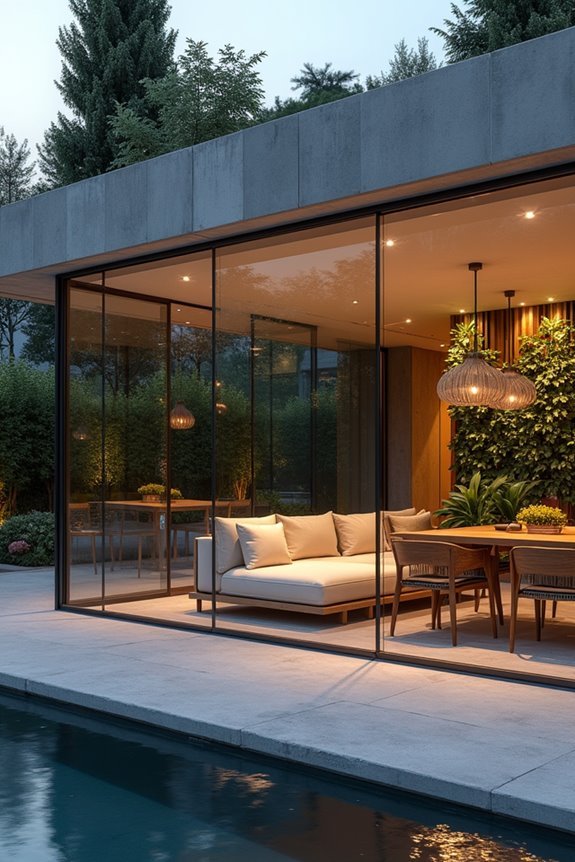
When climate control becomes essential without sacrificing outdoor views, retractable glass panel systems create weatherproof extensions of your living space while preserving visual transparency. These frameless or minimal-frame configurations slide, fold, or stack seamlessly, transforming your patio into a four-season room within seconds.
You’ll find outdoor enclosure functionality maximizes year-round usability through thermal insulation and wind protection while maintaining unobstructed sightlines. Track-mounted systems operate manually or motorized, accommodating openings from 8 to 40 feet wide.
Glass panel aesthetics complement contemporary architecture through clean lines and reflective surfaces that amplify natural light. Tempered safety glass withstands impact and weather extremes, while low-E coatings reduce heat transfer. Consider bottom-rolling systems for smooth operation and top-hung options where floor tracks aren’t feasible.
[affiai keyword=”retractable glass panel systems” template=”carousel” count=”3″]
Vintage Striped Canvas Awnings
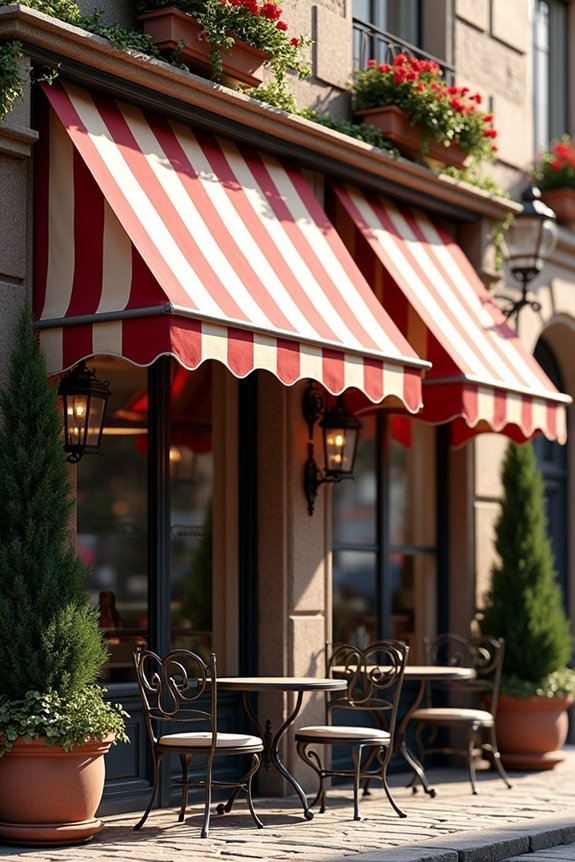
Evoking Mediterranean cafés and classic boardwalk architecture, vintage striped canvas awnings introduce rhythmic patterns and nostalgic charm while delivering measured shade control. You’ll find these vintage designs work best when aligned with your home’s architectural proportions—awning projection should extend 65-80% of the window height for ideal solar protection. Canvas weight matters: specify 10-12 oz. solution-dyed acrylic fabric for UV resistance and dimensional stability. Traditional stripe widths range from 4 to 9 inches, with bolder patterns suited to larger installations. Mount hardware at structural members, maintaining 8-inch spacing for valance support. Consider complementary colorways that reinforce your site’s existing palette while establishing distinct outdoor aesthetics. Proper tensioning prevents water pooling and extends fabric longevity to 8-10 years with routine maintenance.
[affiai keyword=”vintage striped canvas awnings” template=”carousel” count=”3″]
Natural Grass Thatched Roofing
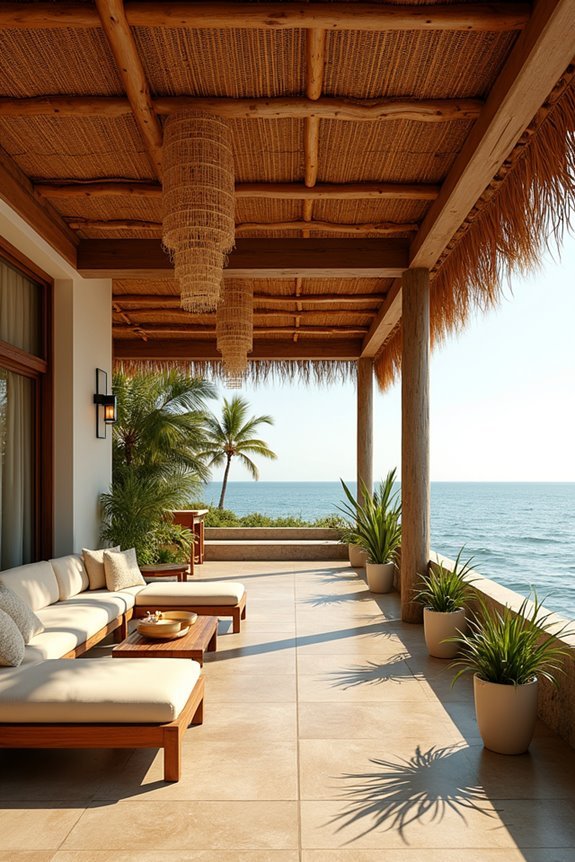
Tropical and coastal installations often demand materials that perform beyond traditional fabric solutions, leading designers toward organic thatch systems that provide superior ventilation and authentic aesthetic integration. You’ll find thatched roofing benefits include natural UV filtration, thermal regulation through air circulation, and biodegradable lifecycle compatibility with environmental standards. Installation requires engineered substrate framing—typically pressure-treated lumber or aluminum—to support bundled palm, reed, or synthetic hybrid materials secured through wire-binding techniques.
Thatched patio maintenance demands quarterly inspections for moisture accumulation, pest infiltration, and structural integrity assessment. You’ll need to address loose binding immediately and apply fire-retardant treatments in jurisdictions requiring compliance. Expect material replacement cycles between five to fifteen years depending on climate exposure, with coastal salt environments accelerating degradation rates considerably.
[affiai keyword=”thatched roofing materials” template=”carousel” count=”3″]
Polycarbonate Corrugated Panel Covers
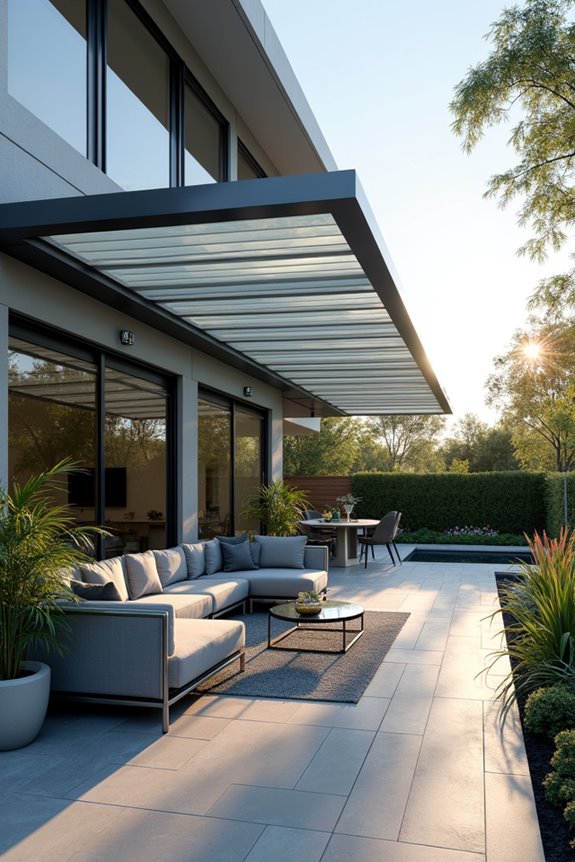
Bridging the gap between architectural transparency and structural durability, polycarbonate corrugated panels deliver impact-resistant overhead protection with light transmission rates you can engineer from 25% to 90% depending on panel thickness and coating specifications. You’ll select from 8mm twin-wall or 16mm multi-wall profiles based on your span requirements and snow load calculations. The polycarbonate durability withstands hail impacts up to 1.75 inches while maintaining optical clarity for fifteen years minimum. Install UV-coextruded surfaces facing skyward to prevent yellowing degradation. Bronze and opal tints optimize sunlight diffusion, reducing glare by 40% compared to clear variants. Mount panels with thermal expansion fasteners spaced at 12-inch intervals, allowing 3mm movement per linear foot. Overlap corrugations by two ribs minimum, sealing joints with compatible silicone rated for 150°F continuous exposure.
[affiai keyword=”polycarbonate corrugated panels” template=”carousel” count=”3″]
Adjustable Aluminum Slat Systems
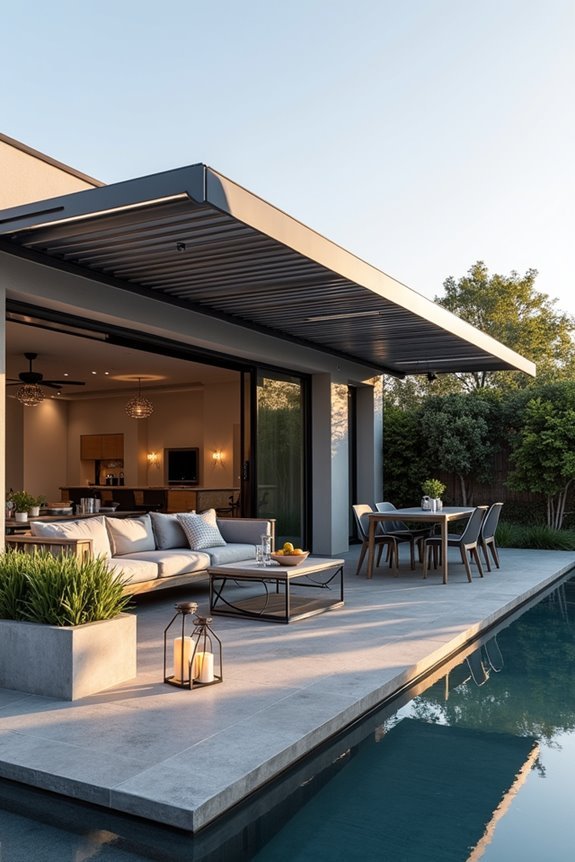
Where fixed panels lock you into permanent light conditions, adjustable aluminum slat systems transform your patio’s solar exposure through motorized or manual rotation of extruded louvers that pivot from 0° to 120°. You’ll control ventilation, shade density, and rain protection with precision-engineered slats mounted to powder-coated frames.
These weather resistant materials withstand coastal corrosion and UV degradation while maintaining operational integrity through thousands of adjustment cycles. Install wall-mounted configurations for minimal site disruption, or specify freestanding posts where structural anchoring isn’t feasible.
You’re investing in customizable sun protection that adapts throughout the day—close louvers completely during afternoon glare, angle them for diffused morning light, or open fully when cloud cover arrives. Integrate rain sensors and wind gauges for automated climate response that protects furnishings without manual intervention.
[affiai keyword=”adjustable aluminum slat systems” template=”carousel” count=”3″]
Cedar Wood Slatted Canopies
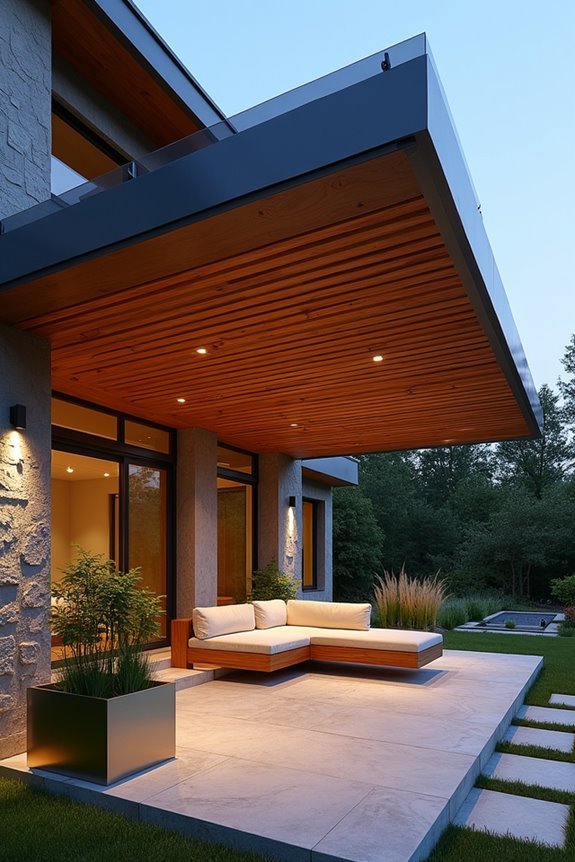
Natural cedar louvers deliver dimensional stability and innate decay resistance through wood grain that weathers to silver-gray patinas without structural compromise. You’ll achieve peak performance by spacing slats 1.5 to 3 inches apart, allowing controlled light penetration while maintaining shade coverage ratios between 60-75%. Install western red cedar boards in 2×6 or 2×8 profiles, mounted perpendicular to primary beams with stainless steel fasteners that prevent tannin staining.
Cedar maintenance tips include annual inspections for splitting and biannual applications of penetrating oil sealers to preserve honey-toned hues. Alternatively, embrace natural weathering for authentic organic aesthetics. Stylish finishes range from transparent stains highlighting grain patterns to semi-transparent formulations adding subtle color depth. Orient slats east-west for maximum southern exposure control, integrating motorized pivot mechanisms for adjustable sun tracking throughout seasons.
[affiai keyword=”cedar wood slatted canopies” template=”carousel” count=”3″]
Woven Wicker Overhead Panels
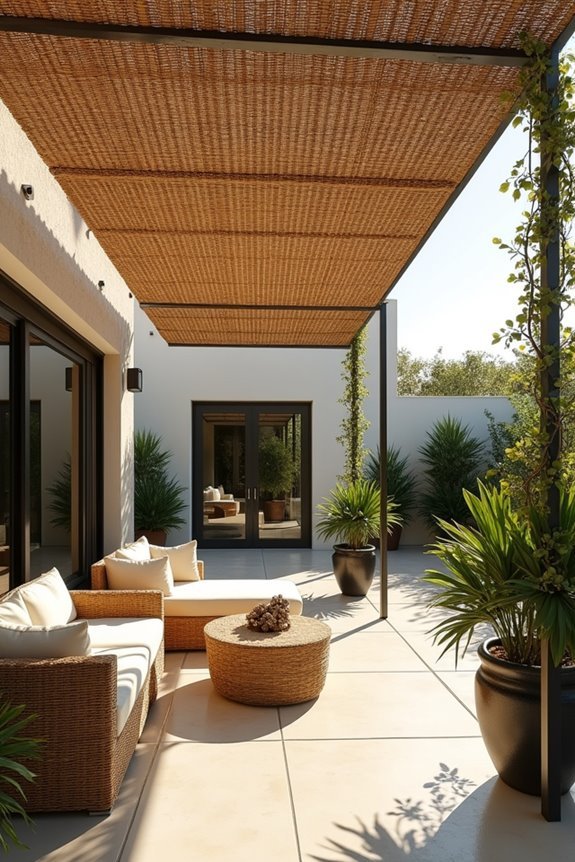
While synthetic materials dominate modern patio coverings, woven wicker panels offer organic texture and natural ventilation properties that synthetic alternatives can’t replicate. You’ll achieve peak performance by installing these panels at 60-70% density, allowing filtered sunlight while maintaining airflow. Mount the panels on aluminum or steel frames to prevent sagging under moisture exposure.
Consider matching your overhead panels with wicker outdoor furniture to create design continuity throughout your space. The panels function similarly to woven wall decor but require weather-resistant treatments—apply marine-grade sealant annually. Install panels at minimum 8-foot clearance for comfortable headroom. Position them perpendicular to prevailing winds to maximize durability. You’ll need to replace natural wicker panels every 3-5 years depending on climate exposure and maintenance frequency.
[affiai keyword=”woven wicker overhead panels” template=”carousel” count=”3″]
Tensioned Shade Sail Structures
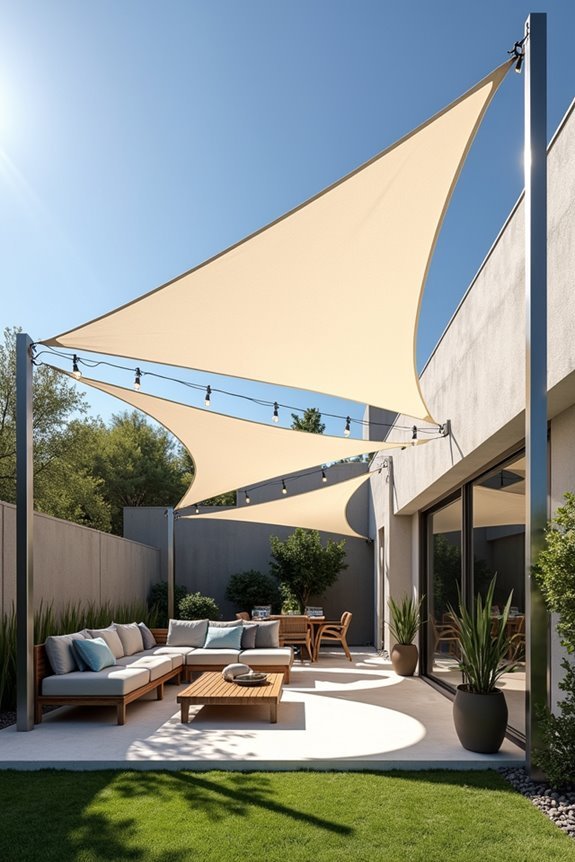
Tensioned shade sails create dynamic overhead coverage through triangular or quadrilateral fabric membranes stretched between anchor points at varying heights. You’ll achieve ideal tensioned shade benefits by positioning anchors to create natural water runoff and maximize UV protection during peak sun hours. The engineered fabric withstands wind loads through proper tensioning ratios—typically 3-5% fabric stretch.
Installation techniques require calculated anchor placement: mount posts at 8-10 feet height with concrete footings extending 36 inches deep. You’ll need stainless steel hardware rated for continuous outdoor exposure and UV-resistant HDPE fabric with reinforced corners. Position sails with 15-20 degree slopes for drainage, maintaining 6-8 inches of clearance from structures. Layer multiple sails at staggered heights to create architectural depth while ensuring complete shade coverage throughout your patio zone.
[affiai keyword=”tensioned shade sail structures” template=”carousel” count=”3″]
Reclaimed Door Awning Frames
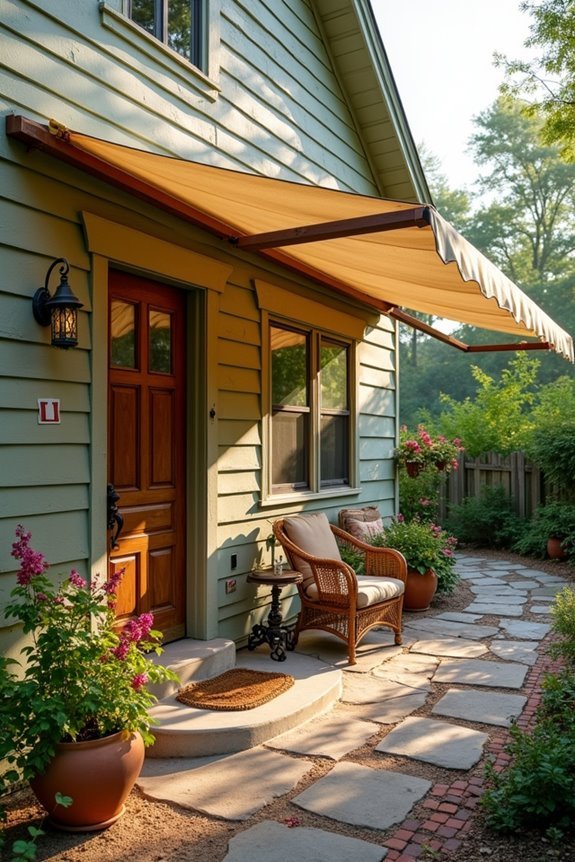
Repurposed vintage doors transform into characterful awning frames that bring architectural salvage into functional shade structures. You’ll mount these doors horizontally above patio spaces, creating distinctive overhead frameworks that support fabric panels or corrugated materials. The existing door panels provide structural rigidity while their weathered patinas deliver instant visual depth to your outdoor environment.
Select solid-core doors measuring 36-42 inches wide for ideal spanning capabilities. You’ll need to reinforce hinge points with galvanized brackets and install lateral support beams across the door’s width. DIY installations require careful assessment of wall anchoring conditions—brick, stucco, and wood siding each demand specific fastening approaches. These upcycled materials typically accommodate shade cloth tensioned through existing hardware openings, creating cost-effective canopies that honor sustainability while addressing site-specific solar orientation challenges.
[affiai keyword=”repurposed vintage door awning frames” template=”carousel” count=”3″]