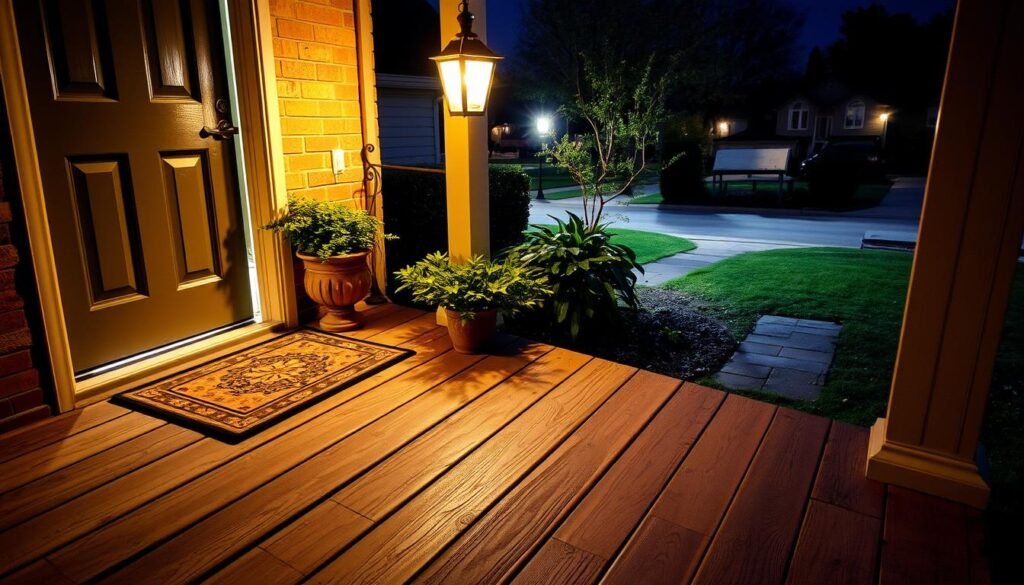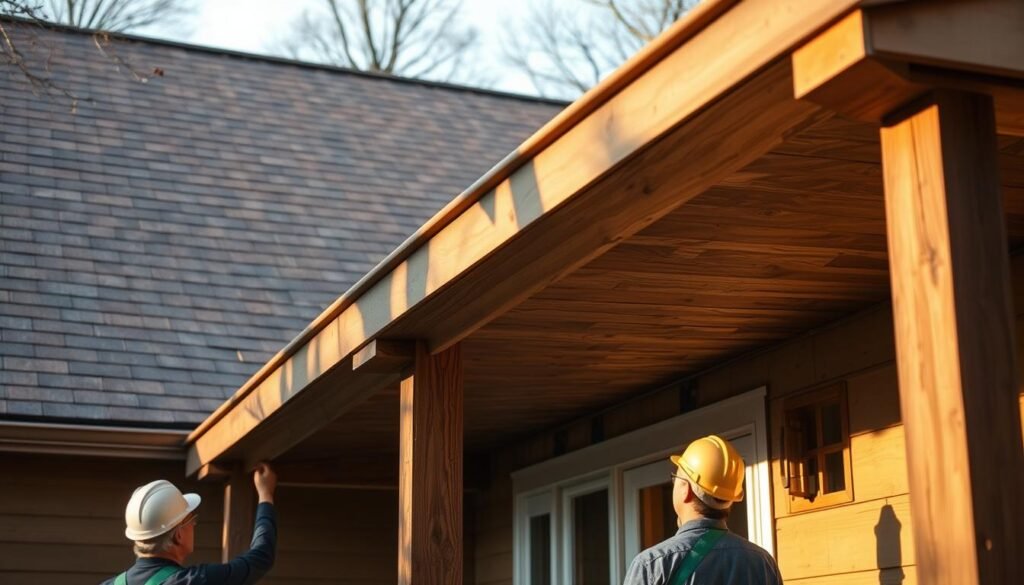
Adding a wrap around porch to your home is a fantastic way to add extra outdoor living space. It makes your property look better and more useful. Imagine relaxing with a book, having friends over, or sipping your morning coffee on it. This project increases your living area and connects you more with the outdoor environment.
It’s important to make sure the porch design fits well with your home’s look. Doing this enhances the beauty and value of your property. Wrap-around porches are usually found on homes that are between 2,462 and 3,913 square feet. These homes often have 2 to 6 bedrooms and 2.5 to 5.5 bathrooms. About 33% of these homes have double-decker porches, showing they are popular among homeowners.
When building your porch, think about the roof, materials, and the style of your home. This could be modern farmhouse or traditional Southern. Consider these to make sure your porch looks great and serves its purpose. The cost might be between $30,000 and $60,000, depending on how complex it is and the features you choose.
Key Takeaways
- A wrap around porch offers additional outdoor living space suitable for various activities.
- Integrating the porch design with your home’s architecture enhances its aesthetic appeal.
- Homes with wrap-around porches commonly range from 2,462 to 3,913 square feet.
- The average cost for constructing a wrap around porch is between $30,000 and $60,000.
- Planning and material selection are critical for the functionality and longevity of your porch.
- Permits and approvals are essential components of the construction process.
Planning Your Wrap Around Porch Design
When thinking about porch design ideas for a wrap around porch, focus on both use and looks. Wrap around porches add valuable living space outdoors, and many people love adding them to their homes. About 25% of new houses in suburbs now have a wrap around porch, showing they’re quite popular.
Choosing between a screened-in porch for keeping bugs out or an open one for clear views is important. This choice changes how much you’ll enjoy the space. The materials you pick matter a lot, too. While traditional wood looks great, 60% of homeowners now prefer composite materials for their lasting quality and easy care.
When building a porch, adding design touches that boost your home’s look and usefulness is key. For instance, German smear brick adds texture and subtle color, giving a distinct charm. Also, 40% of these porches have things like lights and swings to make them more welcoming for meals and fun.
It’s also smart to plan different areas on your porch for different activities. Some designs have spots for chilling, eating, or even an outdoor kitchen. One remodel showed off a large table and a sturdy roof. Painting your ceiling a special color, like a pale blue from Sherwin Williams, can make it look even nicer.
Lastly, think about the cost, which usually runs from $15,000 to $30,000 for a wrap around porch. Planning well and sticking to your budget can help make your porch project go smoothly. Plus, it could even boost your home’s value by as much as 10%.
| Feature | Homeowner Preference | Percentage |
|---|---|---|
| Composite Materials | Durability and Low Maintenance | 60% |
| Screened-In Porch | Protection from Insects | 30% |
| Wrap Around Porches | Inclusion in New Home Builds | 25% |

Authentic Wood Aesthetic - Expertly crafted texture that flawlessly mimics the richness and elegance of real wood, offering a breathtakingly natural and timeless look that transforms your outdoor space into a luxurious retreat.

[BULLNOSE STAIR TREADS WITH FRONT-EDGE COVERAGE]: Features a molded 1-inch bullnose edge designed to extend over the front of each stair, improving traction at the step nose where slips are most likely to occur. Sized for standard stair edges on outdoor stairways, porches, decks, and RV steps.

【Explore all colors with ease】Find the decking color that perfectly matches your space through color sample boards. The 3 sample plates include 6 colors.
Obtaining Necessary Permits and Approvals
Before you start on your new porch, it’s important to get the right building permits and construction approvals. Every state in the U.S. has different rules for permits. This makes knowing what you need a bit tricky.
Things like patio covers or gazebos attached to your house usually need a permit. But small, detached structures under 120 square feet often don’t. For complex projects, getting advice from professionals helps to make sure you’re following all legal requirements for construction.
The height of what you’re building could also affect permit needs. For example, fences under six feet might not need one in some places. But, local rules can vary a lot, even for similar structures close to each other.
Building regulations have changed a lot over time. This adds to the challenge, because there’s no one set of rules for all areas. If you skip getting permits, it could mean fines, having to tear down your work, or expensive fixes.
These strict rules are there to keep homeowners safe and healthy. In areas prone to earthquakes like Illinois and California, safety needs differ. Not following these rules can mess with selling your home, as real estate agents note.
Getting permits and following local laws not only avoids trouble but can also increase your home’s value. A well-built porch can make your home worth 10-15% more, which is a great return on your investment.
If you’re thinking of adding a porch, it can cost between $8,000 to $20,000. The price depends on its size, materials, and design. Working with a professional contractor helps avoid delays and ensures everything meets local codes. Nearly 30% of do-it-yourself projects eventually need expert help.
The cost for a permit for a deck varies widely, from $75 in small towns to much more in big cities. Decks built over 30 inches off the ground almost always need a permit.
To wrap up, it’s crucial to get building permits and construction approvals and to follow legal requirements for construction. This is key for a successful project and keeping away from legal problems.
Preparing the Site for Construction
Getting the site ready is the first physical step in building. It’s very important to clean the area well for your porch. This means taking away things like trees, bushes, or big rocks that are in the way. Checking the soil to make sure it’s solid is also key to supporting your porch. A strong foundation keeps your project lasting a long time.
After making sure the soil is solid, you start laying out a basic framework based on your design. Adding ledger boards to your house helps merge the new porch smoothly with your existing home. Thinking about the landscape and the way your house is built is really important for getting the site ready.
If the ground is flat, building is much easier. But a sloping site might need extra work and more money for the foundation. Also, putting a roof on your porch changes how much light gets into your house.
Adding a deck means you’ll lose some garden space because nothing can grow under it. Planning well means thinking about how your porch fits with the outdoors. You should also think about what materials to use. While costs are similar, materials like composites or PVC last longer and need less upkeep than wood.
Taking these steps seriously helps make your porch a lasting part of your home. Good preparation leads to a strong and beautiful porch. It will make your outdoor space better.
Building the Foundation for Your Porch
Making a strong foundation is key for your wrap-around porch’s stability and life span. The steps of porch foundation construction demand careful planning and exact action. This ensures your porch looks amazing and lasts for years.
The foundation’s depth and type can change a lot, depending on your home’s design and location. You might use simple slab foundations or choose complex setups with piers or beams. Foundations generally need to be 450mm to 1000mm deep. This depends on the location specifics and what the rules in your area say.
For a solid porch foundation, poured concrete is a go-to for the footing. It’s paired with a moisture-blocking layer and insulation boards. Adding plastic sheeting is crucial for keeping water out. These materials work together to stop ground water from harming your porch.
Trench foundations are often chosen for big porches that have walls, columns, and windows. They are usually 600mm wide and 450mm deep. Remember, you must get Building Control’s ok before you start. This confirms your foundation meets all requirements, making the building process safer.
| Material | Description |
|---|---|
| Poured Concrete | Used for creating the footing, providing a solid base for the structure. |
| Damp-Proof Membrane | Installs to prevent moisture from penetrating the foundation. |
| Plastic Sheeting | Additional protection against moisture and groundwater. |
| Polystyrene Boards | Used for insulation, ensuring energy efficiency and stability. |
In places with a lot of frost, the footings should be below the freeze line to fight heaving forces. It’s also vital for the foundation to handle the weight of the structure and anything on it. Balancing these weights stops dangerous incidents, like decks collapsing. Always check local building codes for specific rules on footings and spacing. This helps you design a foundation that suits your area’s conditions and your porch’s needs.

FIX FOUNDATION WALL CRACKS EASILY: Our Concrete Crack Repair Kit offers a reliable solution for foundation crack repair injection kit and concrete crack repair. Homeowners can address concrete cracks and cement crack filler issues efficiently, preventing water infiltration and protecting the basement from potential water damage. Whether you’re facing rainstorms or just trying to maintain your basement, it provides a hassle-free solution, saving you the cost and trouble of hiring professionals.
TWO-PART SYSTEM: This 8 lb density expanding polyurethane pour foam kit includes Part A (Base) and Part B components in 1-pint containers each for a total quart kit

FOUNDATION CRACK REPAIR INJECTION KIT: Professional-grade structural epoxy injection for repairing cracks in poured concrete foundation walls, basement walls, crawlspaces, and retaining walls.
Adding Structural Components and Features
Constructing a wrap-around porch starts with adding structural parts and features. It’s vital to choose and add porch columns, support beams, and roof structures carefully. This ensures your porch is stable and looks great.
Cedar is a top pick for porch columns because it lasts long and fights off pests and rot. Cedar columns not just support your porch but also add beauty with their warm color and texture.
For a unique touch, think about using custom roof trusses. With a custom design, you can add special touches like fancy brackets and gabled roofs. These not only make your porch look better but also give it personality.
Adding built-in lighting can make your porch nicer and more useful. You can choose from simple lights or fancier ones, like wall sconces or recessed lighting. These lights improve the atmosphere and make your porch safer in the evening.
A beautiful and sturdy railing system is a must for safety and looks. You can pick from wood, metal, or composite materials for the railing. The right choice will make your porch look pulled together.
You can also add things like seats, plant boxes, or an outdoor kitchen to your porch. These extra features make your porch more welcoming and useful. When everything is designed well, your porch will be a place where you love to spend time.
Building a wrap-around porch is complex and expensive, so getting professional help is a smart move. According to Nicki & Karen, experts make sure everything from the base to the final details is done right and safely.
Let’s explore the costs of different materials and features:
| Material / Feature | Cost Range (per sq. ft.) |
|---|---|
| Pressure-treated Wood | $15 – $25 |
| Composite Decking | $25 – $50 |
| Professional Installation | $10 – $15 |
| Cedar Decking | $3 – $7 |
| Redwood Decking | $5 – $35 |
| Labor Costs | $15 – $35 |

【About Measurement】Please refer to the diagrams before purchasing. You’ll need to leave 0.5-1 ft of space for accessories to avoid buying an oversized shade. Due to the characteristics of this fabric, there may be a tolerance of ±2 inch from the outer edge of one D-ring to the outer edge of the other D-ring

Easy to apply: designed for easy installation, these appliques can be used on windows, walls, doors, cabinets, and more, providing a versatile decorating solution,appliques for furniture,woodcarving onlay
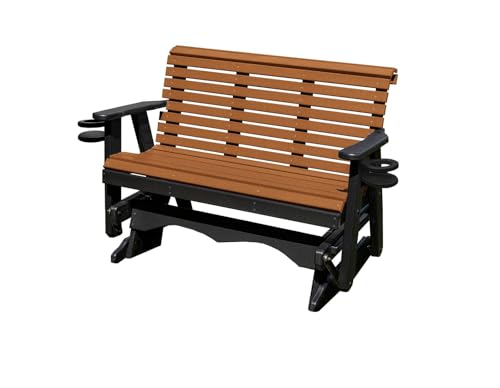
1000 LB CAPACITY — BUILT LIKE A TANK - Engineered to support up to 1000 lbs with reinforced anti-sag metal plates and structural bracing. Zero wobble. Zero flex. Designed for real family use, not decorative display. CUPHOLDERS included.
Finishing Touches to Enhance Your Porch
Your wraparound porch is like a blank canvas, waiting for your personal touch. Adding final details transforms it into a cozy place. Surveys show 70% of homeowners like colorful decoration to brighten their outdoor areas. Think about adding bright cushions, decorative rugs, and hanging plants for a welcoming vibe.
Choosing the right outdoor furniture is key. About 75% of people want furniture that can handle the weather. Pick seating made from treated wood or metal for durability and comfort. Don’t forget to include items like side tables and porch swings, which 55% of homeowners love for added functionality.
Lighting sets the mood of your porch. Sixty percent of homeowners think outdoor lighting, like string lights or lanterns, invites evening gatherings. Add cozy blankets and rugs too, as 80% of porch owners find these essential. For more comfort, screens or overhangs can protect against different weathers. Around 65% of homeowners use privacy screens for comfort all year round.
For even more inspiration, check out wraparound porch ideas online. And remember, upkeep is crucial to keeping your porch lovely for years. With carefully chosen decorations and furniture, you’ll make a space that’s both pretty and relaxing.