You’ll need to understand the structural relationship between fencing and plantings before you select materials. The fence acts as your hardscape anchor—whether it’s split rail, picket, or horizontal slat—while bushes provide the living architecture that softens edges and defines spatial boundaries. Your choices in height, density, and seasonal interest will determine whether you create a formal parterre effect or something more naturalistic, each approach requiring specific installation techniques and maintenance protocols we’ll examine throughout these thirteen proven configurations.
Privacy Screening With Evergreens
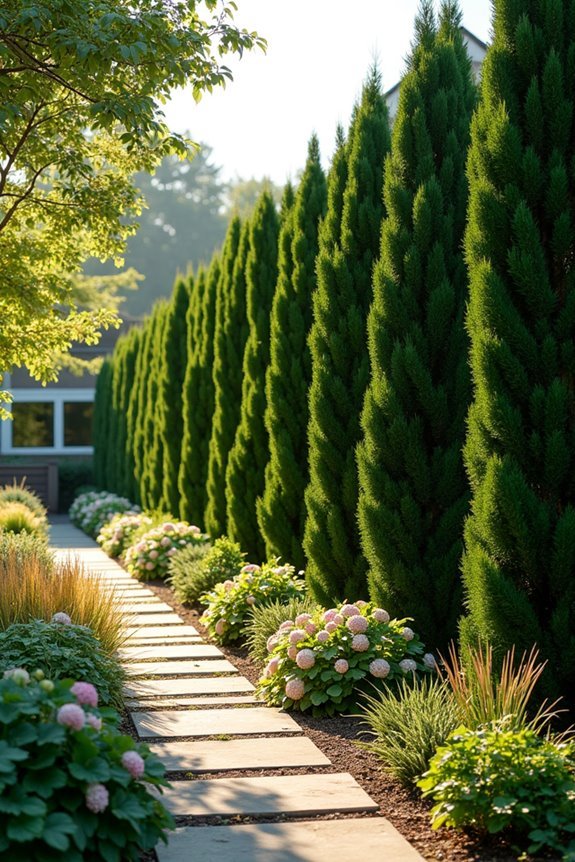
Where vertical space allows, evergreen hedges create living barriers that transform property lines into year-round privacy screens. You’ll achieve ideal density by selecting evergreen varieties like Leyland cypress, which grows 3-4 feet annually, or arborvitae ‘Green Giant,’ reaching 12-15 feet in five years. Space plants 3-5 feet apart for seamless coverage within two growing seasons.
Consider your site conditions carefully. Boxwood thrives in partial shade, while juniper tolerates drought and poor soil. For immediate impact, install 6-8 foot specimens; budget-conscious privacy options include 3-gallon containerized plants that establish faster than bare-root alternatives.
Maintain screening effectiveness through annual shearing, removing one-third of new growth. This encourages lateral branching and prevents gaps. Monitor irrigation during establishment—evergreens require consistent moisture for dense foliage development that delivers complete visual separation.
[affiai keyword=”evergreen privacy screens” template=”carousel” count=”3″]
Layered Shrub Border Design
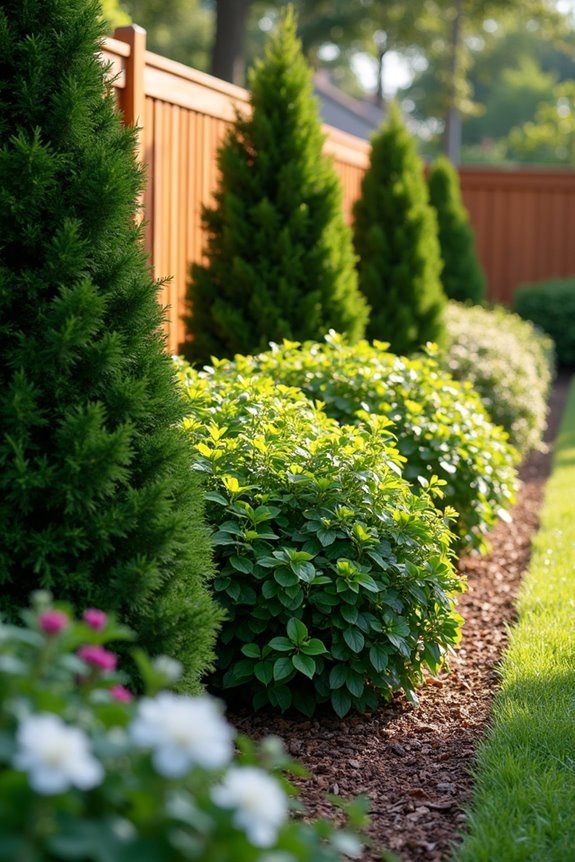
Layered shrub borders build upon vertical screening principles by introducing depth and textural complexity through strategic plant placement in three horizontal zones. You’ll position tall screening shrubs (6-8 feet) at the back, mid-height specimens (3-5 feet) in the middle tier, and low-growing plants (12-24 inches) along the front edge. This creates layered heights that guide the eye while maximizing visual interest.
Texture contrast becomes critical in successful layering. You’ll combine fine-needled evergreens with broad-leaved deciduous shrubs, then add ornamental grasses for movement. Space plants according to mature width, allowing 18-24 inches between zones for air circulation and maintenance access. You’re creating dimensional screening that blocks sightlines while establishing sophisticated garden architecture along your fence line.
[affiai keyword=”layered shrub border design” template=”carousel” count=”3″]
Flowering Hedge Garden Borders
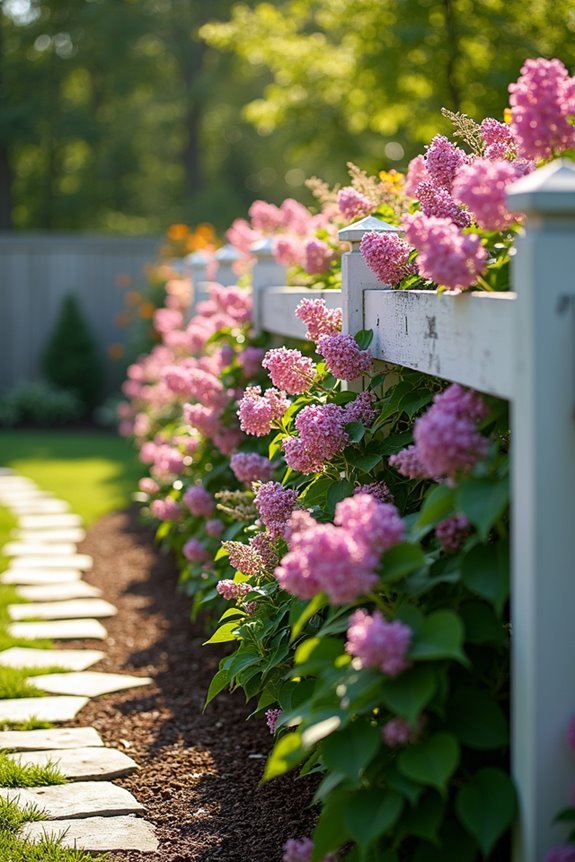
While layered shrub borders prioritize evergreen structure, flowering hedge borders transform fence lines into seasonal spectacles through bloom-focused plant selection. You’ll achieve maximum impact by selecting flowering shrubs with synchronized bloom periods—spring options include forsythia and lilac, while summer brings hydrangea and rose varieties. Plant specimens 18-24 inches apart for rapid closure, maintaining consistent depth from your fence at 2-3 feet to allow air circulation and hedge maintenance access.
Strategic pruning schedules differ by bloom timing: spring-flowering varieties require post-bloom trimming, whereas summer bloomers tolerate late winter cuts. You’ll want to establish bloom succession by interspersing early, mid, and late-season performers within your hedge row. This approach delivers continuous color while maintaining the unified linear form essential for fence-line plantings.
[affiai keyword=”flowering hedge plants” template=”carousel” count=”3″]
Mixed Height Perimeter Planting
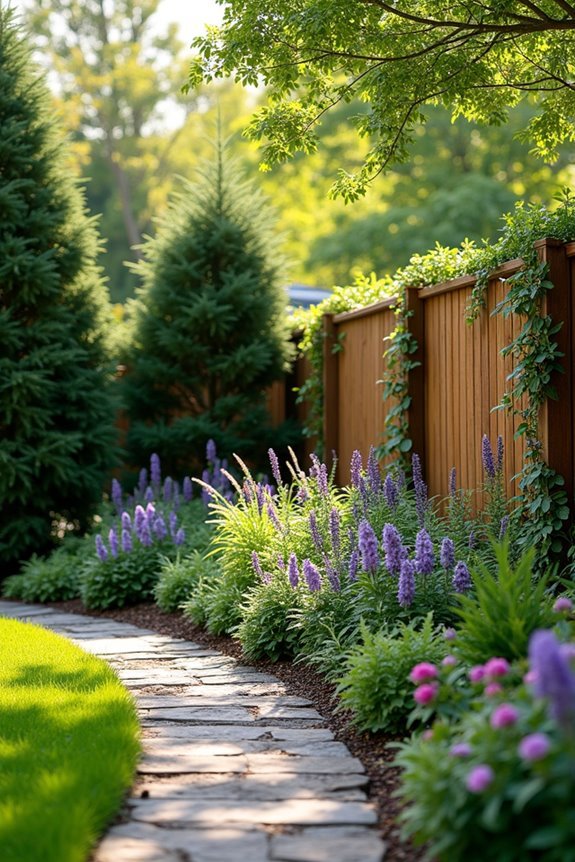
Mixed height perimeter planting breaks the single-plane limitation of traditional hedge borders by introducing vertical layering through deliberate elevation variation. You’ll create dynamic visual interest by positioning tall specimens at strategic intervals, mid-height shrubs filling intermediate zones, and low-growing perimeter plants anchoring the foreground. This tiered arrangement establishes depth perception and spatial complexity along fence lines.
Your height variation should follow the rule of thirds: allocate tallest plantings to occupy the upper third, medium selections the middle third, and compact varieties the lower third. Position evergreens as your structural backbone, interspersing deciduous specimens for seasonal contrast. Guarantee adequate spacing between elevation tiers—typically 18-24 inches—to prevent visual merging as plants mature. This stratified approach transforms flat boundaries into three-dimensional living architecture.
[affiai keyword=”layered garden plants” template=”carousel” count=”3″]
Cottage Style Fence Gardens
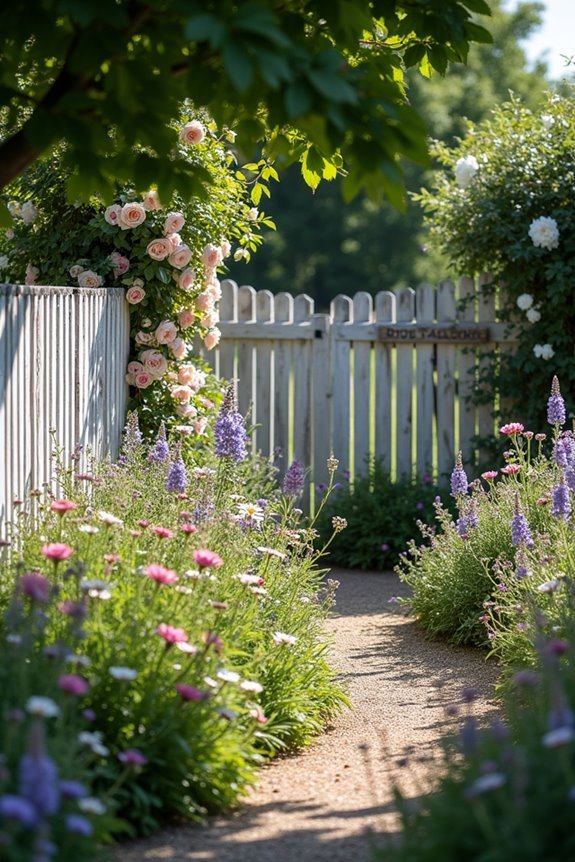
Cottage-style fence gardens establish intentional visual abundance through dense, informal plantings that soften hard boundary lines while maintaining structural coherence. You’ll achieve cottage charm by layering perennials at varying heights—foxgloves, delphiniums, and hollyhocks against picket or split-rail fencing. Position low-growing herbs like lavender and catmint at the fence base, graduating to mid-height roses and shrub roses, then vertical climbers.
The rustic appeal emerges from apparent spontaneity within calculated placement. You’re creating controlled chaos through self-seeding annuals like poppies and nigella interspersed with permanent plantings. Select fence materials that complement rather than compete—weathered wood, painted pickets, or woven willow. Space plants closer than conventional borders, allowing natural intermingling. This density eliminates visual gaps while establishing the characteristically overflowing aesthetic that defines authentic cottage garden design.
[affiai keyword=”cottage style fence garden” template=”carousel” count=”3″]
Modern Minimalist Fence Plantings
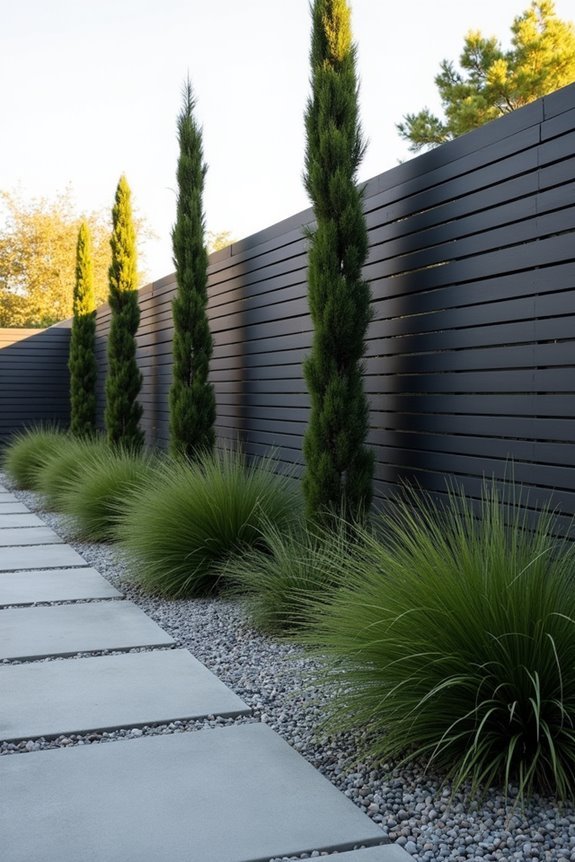
Modern minimalist fence plantings prioritize architectural restraint through strategic plant selection and deliberate negative space. You’ll achieve contemporary design by limiting your palette to three species maximum, emphasizing form over abundance. Position ornamental grasses like Calamagrostis or Miscanthus at precise intervals—typically 36 to 48 inches apart—to create rhythmic visual tension against clean fence lines.
Select specimens with distinct geometric profiles: columnar junipers, spherical boxwoods, or linear bamboo cultivars. You’re working with sustainable materials when choosing native species that require minimal irrigation and maintenance. Maintain exposed mulch or gravel zones between plantings to amplify spatial definition. Your fence becomes a backdrop rather than competition, allowing each plant’s silhouette to register as sculptural intent. Prune regularly to preserve architectural integrity and prevent visual clutter.
[affiai keyword=”modern minimalist fence plants” template=”carousel” count=”3″]
Formal Boxwood Fence Accents
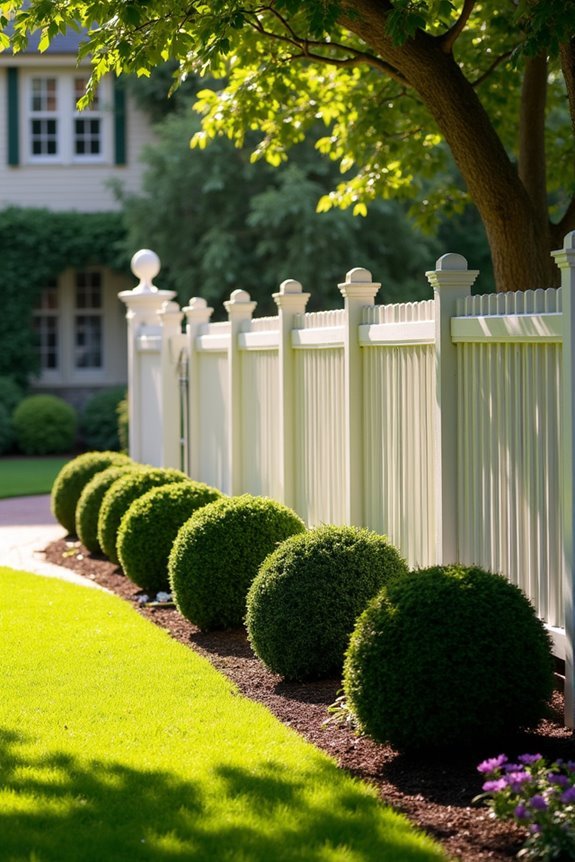
Geometric precision defines formal boxwood fence accents, where you’ll deploy Buxus sempervirens or Buxus microphylla as structured counterpoints to fence architecture. Position these boxwood varieties at measured intervals—typically 18 to 24 inches—to create rhythmic visual anchors along your fence line. You’ll maintain spherical or cubic forms through disciplined shearing, establishing strong architectural dialogue between organic and built elements.
Your spatial strategy should emphasize negative space between each clipped specimen, allowing the fence material to remain visible. This interplay prevents visual heaviness while reinforcing formality. Garden maintenance demands quarterly shaping during the growing season, using sharp hedge shears to preserve crisp edges. Consider dwarf cultivars like ‘Green Gem’ for compact spaces, reserving English boxwood for grander installations where scale permits more substantial plantings.
[affiai keyword=”formal boxwood fence accents” template=”carousel” count=”3″]
Native Plant Fence Combinations
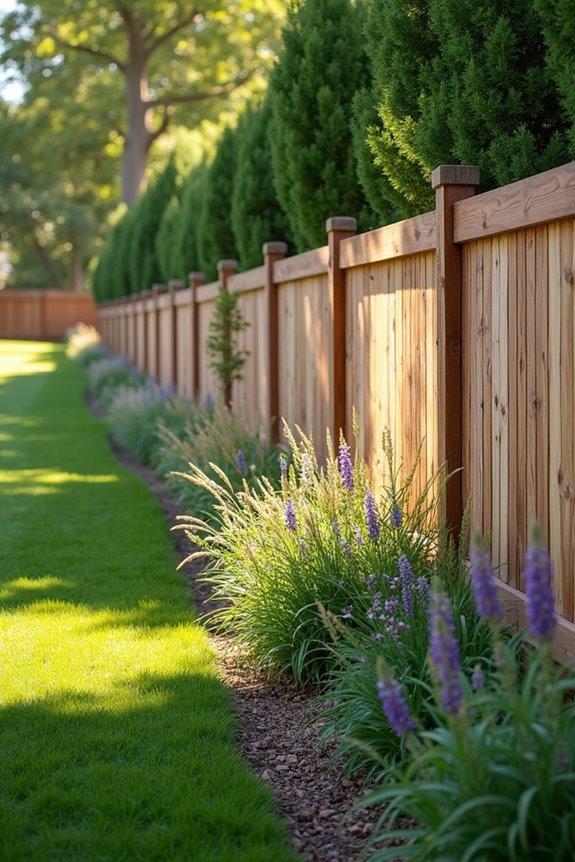
When you integrate native plants with fence structures, you’re establishing ecologically calibrated partnerships that reduce maintenance demands while supporting regional biodiversity. Native plant benefits extend beyond water conservation—these species provide critical habitat corridors along property boundaries while requiring minimal intervention once established.
Select drought resistant plants that align with your fence’s vertical plane. Pair six-foot cedar fencing with flanking serviceberry stands, creating layered screening at 8-12 feet. Position lower-growing native grasses 18 inches from fence bases to prevent moisture accumulation while maintaining sight lines.
Configure planting depths according to root ball specifications: dig holes 1.5 times wider than containers but no deeper. Space specimens based on mature spread calculations, typically 3-5 feet for shrubs, ensuring adequate air circulation between fence surfaces and foliage.
[affiai keyword=”native plants for fencing” template=”carousel” count=”3″]
Colorful Seasonal Rotation Borders
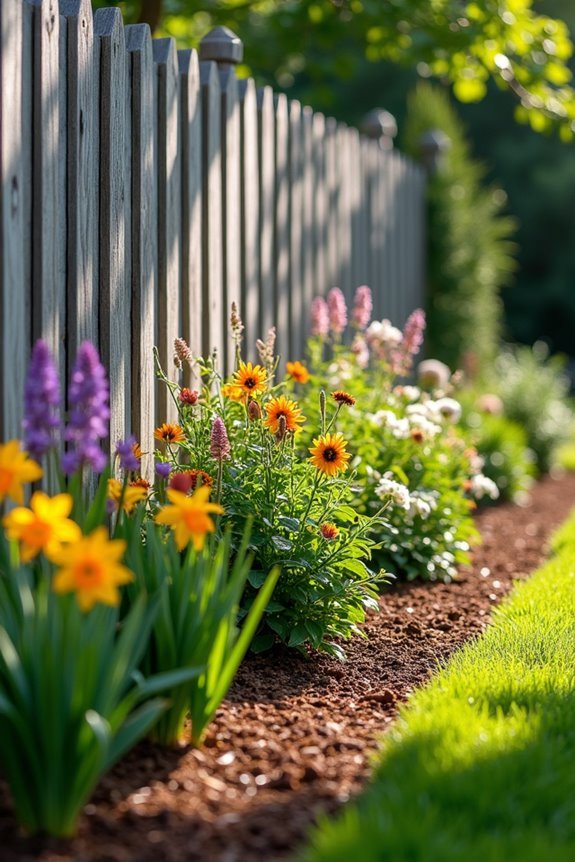
Strategic planting rotations along fence lines create visual interest across all growing seasons while maximizing spatial efficiency. You’ll achieve continuous garden colors by layering spring bulbs, summer perennials, fall-blooming asters, and winter-interest shrubs within the same border zone. Position early-season tulips and daffodils at 6-inch depths, with summer daylilies planted above at shallow levels. This vertical stacking optimizes your fence border’s productivity. Coordinate seasonal blooms using a three-tier system: low-growing pansies for spring foreground, mid-height coneflowers for summer middle ground, and tall ornamental grasses for autumn backdrop. Map your rotation schedule quarterly, ensuring color changes occur seamlessly. Install drip irrigation beneath mulch layers to support varying water requirements across different bloom periods without disturbing established root systems.
[affiai keyword=”seasonal garden border plants” template=”carousel” count=”3″]
Wildflower Meadow Fence Edges
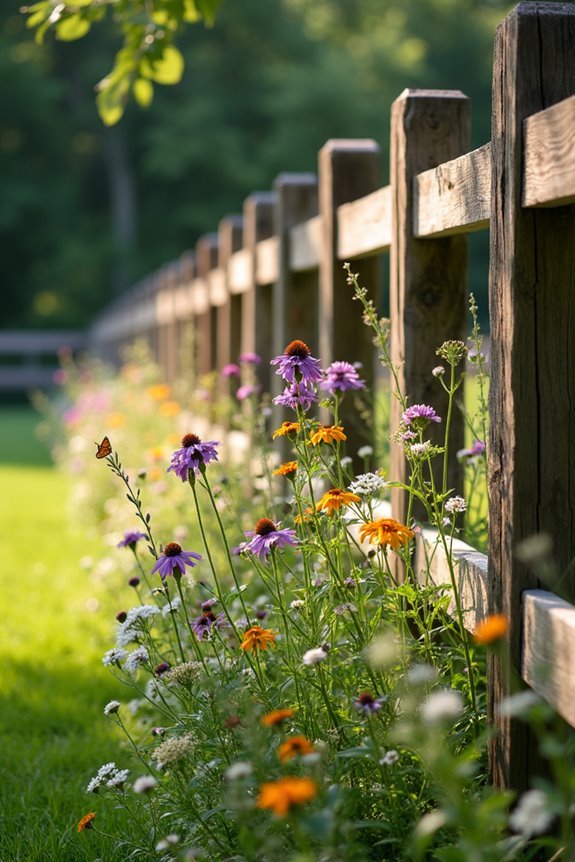
Natural wildflower meadows soften fence perimeters while establishing self-sustaining ecosystems that require minimal intervention once established. You’ll need to assess your site’s soil composition, sun exposure, and moisture levels before making wildflower selections. Native species adapted to your region will outperform generic seed mixes, creating denser blooms with stronger root systems. Allow 18-24 inches of growing space between the fence line and mowed areas to accommodate spreading growth patterns.
Meadow maintenance involves strategic timing rather than constant attention. You’ll mow once annually in late fall after seeds disperse, cutting to 4-6 inches height. Remove invasive species during spring walkthroughs, and supplement thin patches with targeted seeding. This approach creates naturalistic fence changes that support pollinators while reducing your lawn maintenance footprint considerably.
[affiai keyword=”wildflower meadow fencing” template=”carousel” count=”3″]
Bamboo Screen Fence Borders
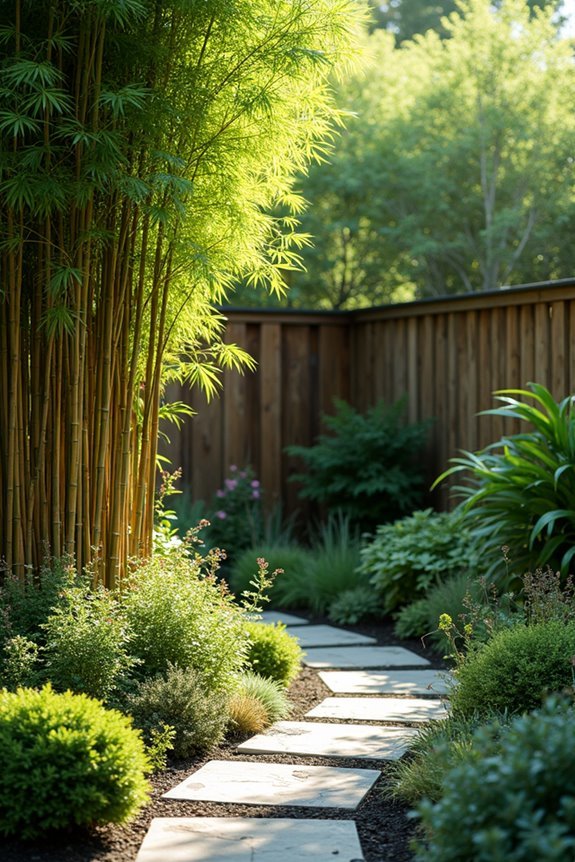
Bamboo screens transform ordinary fence borders into layered privacy barriers that establish vertical dimension while controlling lateral spread. You’ll achieve peak bamboo privacy by positioning clumping varieties 3-4 feet from your fence line, creating a dense visual buffer without invasive rhizome expansion. Running bamboo requires root barriers extending 24-30 inches deep to prevent underground spread into adjacent properties.
Select species based on your climate zone: Fargesia for cold hardiness, Bambusa for tropical conditions, or Phyllostachys for temperate regions. Bamboo maintenance demands consistent attention—remove dead culms annually, thin overcrowded stands to maintain air circulation, and monitor irrigation during establishment. You’ll need to trim height quarterly if you’re maintaining specific sight lines. Space plants 3-5 feet apart for full screening within two growing seasons.
[affiai keyword=”bamboo fence screens” template=”carousel” count=”3″]
Espaliered Fruit Tree Fences
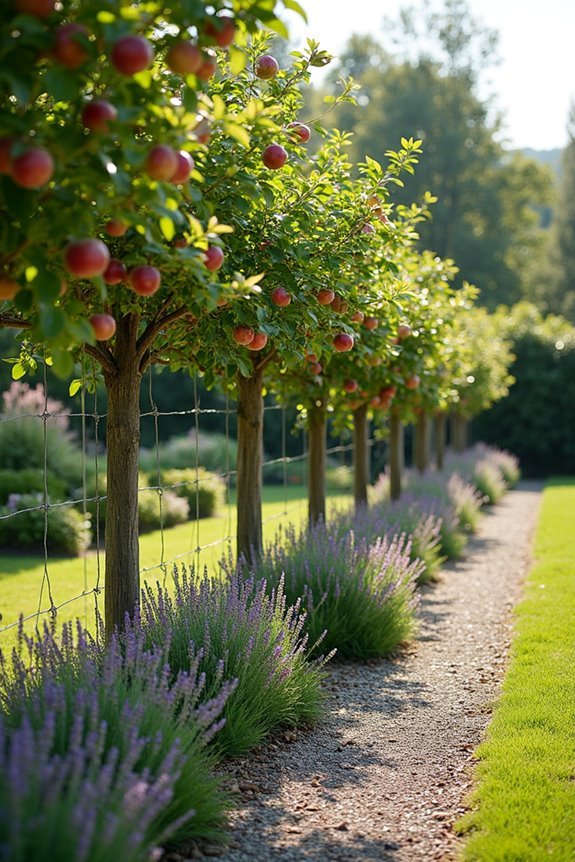
When trained along fence lines, espaliered fruit trees create productive barriers that maximize yield per square foot while maintaining 6-12 inch depth profiles. You’ll need sturdy horizontal wires spaced 12-18 inches apart to support branch architecture. Select fruit varieties suited to your climate zone—apples and pears excel in temperate regions, while citrus and figs thrive in warmer areas.
Master essential espalier techniques including cordon, fan, and Belgian fence patterns. Each method dictates specific pruning schedules and branch angles. Cordons require 45-degree training for ideal fruiting spur development. Fan patterns distribute growth evenly across vertical space, perfect for stone fruits like peaches and apricots.
Position your espaliered fence in full sun with adequate air circulation. Maintain consistent pruning during dormant and growing seasons to preserve form and encourage productive growth.
[affiai keyword=”espaliered fruit tree fences” template=”carousel” count=”3″]
Climbing Rose Fence Combinations
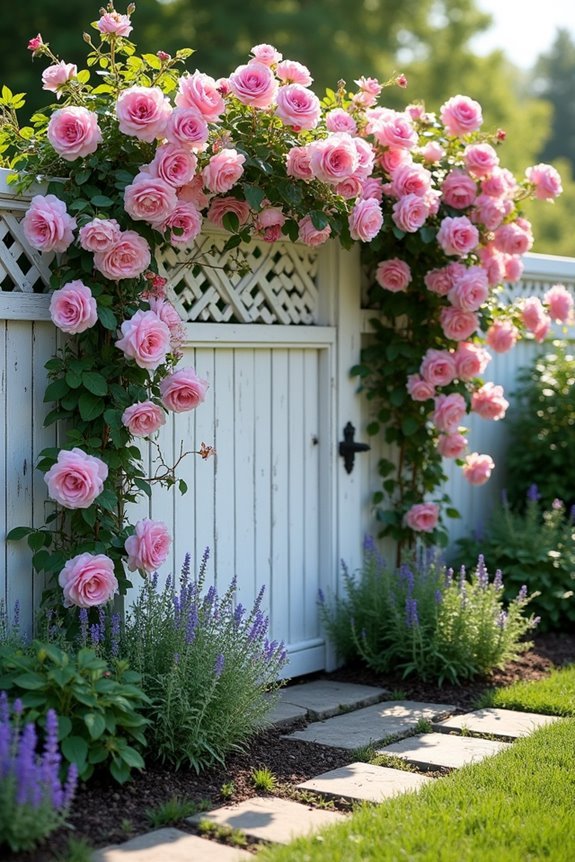
Climbing roses paired with structural fences transform vertical spaces into cascading displays that bloom for months while maintaining distinct architectural form. You’ll achieve ideal coverage by selecting varieties like ‘New Dawn’ or ‘Zephirine Drouhin’ that reach 10-15 feet, matching fence height specifications. Install horizontal wire supports at 18-inch intervals to guide cane distribution and prevent gaps in flowering coverage.
Consider rose trellis ideas that incorporate metal framework behind wooden pickets, creating layered depth while supporting heavy blooms. Pair climbing roses with complementary climbing vine options such as Clematis for extended seasonal interest—roses bloom on mature wood while Clematis fills early-season gaps. Space root zones 24 inches apart to prevent competition. This combination delivers continuous color from spring through fall while preserving fence structural integrity and visual definition.
[affiai keyword=”climbing rose fence combinations” template=”carousel” count=”3″]